The EU Could Be Destroyed in a Moment. Europe’s Defence Awakening Has Begun
Europe lived inside what many believed was the end of history.
War belonged to textbooks. Borders were administrative inconveniences. Military power was something America handled while Europe focused on trade, regulation, and prosperity.
Then Russia invaded Ukraine.
Twice.
And suddenly, a continent that had spent generations enjoying peace found itself confronting an uncomfortable question:
What if Europe is not prepared to defend itself?
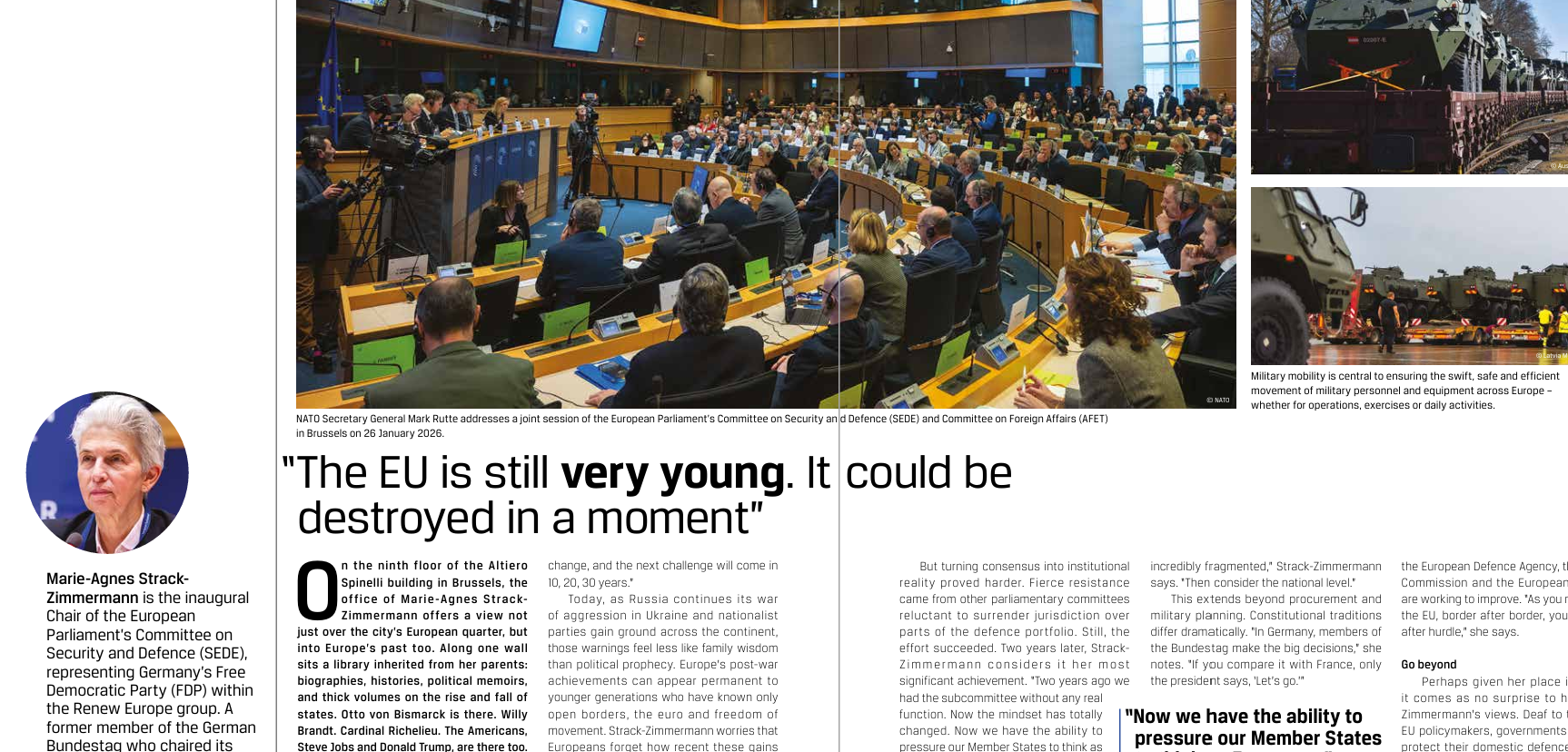
Few voices have been more direct about this challenge than Marie-Agnes Strack-Zimmermann, the inaugural Chair of the European Parliament's Security and Defence Committee (SEDE).
Her warning is simple, unsettling, and brutally relevant.
"The EU project is still very young. It could be destroyed in a moment."
Those words are particularly striking because they come from someone who has spent her career inside European institutions. They are not the remarks of a populist critic. They are the concerns of a committed European who understands how fragile the project actually remains.
Many Europeans see the European Union as permanent.
It is not.
The open borders, shared markets, common currency, and decades of peace that younger generations take for granted are historical exceptions rather than guarantees.
Europe's modern order was built after the devastation of World War II. It emerged gradually through political compromise, economic integration, and American security guarantees.
But history has a habit of returning when societies believe it has ended.
Russia's full-scale invasion of Ukraine shattered one of Europe's most cherished assumptions: that large-scale territorial war had disappeared from the continent.
Suddenly tanks mattered again.
Artillery mattered again.
Missile production mattered again.
And perhaps most importantly, defense industrial capacity mattered again.
The transformation underway in Brussels reflects this new reality.
For years, defense occupied a secondary position in EU politics. Economic regulation, climate policy, and trade agreements dominated political debate.
Today, defense has moved to the center.
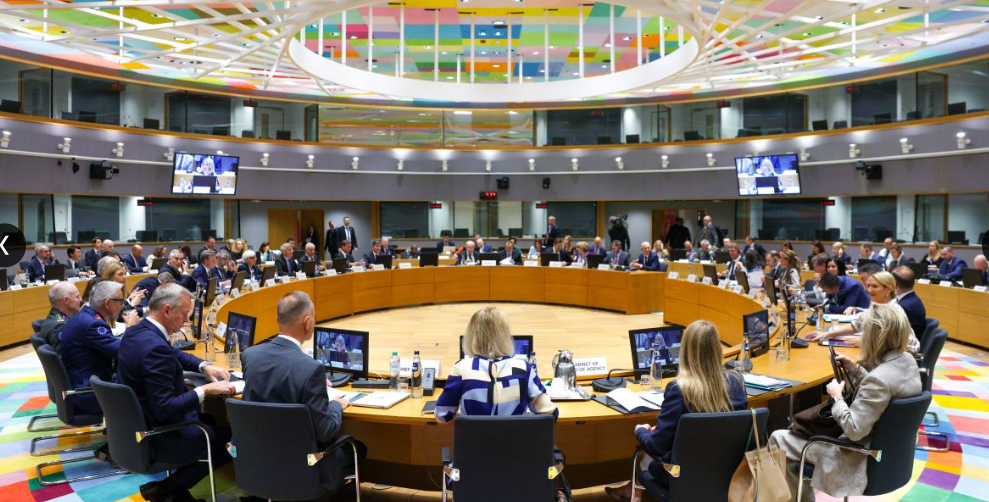
The elevation of the European Parliament's defense subcommittee into a full Security and Defence Committee is more than an institutional adjustment. It is a symbol of Europe's changing priorities.
The continent is beginning to accept that economic power alone is insufficient.
In the twenty-first century, prosperity without security is vulnerability.
Yet recognizing the problem is easier than solving it.
Europe remains deeply fragmented.
Its armed forces operate under different national structures.
Its procurement systems remain divided.
Its military industries compete against one another rather than acting as a unified industrial base.
Even basic military mobility remains surprisingly complicated.
Moving troops and equipment across Europe can still involve regulatory hurdles, administrative barriers, and political obstacles that would be unthinkable during a genuine crisis.
For an alliance confronting a potentially revisionist Russia, such delays represent strategic weaknesses.
The challenge extends beyond logistics.
It is cultural.
European governments still think nationally.
Defense companies still think nationally.
Politicians still win elections nationally.
Yet the threats confronting Europe are increasingly continental.
This is why Strack-Zimmermann repeatedly argues that Europeans must begin to think differently.
Not as Germans.
Not as French.
Not as Italians.
But as Europeans.
And importantly, that vision extends beyond the European Union itself.
The future security architecture she describes includes Britain, Norway, and Ukraine.
Particularly Ukraine.
While much of Europe spent decades reducing military spending, Ukraine spent years learning how to survive.
Today, the country has become perhaps the world's most important laboratory for modern warfare.
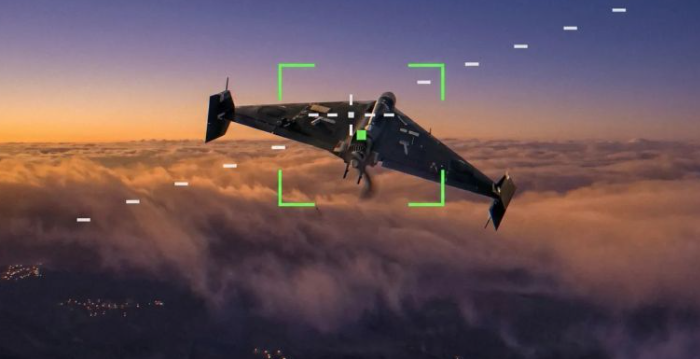
Drone warfare.
Electronic warfare.
Cyber warfare.
Hybrid warfare.
The technologies shaping future conflicts are being tested daily on Ukrainian battlefields.
This reality creates a strategic paradox.
The nation that many Europeans once viewed primarily as a security consumer has become one of Europe's most valuable security innovators.
Ukraine is not simply defending Europe.
It is teaching Europe.
Another lesson arrives from across the Atlantic.
For years, American presidents warned Europe to invest more seriously in defense.
Most of those warnings were politely acknowledged and largely ignored.
Now, with Donald Trump back in the White House, Europe's dependence on American military power has become a far more urgent concern.
Strack-Zimmermann does not advocate separation from the United States.
Far from it.
She believes the transatlantic alliance remains essential.
But she also believes Europe can no longer afford strategic complacency.
The objective is not independence from America.
It is capability.
Responsibility.
Readiness.
The ability to act when necessary.
That may ultimately become Europe's defining political project of the next decade.
Not regulation.
Not trade.
Not energy policy.
Defense.
Because history has returned to Europe.
And history rarely gives second chances to those who ignore its warnings.
The question is no longer whether Europe needs a stronger defense identity.
The question is whether Europe can build one before the next crisis arrives.