Cyprus at the Crossroads - Building European Defence Bridges in a Fractured Region

Few European capitals embody geopolitical complexity like Nicosia. It is the last divided capital in Europe—an enduring symbol of conflict frozen in time. Beyond Cyprus’ shores, the region remains volatile: Syria is emerging from years of war, Libya remains divided, Lebanon is fragile, Turkey faces democratic strain, and the conflict in Gaza continues to reverberate across the Eastern Mediterranean.
Against this backdrop, Cyprus assumes the Presidency of the Council of the European Union for the second time, determined to translate vulnerability into strategic relevance.
“For Cyprus, security threats are never abstract,” says Defence Minister Vasilis Palmas. “They are lived realities.” As the only EU Member State with part of its territory under illegal occupation, Cyprus views Europe’s security challenges through a lens shaped by experience rather than theory.
That experience informs Nicosia’s stance on Ukraine. “Cyprus deeply identifies with the plight of Ukraine and stands in full solidarity with its people,” Palmas notes. Ukraine’s resistance, he adds, proves that aggression can be resisted even when the odds seem stacked against the defender.
The pain of occupation is not a historical footnote for Cyprus. It is a daily reality stretching back to 1974, when Turkish forces invaded the island in breach of international law. More than half a century later, UN peacekeepers still patrol a ceasefire line splitting the country in two. Yet the Cypriot government continues to push for reunification under UN resolutions, pursuing a bizonal, bicommunal federation with political equality.
President Nicos Christodoulides has placed renewed emphasis on restarting negotiations under UN auspices—this time with the active support of the European Union. The EU presidency offers Cyprus a platform not just to advocate for itself, but to project stability outward.
From Palmas’ perspective, regional insecurity and European defence are inseparable. “Europe’s security landscape is changing faster than at any point in recent history,” he says. Hybrid threats, cyber‑attacks, pressure on maritime routes, and the expansion of conflict into domains such as space and information warfare are reshaping defence thinking across the continent.
Cyprus wants less talk—and more delivery.
The presidency is structured around three priorities that mirror this urgency.
First, Cyprus will drive implementation of the EU Defence Industry Strategy (EDIS) and the Security Action for Europe (SAFE) initiative. These aim to scale Europe’s industrial base, reduce strategic dependencies, and deliver military capabilities faster. Hosting high‑level conferences, Cyprus aims to foster deeper cooperation between Member States, EU institutions and trusted partners.
Second, the presidency places the Eastern Mediterranean firmly on Europe’s defence map. Protection of maritime routes, undersea cables and critical infrastructure is not merely a regional concern, Palmas stresses, but essential for the entire Union’s resilience.
Third, support for Ukraine remains non‑negotiable. Cyprus intends to keep Ukraine’s security, stability and future reconstruction at the heart of Europe’s collective response.
Despite not being a NATO member, Cyprus supports enhanced EU–NATO cooperation, provided it respects the autonomy of both organisations. Simultaneously, Nicosia has deepened its strategic partnership with the United States through a 2024–2029 Defence Cooperation Roadmap, focusing on crisis management, maritime security and defence innovation.
Strategic autonomy, Palmas insists, is not isolationism. “It means securing supply chains, advancing technology and strengthening Europe’s industrial base—while remaining open to like‑minded partners.” But he draws a firm line: defence cooperation cannot include actors whose actions undermine EU security, a clear reference to Turkey’s ongoing military presence on EU territory.
Cyprus is not merely framing policy—it is investing operationally. Through EU mechanisms such as the European Defence Fund (EDF) and SAFE Regulation, the country is modernising military infrastructure, upgrading air and naval bases, and expanding defence production capacity with access to €1.18 billion in low‑interest loans.
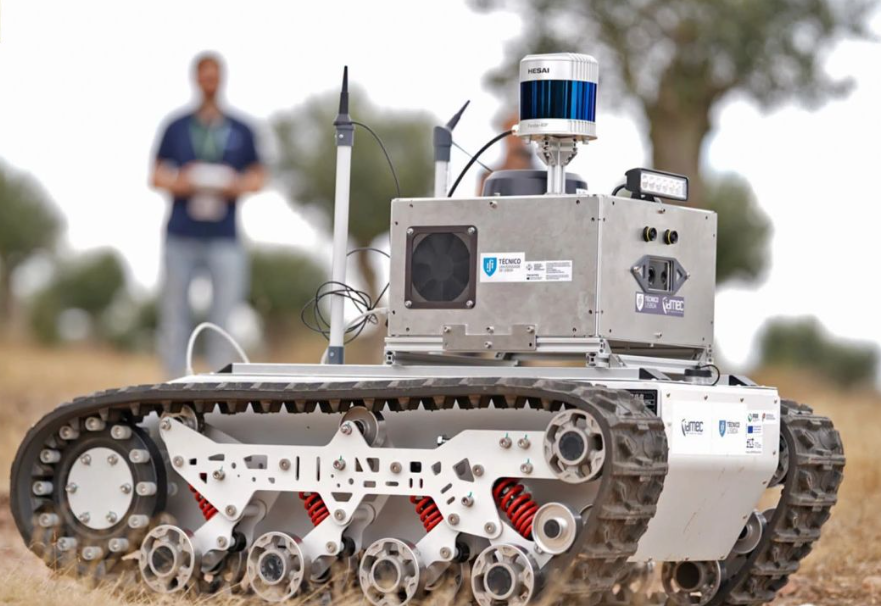
At the industrial level, Cyprus is punching above its weight. Ranked seventh in the EU for EDF participation, its defence companies are increasingly exporting beyond national borders. A new Defence Industry Council aims to align government policy with industry growth, while Cyprus will host BATTLEFIELD ReDEFiNED 2026, showcasing dual‑use technologies for defence, space and resilience.
From a divided island at the crossroads of three continents, Cyprus is using its EU presidency to argue a simple point: security is indivisible—and solidarity is Europe’s strongest defence.