The Drone That Learned to Read Corn. Why Agriculture Is Becoming the Next Battlefield for AI
For decades, farmers relied on experience, intuition, and a pair of boots.
Walk the field. Inspect the leaves. Check soil conditions. Look for disease.
The process worked.
But it was slow, labor-intensive, and inherently reactive.
By the time a problem became visible to the human eye, yield losses had often already begun.
That reality is now changing.
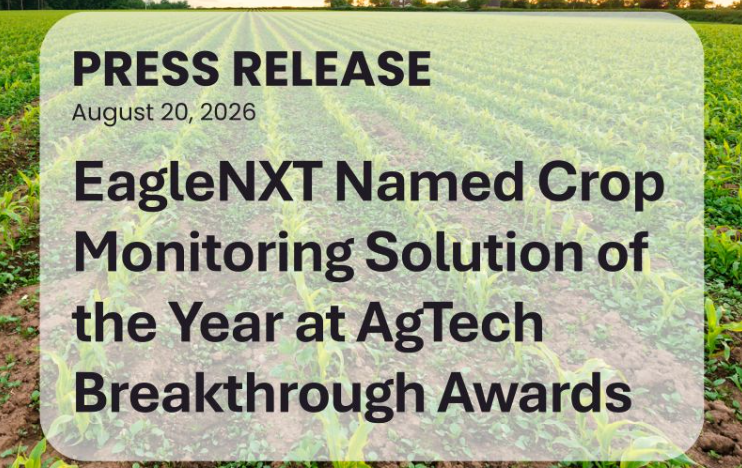
EagleNXT's recognition as "Crop Monitoring Solution of the Year" at the 2026 AgTech Breakthrough Awards is not merely another industry award. It is evidence of a much larger transformation taking place across global agriculture.
The future of farming is moving upward.
Into the sky.
And increasingly into data.
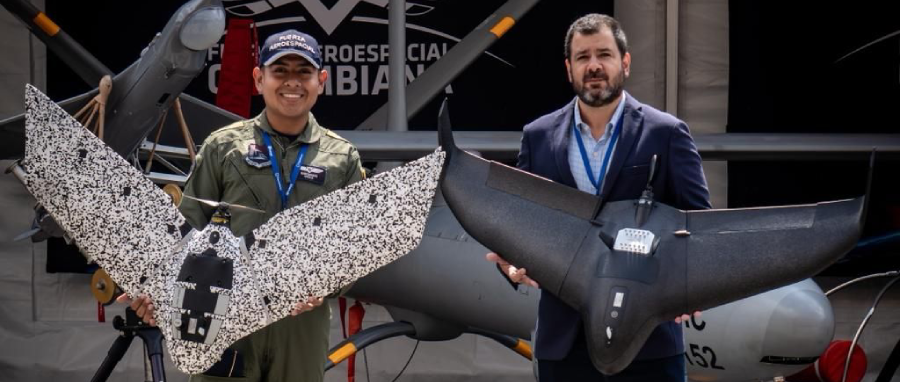
At the center of this shift are EagleNXT's MicaSense multispectral imaging systems, which allow drones to see something farmers cannot.
Stress before symptoms.
Disease before visible damage.
Nutrient deficiencies before leaves change color.
Environmental variability before yields decline.
In practical terms, the technology enables crops to communicate long before they appear unhealthy.
That changes everything.
The End of Guesswork Agriculture
Traditional farming operates on delayed information.
A field might cover hundreds or thousands of hectares. Even experienced agronomists cannot inspect every plant.
Satellite imagery helped improve visibility, but often lacked the resolution and refresh rates required for precision decision-making.
Drones are filling that gap.
Flying at low altitude and equipped with multispectral sensors, they generate highly detailed crop intelligence at both field and plant level.
What matters is not simply the image.
It is the information hidden inside it.
Plants reflect light differently depending on their health status. Multispectral imaging captures data beyond the visible spectrum, revealing physiological changes before they become obvious to humans.
The result is a form of predictive agriculture.
Problems can be identified while they are still manageable rather than after they have become expensive.
That shift transforms crop management from reaction to anticipation.
Agriculture's AI Moment
Most discussions about artificial intelligence focus on autonomous vehicles, defense systems, or large language models.
The agricultural revolution receives far less attention.
Yet AI may ultimately have an even greater impact on food production than on many digital industries.
Data collected by drone sensors creates enormous information streams.
Millions of plants.
Thousands of hectares.
Multiple growing stages.
Changing weather patterns.
Variable soil conditions.
The challenge is no longer collecting data.
It is interpreting it.
This is where AI enters the picture.
The combination of UAVs, multispectral sensors, analytics platforms, and machine learning creates something close to a digital nervous system for modern agriculture.
Fields can be monitored continuously.
Patterns can be detected automatically.
Interventions can become increasingly targeted.
Fertilizer, irrigation, and crop protection can be applied precisely where needed rather than uniformly across an entire field.
That has implications far beyond productivity.
It affects costs, sustainability, water consumption, and environmental impact.
From Defense Technology to Food Security
There is another reason EagleNXT's success deserves attention.
The convergence of technologies.
The drone industry increasingly operates across multiple domains.
A platform designed for defense can support infrastructure inspection.
A sensor developed for agricultural monitoring can support environmental analysis.
An imaging system used to classify crops may share technological foundations with systems used for surveillance and intelligence.
This cross-pollination accelerates innovation.
It also demonstrates that drones are no longer niche tools.
They are becoming essential information platforms.
Agriculture happens to be one of the sectors benefiting most directly.
The Real Commodity Is Not Corn
What MicaSense and similar technologies reveal is that agriculture is entering an age where information may become as important as land.
The traditional inputs remain critical:
- Soil
- Water
- Fertilizer
- Seed
- Equipment
But a new input has emerged.
Intelligence.
The ability to understand what is happening inside a field before competitors, before disease spreads, before resources are wasted, and before yields decline.
Data is becoming a yield multiplier.
And drones are becoming one of its primary collection mechanisms.
The Next Agricultural Revolution
The Green Revolution transformed farming through fertilizers, genetics, and mechanization.
The next revolution will be digital.
Not because machines replace farmers.
But because they augment decision-making.
The most successful farms of the future may not simply own better equipment.
They may possess better visibility.
They may know earlier.
Act faster.
And optimize more precisely.
That appears to be the direction represented by EagleNXT's award-winning technology.
The lesson extends far beyond agriculture.
In the twenty-first century, competitive advantage increasingly belongs to those who can see what others cannot.
For generations, farmers looked at crops.
Now crops are beginning to talk back.
And drones are translating the conversation.

.png)