EagleNXT and ThirdEye Systems Joint Venture - Why Counter‑Drone Innovation Keeps Crossing Borders And Then Coming Home

EagleNXT’s decision to invest $10 million in ThirdEye Systems and launch the ThirdEye USA joint venture captures that paradox perfectly. The technology may be Israeli, refined under some of the world’s most demanding security conditions, but its future customers—and production lines—are firmly North American.
ThirdEye USA will be headquartered in Allen, Texas, supplying counter‑drone products to the United States and Canada, with EagleNXT holding a controlling 51 percent stake. This isn’t just a financial arrangement; it is a compliance architecture.
In today’s defence market, performance alone is insufficient. Buyers increasingly demand domestically produced, export‑controlled, politically resilient systems. The joint venture structure answers that requirement directly.
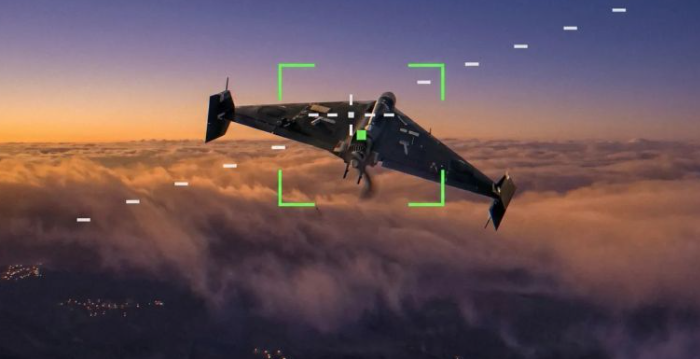
At the technical level, ThirdEye brings a focused capability set. The company develops electro‑optical and AI‑based detection and identification systems, rather than relying on traditional radar or wide‑area jamming. Products like Argus Shield and Meduza X are designed to recognise, classify, and track drones across fixed sites, vehicles, and aerial platforms—a modular approach aligned with layered air defence concepts.
EagleNXT contributes the industrial spine: unmanned systems experience, sensor integration, and U.S.-based manufacturing infrastructure. According to the companies, existing facilities will be used to speed up integration and production, cutting the delay between contract award and field deployment.
The emphasis on localized production is no accident. U.S. and Canadian procurement frameworks increasingly privilege domestic assembly and trusted supply chains, particularly for systems tied to homeland security or military base protection. ThirdEye USA is explicitly designed to meet those expectations.
The timing is also telling. The venture is expected to be operational by May 2026, as counter‑UAS demand accelerates well beyond purely military use cases. Critical infrastructure operators—from energy facilities to transport hubs—are now central customers in the counter‑drone ecosystem.
What makes this deal strategically interesting is what it does not promise. There are no claims of revolutionary hard‑kill solutions or silver‑bullet defences. Instead, the focus is on detection, identification, and decision superiority—arguably the most scarce commodities in a battlespace saturated with cheap drones.
In that sense, ThirdEye USA reflects a broader industry shift: from bespoke, nation‑specific systems toward globally sourced innovation wrapped in national production frameworks.
Israel builds. America localises. Procurement follows.
For EagleNXT, the bet is that this formula—AI‑heavy, optics‑driven, domestically produced—will scale faster than competitors tied to monolithic defence primes or export‑restricted supply chains.
In counter‑drone warfare, sovereignty is increasingly measured not by where technology was invented, but by where it is built, certified, and controlled.