The Drone Dock Just Got Wheels. GDU’s K05 Turns Any Vehicle Into an Aerial Command Post
The biggest problem with many autonomous drone systems is not the aircraft.
It is the distance between the drone and the incident.
Fixed drone docks can automate takeoff, landing, charging, and remote operations, but they are still tied to one location. That works well for permanent sites, industrial plants, or known patrol zones. It becomes far less useful when the mission moves, the emergency starts somewhere unexpected, or teams need aerial intelligence in a remote area.
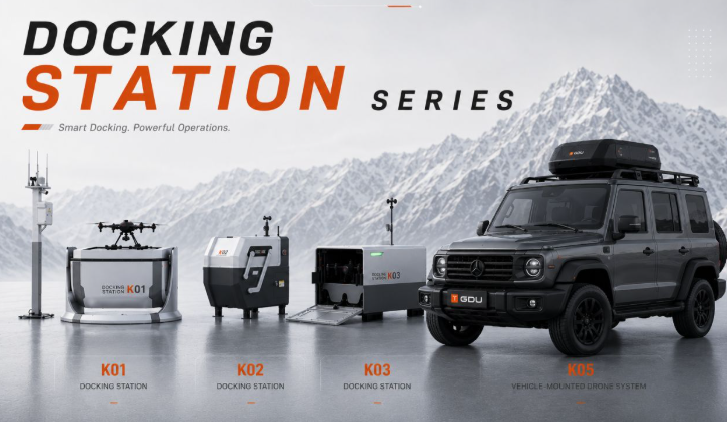
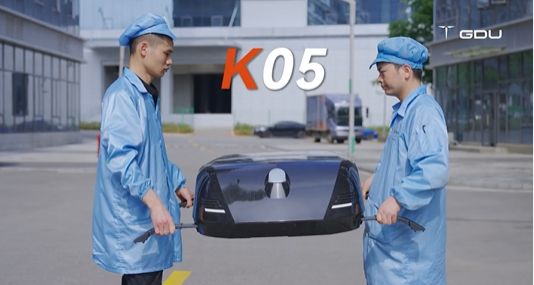
GDU’s K05 Vehicle-Mounted Drone System is designed to solve that problem by putting the drone dock on wheels.
The system can be installed on virtually any suitable vehicle, transforming it into a mobile aerial-operations platform. Instead of waiting for a drone to arrive from a distant base, operators can drive the complete system directly toward the scene and deploy the aircraft where the mission actually begins.
That simple change could have a major operational impact.
In public safety, patrol vehicles equipped with the K05 could provide an immediate aerial view during searches, traffic incidents, major events, or developing security situations. Emergency responders could launch a drone before leaving the vehicle, gaining a wider view of hazards, access routes, and the surrounding area.
For wildfire monitoring, mobility may be even more valuable.
Vegetation fires can start far from fixed infrastructure and spread rapidly across difficult terrain. A vehicle-mounted drone system could be repositioned as the fire develops, allowing crews to launch from different locations and maintain aerial coverage closer to the active area.
The same principle applies to infrastructure inspections.
Power lines, pipelines, railways, roads, and construction sites can stretch over large distances. A mobile drone dock allows inspection teams to move along the asset, deploy repeatedly, and avoid returning to one permanent launch point.
Remote-area reconnaissance also benefits from this approach.
Mountain regions, forests, disaster zones, and industrial sites often lack the communications, power, or physical infrastructure needed for fixed drone stations. A vehicle can carry the drone, control system, power supply, and deployment equipment together.
This makes the K05 more than a transport box.
Its value lies in combining vehicle mobility with automated drone operations.
The system is designed for quick field installation and rapid launch without requiring permanent infrastructure. In theory, this reduces preparation time and allows operators to react more dynamically as conditions change.
That matters because real-world missions rarely follow a perfect plan.
Emergency locations shift. Roads become blocked. Weather changes. Search areas expand. Inspection priorities move. A fixed system can only observe what is within reach. A mobile system can follow the mission.
The K05 also reflects a wider trend in the drone industry: the move from standalone aircraft toward complete operational systems.
Professional users increasingly need more than a capable drone. They need automated deployment, reliable communications, repeatable workflows, simple transport, and integration with existing vehicles and command systems.
The aircraft is only one part of the solution.
Of course, the concept also creates technical challenges.
A vehicle-mounted drone dock must handle vibration, dust, rain, temperature changes, and repeated movement. The drone must be able to launch and land reliably even when the vehicle is operating away from a prepared site.
Communication is another critical factor.
Remote missions may take place in areas with weak mobile coverage or limited network infrastructure. Operators will need secure and stable control links, as well as clear procedures for lost communication, changing weather, and restricted airspace.
Power management will also influence how useful the platform becomes. Repeated missions require efficient charging, battery monitoring, and enough onboard energy to support both the drone and the dock over extended operations.
Despite these challenges, the operational logic is compelling.
A fixed drone dock creates a permanent aerial capability over one area.
A vehicle-mounted dock creates a capability that can be taken anywhere.
That distinction could make the K05 especially attractive to police, firefighters, infrastructure operators, emergency teams, and organizations that need to cover large or unpredictable areas.
The drone industry has spent years making aircraft faster, smarter, and more autonomous.
GDU’s K05 asks a different question: what happens when the entire drone station becomes mobile?
The answer may be a new class of rapid-response platform—part vehicle, part drone dock, and part aerial command post.
Because in a real emergency, the best drone is not the one with the longest specification sheet.
It is the one already at the scene.
.png)