The Drone Controller That Wants to Replace Everything. Inside the Rise of BeastTX
There’s a quiet war happening in the drone industry.
Not in the air—but in the hands of the operator.
Because as drones become more autonomous, more connected, and more embedded in real infrastructure, one question becomes critical:
Who controls the control system?
Enter BeastTX.
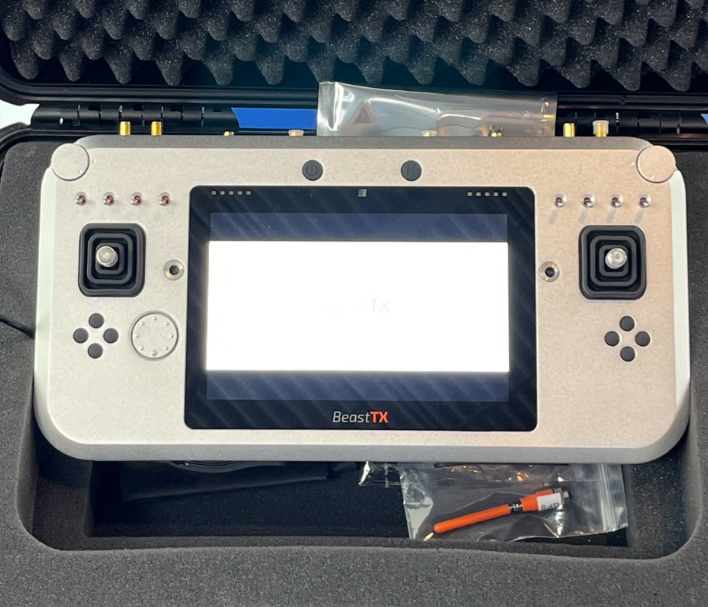
At first glance, it looks like just another rugged drone controller. But spend five minutes with it, and you realize something more disruptive is happening. BeastTX is not trying to improve the controller.
It’s trying to eliminate everything around it.
From Controller to Command Center
The idea behind BeastTX – The ultimate UAV controller is deceptively simple:
combine remote control, computing, data processing, telemetry, and video streaming into one device.
No laptop.
No external systems.
No fragmented setup.
Just one integrated machine that handles it all.
The result is what engineers call an all-in-one ground control station—a system that merges the traditionally separate layers of UAV operation into a single platform.
Flight planning, controlling, data processing, and communication are all managed directly on the device.
This is not evolution.
This is consolidation.
Microcontroller Meets Full Computer
Under the hood, BeastTX blurs the line between microcontroller-driven systems and full computing platforms.
Instead of relying purely on embedded electronics, it integrates a high-power quad-core CPU capable of onboard data processing, turning the controller into a mobile workstation.
It can even run multiple operating systems—including Windows, Android, and Linux—switchable via reboot.
That sounds like overkill—until you understand the mission profile.
Modern drone operations don’t just generate flight data.
They generate massive datasets: mapping results, inspection imagery, telemetry streams.
Traditionally, all of that had to be offloaded and processed elsewhere.
BeastTX changes that.
It processes data in-field, in real time, at the edge.
And that fundamentally changes how drone missions are executed.
Connectivity Is the Real Weapon
If there is one feature that defines BeastTX, it’s not processing power.
It’s connectivity.
The system integrates three simultaneous data channels: remote control, telemetry, and digital data link—enabling real-time communication across the entire drone operation.
With modular data link options, the device can reach distances of up to 50 kilometers, depending on configuration and regulations.
That means one operator, one device, can manage missions far beyond line-of-sight—without additional infrastructure.
Video streams, telemetry, and mission control are unified into a single interface.
This is not just convenience.
It’s operational dominance.
Built for Reality, Not Demos
Plenty of controllers look good in a lab.
Few survive the field.
BeastTX is built with a different philosophy: ruggedness first.
Encased in aluminum and designed for harsh environments, it is engineered for long operational cycles (up to 8 hours) and real-world conditions where dust, rain, and fatigue are constants.
Its high-brightness display remains readable in direct sunlight, and its design supports daily deployment, not occasional use.
This is hardware for professionals—for surveyors, infrastructure operators, and industrial drone pilots.
Not hobbyists.
Why This Matters More Than It Looks
Here’s the uncomfortable truth:
The drone industry doesn’t run on drones.
It runs on control systems, data flows, and operational interfaces.
And that’s exactly where BeastTX is positioning itself.
By integrating everything into one platform, it challenges a fragmented ecosystem where pilots rely on multiple devices, tools, and workflows.
Instead, it offers a single point of control—a digital cockpit for autonomous operations.
The Bigger Shift
BeastTX represents something bigger than a better controller.
It signals a shift toward edge computing in UAV operations.
- Processing moves from cloud to device
- Complexity moves from multiple systems to one
- Operators become decision-makers, not system managers
And that raises a provocative question:
If control systems like BeastTX continue to evolve…
Will the next generation of drones even need operators—or just supervisors?
Because once your controller becomes a computer,
and your computer becomes autonomous,
control itself becomes software.