The Death in 2000 km Distance - How Ukraine Is Rewriting Air Defense

Ukraine’s latest interceptor drone operation—piloted from 2,000 kilometers away—does more than break a technical record. It signals a deeper transformation in how air defense, manpower, and command authority are understood in the 21st century.
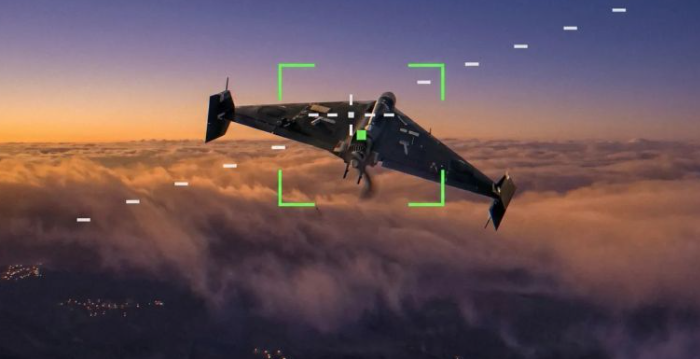
According to United24Media, the operator was located abroad while controlling a Sting interceptor drone active in northern Ukraine. The target set: Russian‑launched Shahed kamikaze drones, now a staple of Moscow’s long‑range harassment campaign against Ukrainian cities and infrastructure.
The Sting itself is deceptively simple. Developed by engineers from the volunteer group Wild Hornets, it is built for speed and efficiency, exceeding 340 km/h and climbing to three kilometers in altitude. Its sole mission is interception—fast, cheap, and disposable compared to traditional air‑defense missiles.
What makes Sting revolutionary is its nervous system.
The Hornet Vision Ctrl platform enables high‑resolution video feeds and almost delay‑free piloting over enormous distances. In effect, Ukraine has demonstrated that interceptor drones can be operated as part of a distributed, borderless air‑defense network, rather than as local tactical assets.
Earlier confirmed missions at 500 km already stretched conventional assumptions. At 2,000 km, those assumptions collapse entirely.
This changes several strategic equations at once.
First, operator survivability improves dramatically. Drone crews no longer need to be anywhere near the battlefield—or even within national borders. Second, human capital scales: experienced pilots can defend multiple regions without relocation or exposure.
Third—and most unsettling for traditional militaries—air defense becomes software‑centric. Physical proximity, base infrastructure, even national airspace boundaries lose significance compared to bandwidth, encryption, and system resilience.
This evolution is not happening in isolation.
Alongside interceptors, Ukraine has showcased new long‑range strike drones, including the “Sichen,” reportedly capable of reaching targets up to 1,400 kilometers away with a circular error of around 20 meters. Taken together, these systems form a uniquely Ukrainian doctrine: long‑range reach paired with distributed control.
The conditions that produced this innovation are brutal. Ukraine is fighting a numerically superior opponent under constant resource constraints. But necessity has accelerated experimentation faster than any peacetime defense program ever could.
The result is uncomfortable for established defense powers.
Ukraine is no longer merely a recipient of military technology. It has become a live laboratory for next‑generation warfare, particularly in drones, autonomy, and remote command. In several domains, it is already setting benchmarks others will have to follow.
If distance no longer protects operators—and cheap interceptors can be steered from continents away—then the future of air defense will not be built around static systems or billion‑dollar missiles.
It will be built around software, connectivity, and speed.
And Ukraine is leading that race.