The Bushmaster Just Became a Drone Carrier: Australia’s Armored Vehicles Are Learning to Strike 100 Kilometers Away
The battlefield is undergoing a quiet but profound transformation.
For more than a century, armored vehicles were judged by the same metrics: armor thickness, mobility, firepower, and survivability. The vehicle that could see farther, move faster, and shoot harder usually held the advantage.
That era is ending.
The armored vehicle of the future may not fire the first shot itself.
Instead, it may launch a swarm of intelligent munitions that hunt targets dozens of kilometers away.
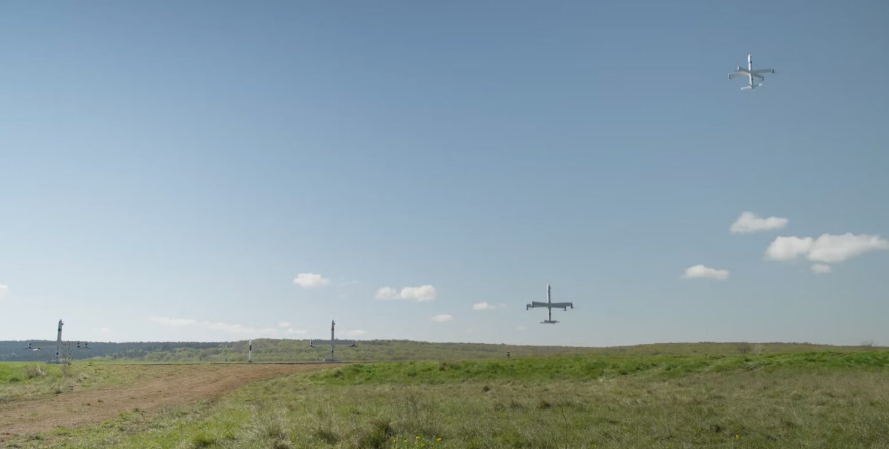
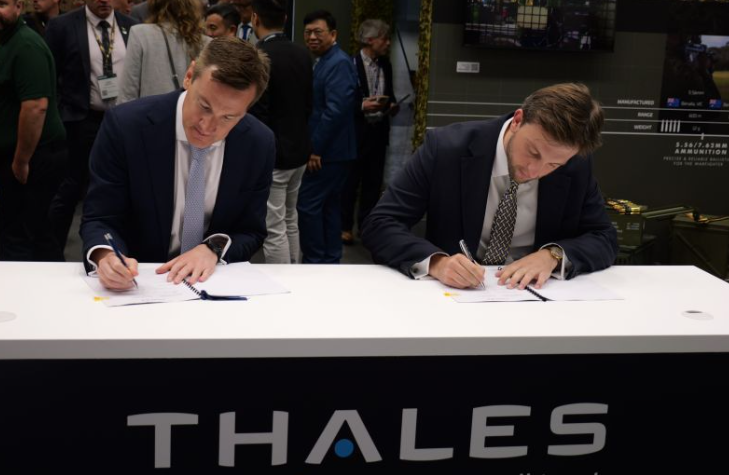
That future took another step forward with the announcement that STARK and Thales Australia are partnering to integrate the Cascade loitering munition system onto the latest version of the iconic Bushmaster armored vehicle.
The implications are far larger than a simple weapons integration.
This is another sign that the distinction between armored vehicles, missile launchers, and drone platforms is rapidly disappearing.
For decades, armored vehicles operated within the limits of their onboard weapons.
If a target was beyond visual range, another asset was required.
Artillery.
Aircraft.
Missiles.
The crew depended on someone else to deliver the strike.
Cascade changes that equation.
STARK's tube-launched effector gives smaller units the ability to launch precision-guided munitions capable of striking targets at distances of up to 100 kilometers.
That distance is extraordinary when viewed through the lens of traditional armored warfare.
A target can now be identified, pursued, and attacked far beyond the immediate battlefield.
The vehicle itself may never come close to the enemy.
Yet it still delivers decisive effects.
This is where modern warfare is heading.
Range is becoming survivability.
The farther away a force can strike, the less exposed it becomes.
The Ukraine war has provided a brutal demonstration of this reality. Modern sensors, drones, and long-range fires have made concentration of forces increasingly dangerous. Every vehicle detected can become a target within minutes.
As a result, military planners are searching for ways to disperse combat power while maintaining lethal reach.
Loitering munitions offer exactly that capability.
Rather than firing a projectile and hoping the target remains where expected, operators launch an airborne sensor-shooter capable of searching, identifying, tracking, and striking.
The munition becomes an extension of the crew's eyes and weapons.
The battlefield suddenly becomes much larger.
And much deadlier.
Perhaps the most important aspect of Cascade is not its range.
It is its simplicity.
The universal tube launcher was specifically designed for rapid integration onto vehicles and other platforms. In military procurement terms, that matters enormously.
The best technology in the world is useless if integration requires years of redesign and billions of dollars.
Cascade appears designed around the opposite philosophy.
Make it modular.
Make it mobile.
Make it deployable everywhere.
That philosophy reflects one of the most important lessons emerging from current conflicts.
Winning no longer necessarily belongs to the force with the largest platforms.
Winning increasingly belongs to the force that can rapidly adopt new capabilities.
Smaller units equipped with long-range precision strike systems can now generate battlefield effects once reserved for far larger formations.
A patrol vehicle begins to acquire capabilities traditionally associated with artillery batteries.
An infantry unit gains access to precision attack options previously unavailable.
A tactical vehicle starts behaving like a launch platform for networked autonomous weapons.
The battlefield hierarchy changes.
The partnership is also strategically significant for Australia.
Nations throughout the Indo-Pacific are investing heavily in autonomous systems, loitering munitions, and distributed strike capabilities. Geography alone makes long-range precision engagement a critical requirement.
Systems that allow mobile forces to project combat power over extended distances will become increasingly valuable.
The Bushmaster has long been recognized as one of Australia's most successful military exports.
With Cascade integration, it evolves from a protected mobility platform into something much more consequential.
A mobile precision-strike node.
A drone carrier on wheels.
A battlefield system capable of reaching far beyond the horizon.
And perhaps that is the real story here.
The future armored vehicle is no longer defined by the size of its gun.
It is defined by the reach of the drones it carries.