The Arsenal Without Borders: How Russia, China, Iran and North Korea Are Learning to Fight Together

The West may be looking for a new military alliance. What is emerging could be harder to confront: a war machine that doesn't need one.
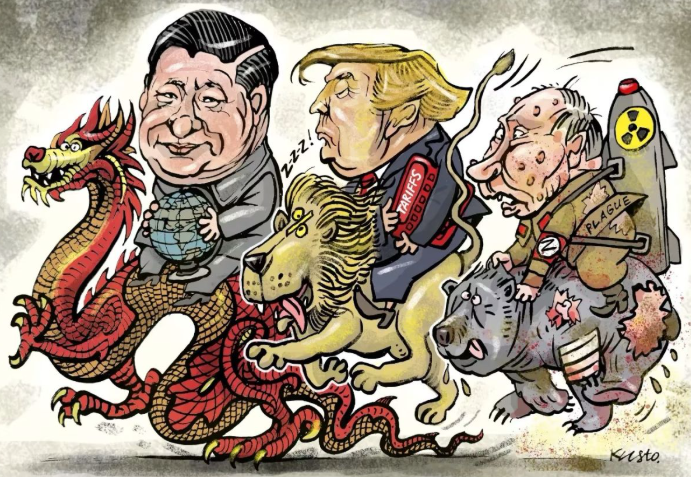
Russia, China, Iran and North Korea do not have a NATO-style command structure. They do not share an Article 5 commitment. Their interests frequently collide.
Yet something consequential is happening between them.
Weapons move one way. Components move another. Oil pays for technology. Engineers exchange expertise. Battlefield experience feeds back into factories. Sanctions create new banks, intermediaries, shell companies and shipping routes.
The result is less a formal alliance than an increasingly interconnected military ecosystem.
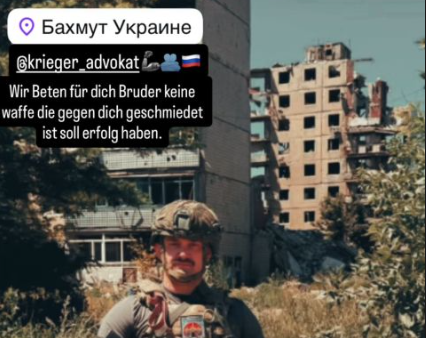
Ukraine has become one of its laboratories.
North Korea has supplied Russia with ammunition, ballistic missiles and troops. In return, Western and Ukrainian officials believe Pyongyang is acquiring knowledge that could improve its drones, missiles and military tactics.
Combat creates something money cannot easily buy: experience.
Missiles that fail expose weaknesses. Drones that are jammed reveal vulnerabilities. Electronic warfare identifies which components survive. Every attack generates data.
That creates a dangerous feedback loop.
A weapon can be designed in one country, manufactured with components from another, tested in combat by a third and improved using lessons shared with a fourth.
Iran illustrates the process.
Its Shahed-family drones helped shape Russia's long-range attack-drone campaign. But the relationship did not end when Russia learned to manufacture its own variants. Engineers, components and operational knowledge can continue circulating.
China adds something far larger: industrial scale.
Its manufacturing ecosystem dominates huge parts of the commercial drone and electronics supply chain. Dual-use machinery, microelectronics and other industrial goods can support civilian production while simultaneously sustaining military manufacturing.
Russia, meanwhile, offers something Beijing cannot manufacture overnight.
Recent combat experience.
China has not fought a major war since its 1979 conflict with Vietnam. Russia has spent years learning, brutally and expensively, how drones, electronic warfare, satellite navigation, missiles and mass industrial production behave against a sophisticated opponent.
If those lessons flow east, the implications extend far beyond Ukraine.
They reach Taiwan.
Then there is the financial infrastructure.
Sanctions once relied heavily on controlling access to Western banking, shipping and technology. But sanctioned economies adapt. Trade shifts into yuan and roubles. Oil moves aboard opaque fleets of aging tankers. Components travel through networks of trading companies. New transport corridors connect Russia with China, Iran and North Korea.
Each connection makes isolation harder.
And that may ultimately be the most important story.
Calling these four states an "axis" can be misleading if it suggests ideological unity. They distrust one another. Their geopolitical interests diverge. China wants stability in regions where Russia may benefit from disruption. Beijing worries about an unpredictable nuclear North Korea even while supporting Pyongyang economically.
But alliances don't have to be affectionate to be effective.
Organized crime offers a darker analogy.
Rival groups can compete, spy on one another and withhold their most valuable capabilities while still trading, cooperating and helping one another survive pressure from a common opponent.
That may be closer to what is emerging.
Not NATO.
Not the Warsaw Pact.
Not even a perfectly coordinated anti-Western bloc.
Something more transactional and perhaps more adaptable.
The danger is not that Russia, China, Iran and North Korea suddenly become inseparable allies.
The danger is that each becomes more capable because the others exist.
Russia gains components, markets and ammunition.
China gains operational lessons.
Iran gains economic and technological lifelines.
North Korea gains military experience, resources and potentially better weapons.
And every successful sanctions workaround becomes infrastructure available for the next crisis.
The West therefore faces an uncomfortable strategic reality.
It may still be organizing its response country by country, sanction by sanction, technology by technology.
Its adversaries are increasingly learning across borders.
The next great military competition may not be determined by who possesses the single best tank, drone, missile or submarine.
It may be determined by whose network learns faster.