The Arctic’s Three Theaters and Russia’s Quiet War in the High North

For decades, the Arctic was dismissed as a frozen void - remote, hostile, and strategically secondary. Today, it is becoming one of the most contested regions on Earth. While global attention remains focused on Ukraine and the Indo-Pacific, a quieter struggle is unfolding across the High North: a shadow war defined by sabotage, surveillance, disinformation, and strategic positioning.
According to multiple analysts, Russia is increasingly using the Arctic as both a pressure point against NATO and a logistical backbone for its broader geopolitical ambitions. The region is best understood not as a single front but as three overlapping theaters - each with distinct risks and strategic dynamics.
The first is the Russian Arctic. Rich in oil, gas, and minerals, it has become critical to sustaining Moscow’s war economy as sanctions tighten. Here, Russia seeks capital and technology from China and other BRICS partners while expanding the Northern Sea Route as a commercial and military artery. Energy exports, Arctic shipping, and infrastructure investments help finance operations far beyond the polar circle - including the war in Ukraine.
The second is the North American Arctic. Despite its vast geography, the United States and Canada face mounting challenges modernizing defenses in a region where climate change is opening new sea routes and exposing vulnerabilities. Russian and Chinese investments in dual-use infrastructure and shipping operations increasingly test North American readiness. Analysts warn that while this theater remains geographically distant from Russia’s core, its strategic relevance is growing rapidly.
The third - and perhaps most volatile - theater is the European Arctic, encompassing northern territories of Denmark including Greenland and the Faroe Islands, as well as Iceland and Norway. Experts describe this region as Russia’s most-probed front, where hybrid threats already operate below the threshold of open conflict. Reports highlight critical infrastructure sabotage, cyber intrusions, disinformation campaigns, and suspected espionage activities linked to Russian security services. Some analysts warn that intelligence and defense personnel may be disguised as civilian specialists or scientists, exploiting the region’s research-heavy environment.
The strategic logic is clear. Control of Arctic routes and data flows offers leverage over NATO’s northern flank and access to the GIUK gap - the crucial maritime corridor connecting the Arctic Ocean to the North Atlantic. Whoever dominates this corridor influences transatlantic security and naval freedom of movement.
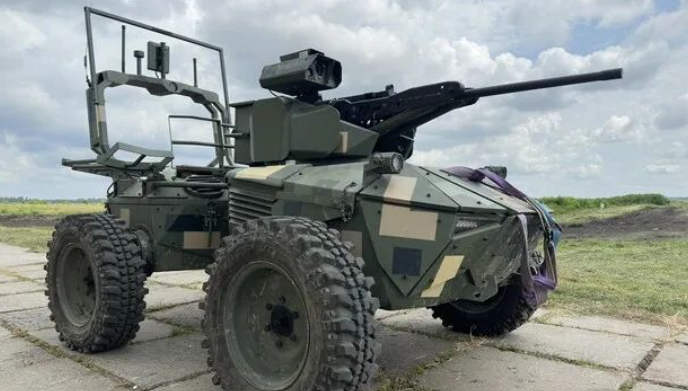
At the same time, the United States faces a difficult strategic debate. Current Arctic plans rely heavily on costly, delayed polar security cutters - large vessels that critics argue are increasingly vulnerable in an era defined by cheap drones, long-range missiles, and distributed warfare. The lesson from Ukraine and other recent conflicts is stark: a low-cost unmanned platform can destroy high-value assets worth hundreds of millions.
Defense planners are increasingly calling for a different approach - one built on modular, affordable, and interoperable systems. Instead of relying solely on a few large ships, analysts advocate for smaller ice-capable patrol vessels, mobile missile defenses, unmanned sensors, and stronger NATO integration. Such a model emphasizes resilience over prestige and distributed presence over symbolic power projection.
This debate reflects a wider transformation in military strategy. The Arctic is no longer merely about icebreakers and flags on maps. It is about data, sensors, logistics, and the ability to operate in contested environments shaped by cyber warfare and electronic disruption. The region is becoming an ancillary but critical theater in the global competition between Russia, China, and the Western alliance.
The stakes are rising as climate change accelerates accessibility. More shipping means more opportunities for covert activity and intelligence gathering. More infrastructure means more targets for hybrid attacks. And more geopolitical attention means greater risk of miscalculation.
The Arctic’s transformation reveals a sobering truth: modern conflict rarely begins with tanks crossing borders. It starts in the shadows - through sabotage, influence operations, and strategic ambiguity. Russia’s Arctic posture suggests that the High North is no longer a peripheral concern but a testing ground for twenty-first-century competition.
If NATO and its partners fail to adapt quickly, the Arctic may shift from being a buffer zone to becoming a frontline - one where the rules of engagement are still being written.
%20(1)%20(1).jpg)