The Aircraft Carrier That Doesn't Fly: How RoboForce Is Rewriting Drone Warfare
Military revolutions rarely announce themselves with grand speeches or billion-dollar programs.
Sometimes they arrive disguised as a simple machine rolling across a muddy field.
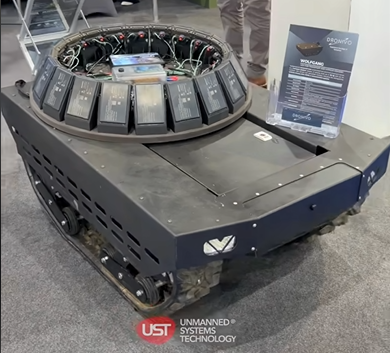
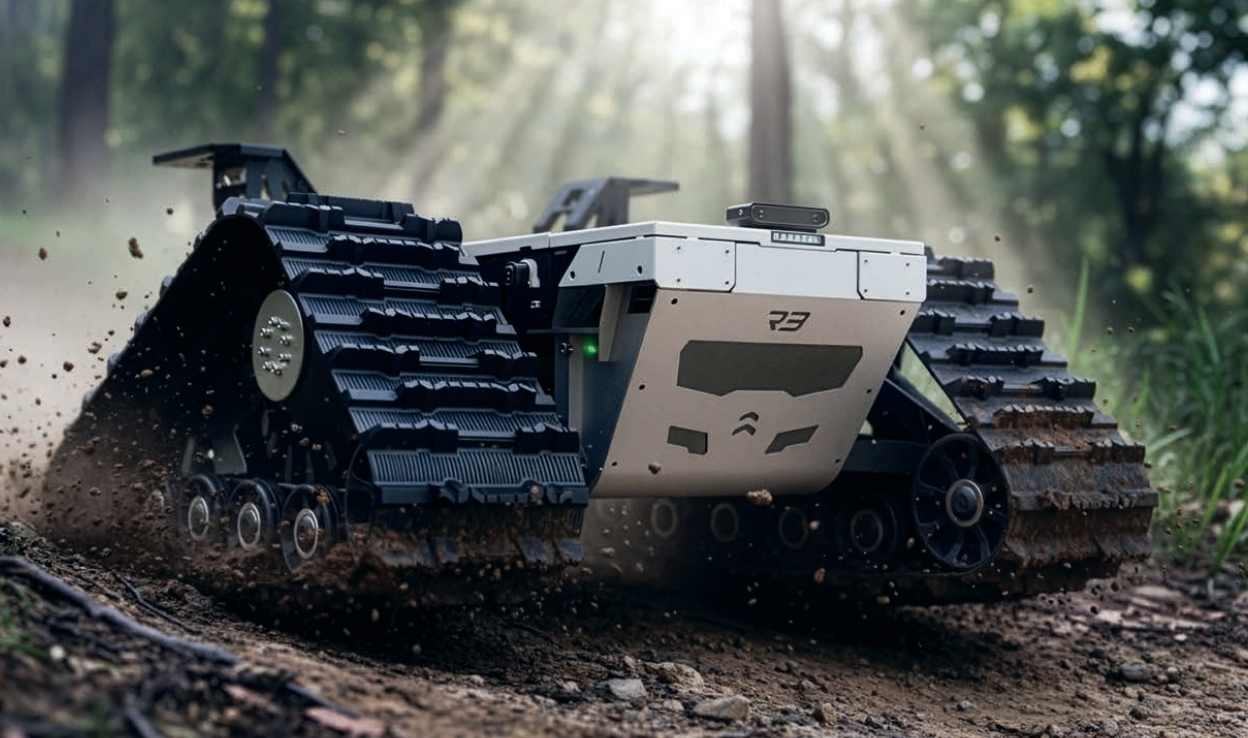
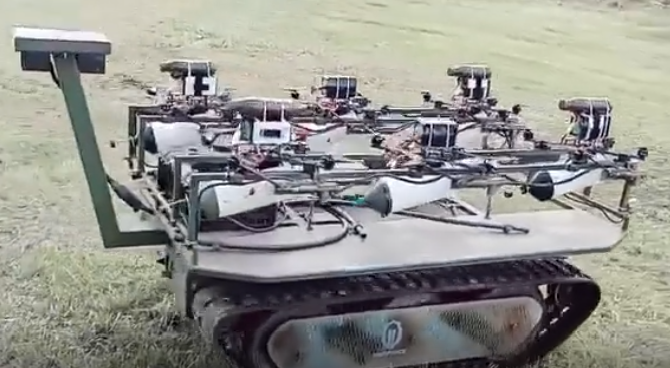
The latest footage of RoboForce's ground-based FPV drone carrier, built around the Golem robotic platform, offers one of the clearest glimpses yet into where modern warfare is heading. At first glance, the concept appears almost disappointingly straightforward: a tracked unmanned ground vehicle transporting six FPV drones closer to the battlefield while the operators remain safely behind.
Yet beneath that simplicity lies a potentially transformative military idea.
Move the drones forward.
Don't move the pilots.
That single principle may define the next generation of combat operations.
For years, drone warfare has been constrained by a fundamental problem. While FPV drones have become increasingly lethal and inexpensive, their operators often have to position themselves dangerously close to the front line to maintain communications and effectiveness. The closer the drone, the greater the risk to the pilot.
RoboForce's solution attacks that vulnerability directly.
The carrier becomes a mobile launch platform, communications extension node, logistics vehicle, and force multiplier all at once. Instead of exposing highly trained operators to artillery, surveillance drones, and electronic warfare systems, the robot takes the risk.
Machines move forward.
Humans stay alive.
That trade-off is becoming one of the most important strategic equations in modern warfare.
The newly circulating footage highlights the six-drone configuration in greater detail than previously seen. The setup resembles a ground-based aircraft carrier stripped down to its most essential function: delivering strike assets exactly where they are needed.
There are no runways.
No hangars.
No flight decks.
Just six attack drones waiting to launch.
The comparison may sound exaggerated, but conceptually it fits. Throughout history, military power has often depended on extending the reach of weapons systems. Aircraft carriers projected air power across oceans. Today, robotic carriers are beginning to project drone power across contested terrain.
And they are doing it for a fraction of the cost.
This matters because the economics of warfare are changing faster than military doctrines can adapt.
A traditional armored vehicle can cost millions. A robotic platform carrying several FPV drones can threaten far more expensive targets for a tiny percentage of that price. Every time a low-cost system destroys a high-value asset, centuries of military assumptions are challenged.
The battlefield is no longer rewarding size.
It increasingly rewards adaptability.
The implications extend beyond a single robotic carrier.
What happens when one carrier becomes ten?
What happens when ten become one hundred?
What happens when autonomous ground vehicles begin transporting attack drones, reconnaissance drones, electronic warfare payloads, and resupply packages simultaneously?
The answer is a battlefield saturated with machines where distance, exposure, and manpower are measured differently than ever before.
Future military operations may resemble networks rather than formations.
Robots carrying drones.
Drones guiding artillery.
Sensors feeding artificial intelligence.
Human operators directing the process from safer locations kilometers away.
The RoboForce carrier provides a glimpse of that reality.
Its most radical feature is not technical sophistication. It is operational simplicity.
Military innovations often fail because they are too complicated, too expensive, or too difficult to scale. The brilliance of this concept lies in its practicality. It requires no revolutionary physics, no classified breakthroughs, and no futuristic technology.
It simply combines existing capabilities in a smarter way.
History repeatedly shows that such innovations are often the most dangerous.
The tank wasn't revolutionary because of any single component. The smartphone wasn't revolutionary because of one technology. Both succeeded because they combined existing technologies into systems that fundamentally changed behavior.
The same dynamic may be emerging here.
The Robot Carrier is not merely transporting drones.
It is transporting a new idea.
An idea that the future battlefield will favor those who can project robotic systems forward while keeping people farther away from the danger.
As militaries worldwide study the lessons of Ukraine, they may discover that the most important weapon is not the FPV drone itself.
Nor is it the robot carrying it.
It is the realization that tomorrow's combat power will belong to those who can separate human risk from battlefield reach.
The aircraft carrier of the future may never leave the ground.
And that should make military planners pay very close attention.
%20(1)%20(1).jpg)