The 80% Drone Hit-Rate Myth. Ukraine’s Real Advantage Is More Interesting
Watch enough combat footage from Ukraine and you could easily reach one conclusion:
FPV drones almost never miss.
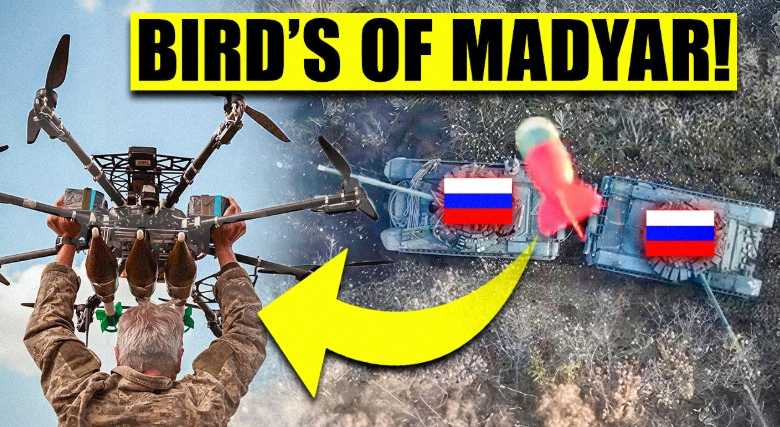
Videos show drones flying through windows, chasing vehicles, entering bunkers and striking moving targets with extraordinary precision.
Then comes the statistic: elite operators can reportedly achieve 70–80% mission success.
There is just one problem.
That is not what the broader battlefield data show.
The number is closer to 40%
One of the strongest public datasets comes from Ukraine’s Unmanned Systems Forces.
In July 2025, the USF reported 29,172 FPV drones used and 11,538 resultative strikes—39.6%.
A much larger dataset available by August 2026 recorded 389,856 affected targets from 965,921 strike missions.
Again: approximately 40 effects for every 100 strike missions.
July 2026 data produced a similar figure of roughly 42 per 100.
That does not mean “FPVs have a 40% hit rate.”
A drone must work, launch, reach the target area, maintain communication, find its target, survive countermeasures, complete its attack, hit correctly and create sufficient damage.
Each stage can fail.
What the data provide is something more useful: an approximate measure of how often tactical strike employment produces a recorded operational effect.
And that distinction changes how we should think about drone warfare.
So where does 80% come from?
Elite operators really can perform dramatically better.
One Ukrainian trainer estimated mission success at approximately 20% for new operators, 40–50% for intermediate crews and 70–80% for the best operators.
Both statements can therefore be true:
An elite pilot can achieve 80%.
An entire force can average around 40%.
The mistake comes when exceptional performance is presented as normal battlefield performance.
Social media makes this distortion even stronger.
Nobody uploads thousands of drones losing signal, failing to acquire a target or crashing into a tree.
We watch the spectacular successes.
We rarely watch the denominator.
Fiber optics don't magically solve the problem
Even fiber-optic FPVs illustrate this.
Removing the radio link makes conventional RF jamming far less relevant, but fiber introduces its own problems: broken cables, trees, power lines, terrain, wind and routing constraints.
Operator estimates cited in the research put strong practical fiber-FPV performance around 40–50%.
Technology doesn't eliminate the failure chain.
It changes it.
But here comes the counterintuitive part
A 40% effectiveness rate can be devastating.
Imagine System A succeeds 80% of the time but can perform only 100 missions per month.
That produces 80 effects.
System B succeeds only 40% of the time but performs 10,000 missions.
That produces 4,000.
Which system changes the battlefield?
The second one—by an enormous margin.
And this may be the more important story of Ukraine’s drone evolution.
Between 2025 and 2026, the tactical effectiveness percentage apparently improved only modestly.
But mission volume exploded.
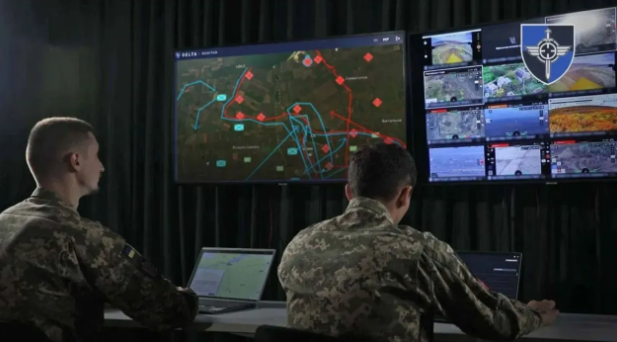
Ukraine expanded FPV operations, middle strike, deep strike, counter-UAS missions and interceptor drones while simultaneously building increasingly sophisticated digital systems for recording battlefield outcomes.
Its Mission Control workflow was processing roughly 50,000 missions and more than 230,000 reports every week by summer 2026.
The learning machine may therefore matter more than the individual flying machine.
Every mission generates information.
What worked?
What failed?
Which unit performs best?
Which drone works against which target?
Which countermeasure caused failure?
Which manufacturer should receive another order?
That information can flow back into procurement, training and tactics.
So perhaps we have been asking the wrong question.
Not:
“How accurate are Ukraine’s drones?”
But:
“How efficiently can Ukraine convert drones, operators, intelligence, money and battlefield data into military effects?”
Because the revolution in drone warfare may not be an FPV that hits 80% of the time.
It may be a military system capable of launching thousands, accepting that many will fail—and learning from every single one.
The winner may not be the side whose drones miss least.
It may be the side that learns fastest from every miss.