The 3D Factory That Fits in a Room
For generations, industrial warfare was easy to recognize.
Massive factories produced tanks, artillery shells, aircraft and armored vehicles. National power was measured in steel, concrete and production lines stretching across entire cities. Industrial mobilization meant giant state facilities running around the clock.
Ukraine is rewriting that definition.
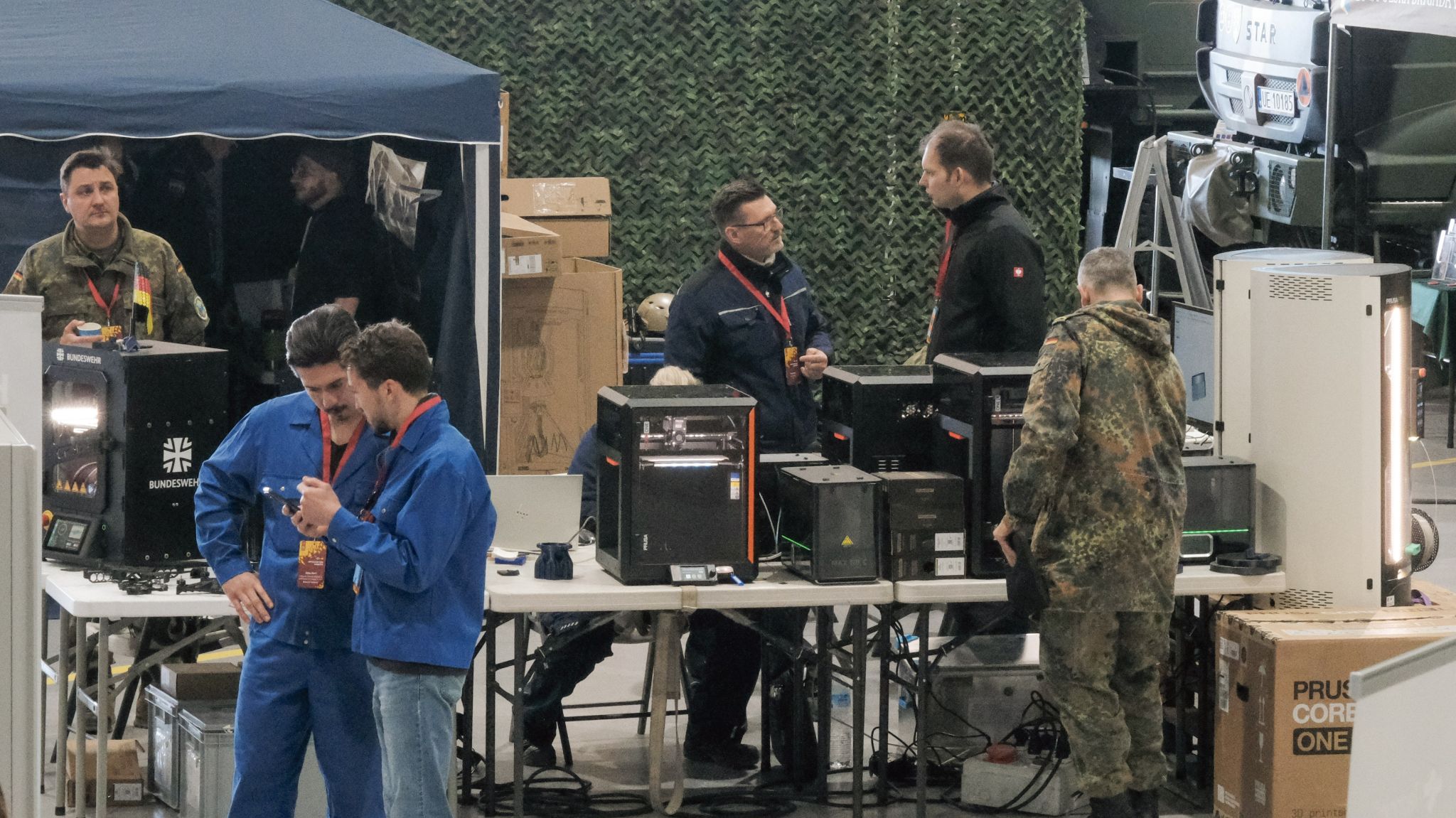
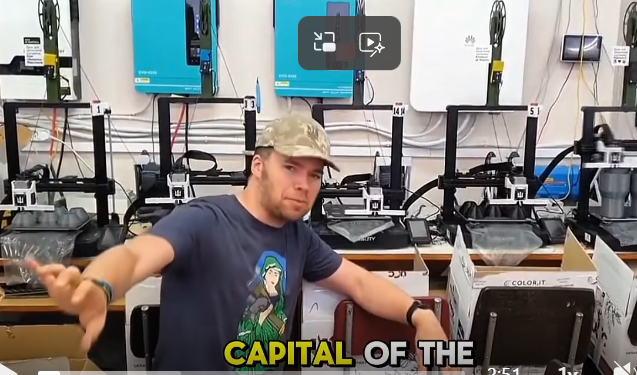
Somewhere in Kyiv, at an undisclosed location for obvious reasons, 46 consumer-grade 3D printers are doing something that would have seemed almost absurd to military planners a decade ago.
They are helping sustain a war effort.
Not as a side project.
Not as a novelty.
As part of the frontline supply system itself.
The image is striking because it forces us to confront an uncomfortable reality:
The future battlefield may depend less on giant factories and more on distributed manufacturing networks that fit inside ordinary rooms.
The war in Ukraine has become famous for drones, artificial intelligence, electronic warfare and autonomous systems. But behind every technological revolution there is a less glamorous question:
Who builds the parts?
The answer is increasingly unexpected.
Engineers.
Volunteers.
Makers.
Civilian innovators.
People operating technologies once considered hobbies.
A 3D printer was originally marketed as a tool for enthusiasts, designers and small businesses. It was supposed to create prototypes, replacement components and personal projects.
Today, those same machines are producing parts destined for one of the world's most intense conflicts.
The line separating civilian innovation and military capability has become remarkably thin.
That may be one of the most important lessons emerging from Ukraine.
The democratization of manufacturing is changing warfare just as profoundly as the democratization of drones.
For decades, producing military equipment required enormous barriers to entry. Specialized facilities, large capital investments, industrial-scale machinery and long production cycles limited who could contribute to national defense production.
Additive manufacturing is weakening those barriers.
A spool of filament becomes a component.
A component becomes part of a system.
A system reaches the front line.
The process is astonishingly direct.
There are few layers of bureaucracy.
Few warehouses.
Few procurement cycles measured in years.
In some cases, there is simply a design file, a printer and someone willing to keep the machine running.
The implications go far beyond Ukraine.
Traditional military logistics were built around centralized production. Efficiency favored concentration. Factories became bigger, supply chains became longer and manufacturing moved further away from the battlefield.
Modern warfare is increasingly challenging that model.
A distributed printing network possesses characteristics that military planners increasingly value:
Resilience.
Adaptability.
Speed.
If one facility is disrupted, production continues elsewhere.
If operators request a modification, digital files can be updated immediately.
If demand changes, printers can switch tasks almost instantly.
The result is not a replacement for traditional industry.
It is something different.
A parallel industrial layer capable of responding at wartime speed.
This is where many observers underestimate the significance of Ukraine's experience.
The story is not really about 46 printers.
It is about the emergence of a new industrial philosophy.
The idea that production can move closer to the point of need.
The idea that innovation can emerge from networks rather than institutions.
The idea that manufacturing power can be distributed rather than concentrated.
For military organizations, this creates both opportunities and challenges.
How do procurement systems interact with rapidly evolving designs?
How do armed forces certify components produced by decentralized networks?
How do traditional defense manufacturers compete with innovation cycles measured in days rather than years?
These questions are no longer theoretical.
They are already appearing on the battlefield.
The war in Ukraine continues to demonstrate that technological advantage is increasingly created through adaptation rather than scale alone.
A printer farm does not resemble a traditional defense factory.
It does not have assembly lines hundreds of meters long.
It does not produce tanks or fighter aircraft.
But warfare in 2026 looks nothing like the industrial wars of the twentieth century.
The modern battlefield rewards speed, flexibility and learning.
And sometimes, that means a factory is no longer a giant industrial complex.
Sometimes it is 46 printers working around the clock.
Turning plastic filament into battlefield capability.
One layer at a time.