Singular Aircraft’s Deal with Zenith Signals a New Phase for Europe’s Drone Industry
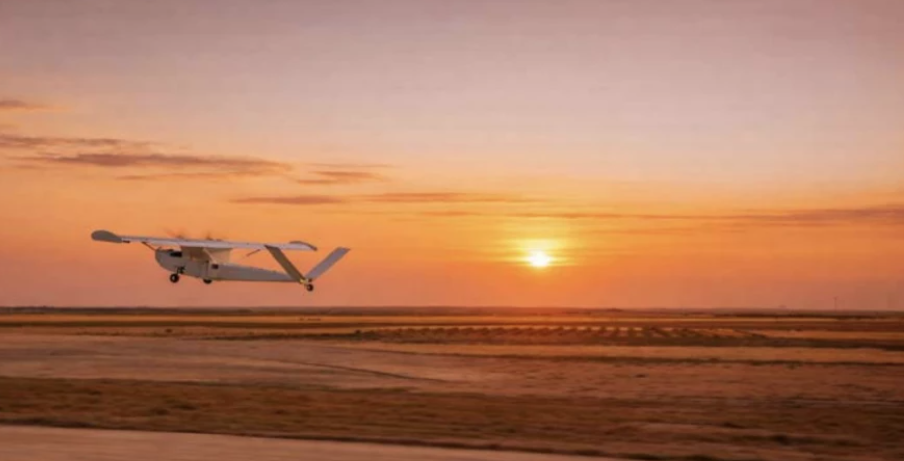
Europe’s drone sector has been rich in engineering talent but poor in scale. Singular Aircraft’s latest move suggests that equation may be starting to change.
The Spanish company has signed a letter of intent with Zenith Multi Trading DMCC, marking the entry of a majority investor and a decisive turn toward global expansion. It is not merely a financial transaction. It is a signal that autonomous aviation — long constrained by fragmented markets and undercapitalised growth — is entering a more industrial phase.
Singular Aircraft operates in a space that investors increasingly describe as unavoidable: unmanned systems with dual‑use potential, spanning civil applications and defence‑relevant missions. Agriculture, disaster response, logistics, surveillance, and specialised aviation are no longer isolated use cases. They are converging into a single demand profile defined by autonomy, endurance, and rapid deployment.
What makes Singular Aircraft stand out is not only ambition, but structure.
Over more than a decade, the company has developed proprietary aerospace technology with cumulative investment exceeding €24 million — financed entirely from its own resources. In an era dominated by venture‑fuelled growth and dependency on external IP, Singular’s approach is unusually disciplined. Around 80 percent of its production is based on internal intellectual property, allowing tight control over its industrial processes and product evolution.
That control translates into readiness. With an annual production capacity of roughly 25 to 28 aircraft, Singular Aircraft is no longer a laboratory‑scale innovator. It sits at the threshold where scaling becomes a question of capital, supply chains, and market access — precisely where strategic investors matter.
Zenith’s interest reflects a broader pattern. International capital is increasingly drawn to autonomous systems not because they are fashionable, but because they solve structural problems. Labour shortages, environmental constraints, and security concerns are pushing both governments and commercial operators toward unmanned solutions that reduce risk and increase efficiency.
The partnership explicitly targets dual‑use technologies. That matters. Markets with the strongest growth today are those where regulatory, operational, and security needs overlap. Disaster response platforms prove techniques later adopted for defence. Agricultural monitoring feeds into border surveillance. Firefighting payloads validate mission‑critical reliability in extreme environments.
Singular Aircraft has already demonstrated operational maturity in demanding contexts, including aerial water‑release missions. These are not marketing demonstrations. They are real‑world validations that systems can perform under pressure — a differentiator increasingly valued by global customers.
The deal is also about people and organisation.
With a multidisciplinary team of more than 45 specialists across software, hardware, avionics, and manufacturing, Singular Aircraft has deliberately built an end‑to‑end capability. That internal coherence enables faster design cycles and tighter integration — essential traits in a sector where mission requirements evolve faster than certification frameworks.
Zenith, for its part, is using the operation to rebalance its portfolio toward scalable, technology‑driven manufacturing models with recurring service potential. Drones are not a one‑off product business. They create ecosystems of maintenance, data, upgrades, and training — exactly the kind of long‑tail value institutional investors increasingly seek.
The timing is telling.
Across Europe, policymakers speak of strategic autonomy in aerospace and defence. Yet industrial reality often lags behind rhetoric. Singular Aircraft’s move shows what autonomy actually looks like in practice: proprietary technology, controlled production, and partners willing to fund scale — not just prototypes.
This agreement does not instantly create a European drone champion. But it does mark a transition from promise to platform. In a global drone market increasingly shaped by geopolitical pressure, supply‑chain trust, and operational credibility, that shift matters.
Scale is the next battlefield for autonomous aviation.
Singular Aircraft has just chosen to enter it.


.png)