ADS – Air Defence Shield. The Startup That Beat Software and Cybersecurity

For years, startup competitions followed a familiar script.
Artificial intelligence attracted investors. Software companies promised disruption. Fintech entrepreneurs chased the next unicorn. Cybersecurity startups dominated technology conferences with increasingly sophisticated solutions.
Then something changed.
At the FLIGHT Accelerator 2026 Final in Schweinfurt, a startup focused on counter-drone technology claimed first place, outperforming competitors from software, cybersecurity, and consumer technology sectors.
The winner wasn't building another productivity app.
It wasn't creating a social platform.
It wasn't chasing digital advertising revenues.
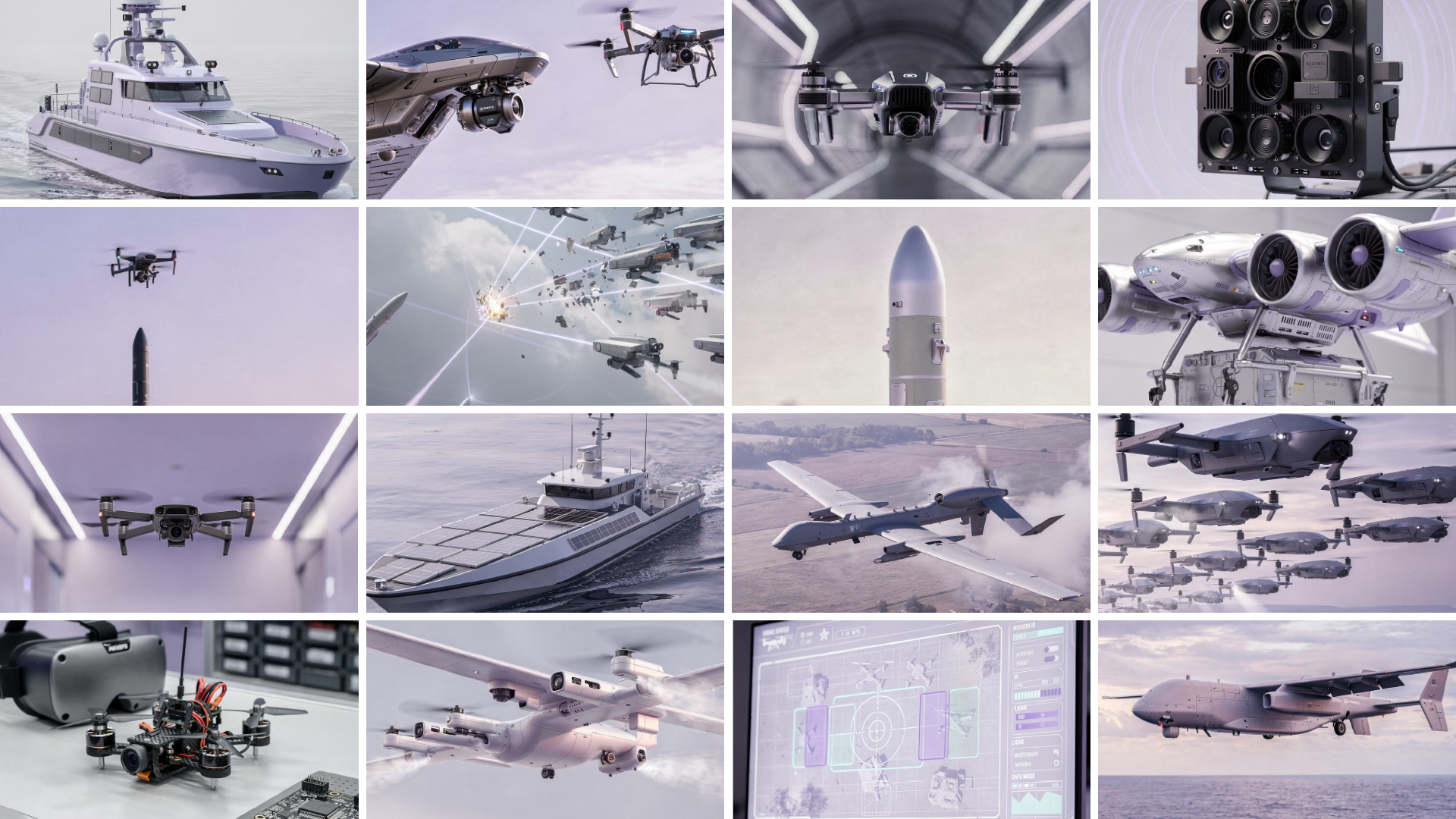
Instead, ADS – Air Defence Shield won with a modular drone-defense system featuring AI-powered target detection.
That outcome says a great deal about where Europe's innovation priorities are heading.
The World Has Entered the Drone Era
Until recently, drones were viewed primarily as tools.
Today, they are strategic assets.
Across military operations, critical infrastructure, logistics networks, airports, public events, and industrial facilities, unmanned aerial systems have become part of daily reality.
But where drones proliferate, new challenges emerge.
Unauthorized airspace incursions.
Surveillance threats.
Attacks on infrastructure.
Swarm scenarios.
The result is the rapid growth of an entirely new sector: counter-drone technology.
What was once a niche corner of the defense industry is becoming one of the hottest areas in security innovation.
The success of Air Defence Shield reflects this larger trend.
A Startup Solving Tomorrow's Problem Today
The concept behind ADS is deceptively simple.
Detect a threat.
Identify it.
Track it.
Neutralize it.
In practice, however, this challenge is among the most complex problems in modern security.
Drone threats evolve continuously. New aircraft appear every month. Communication protocols change. Flight behavior becomes increasingly sophisticated.
Traditional air-defense systems were designed for aircraft, helicopters, and missiles—not inexpensive drones costing a fraction of the interceptor used to stop them.
This mismatch is driving enormous demand for smarter, more flexible solutions.
By focusing on modularity and AI-supported target acquisition, Air Defence Shield is targeting precisely the problem that governments, industries, and security agencies increasingly face.
A Reflection of Europe's New Priorities
The victory comes at a fascinating moment.
Across Europe, defense and dual-use technologies are entering the innovation mainstream.
The European Innovation Council recently opened significant funding opportunities for defense and dual-use startups. Governments are expanding security-related research programs. Venture capital firms that once avoided defense are becoming increasingly active in the sector.
The shift is not accidental.
Russia's war against Ukraine, growing geopolitical tensions, threats to critical infrastructure, and the rapid expansion of drone technology have fundamentally changed the innovation landscape.
Security is no longer viewed as a separate category.
It is becoming a core component of technological development.
The success of ADS demonstrates that startup ecosystems are adapting to that reality.
More Than Just Defense
Perhaps the most interesting aspect of modern counter-drone technology is that its applications extend far beyond military environments.
Airports require protection from unauthorized aircraft.
Energy companies must secure critical infrastructure.
Sports venues need airspace monitoring.
Industrial sites increasingly face aerial security challenges.
Ports, logistics hubs, government facilities, and transportation networks all share similar concerns.
The technologies developed for drone defense often create value across multiple civilian sectors.
This is the essence of dual-use innovation: solutions designed for security that simultaneously generate commercial opportunities.
Why FLIGHT Matters
Winning a startup competition is only the beginning.
The true value of programs like FLIGHT lies in the ecosystem they create.
During sixteen intensive weeks, participating founders refined business models, validated market opportunities, strengthened their positioning, and gained access to mentors, regional networks, and practical expertise.
For emerging startups, these connections can prove just as valuable as prize money.
Innovation rarely succeeds in isolation.
It grows through collaboration.
The nearly 90 supporters contributing to FLIGHT 2026 demonstrate the increasingly sophisticated startup infrastructure emerging across Germany's regions.
A Signal for the Future
The most provocative takeaway from Schweinfurt is not who won.
It is why they won.
The innovation economy is changing.
For much of the past decade, entrepreneurs focused primarily on convenience, efficiency, and digital transformation.
Today's challenges are different.
Resilience.
Security.
Sovereignty.
Critical infrastructure protection.
Autonomous systems.
These themes increasingly define investment flows and innovation priorities.
The victory of Air Defence Shield suggests that Europe's next generation of breakthrough startups may not emerge solely from consumer technology or enterprise software.
They may come from founders solving the difficult problems of security, autonomy, and defense.
And if FLIGHT Accelerator 2026 is any indication, that future is already arriving faster than many people realize.