Rohde & Schwarz THORIS. The Future of Counter-Drone Warfare Isn't a Jammer - It's a Brain
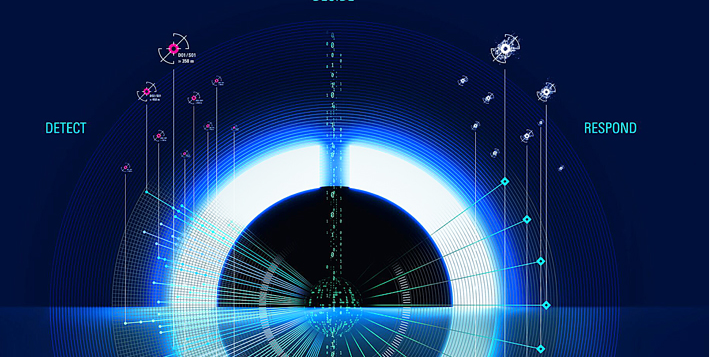
At Eurosatory 2026, Rohde & Schwarz demonstrated that the future of counter-drone operations may no longer depend on a single sensor or a single interceptor. Instead, it may depend on something much more powerful: intelligent sensor fusion.
The company's latest solution, THORIS, represents a new generation of modular Counter-UAS (C-UAS) architecture designed to integrate multiple sensor technologies into one unified operational picture. Rather than replacing existing systems, THORIS acts as the central "brain" that gathers, analyzes and distributes information across the entire defense network.
This reflects an important shift in modern battlefield thinking.
Today's drone threats are extremely diverse. Small FPV drones, commercial quadcopters, autonomous UAVs, fixed-wing reconnaissance aircraft and coordinated drone swarms all present different signatures and require different response methods. No single sensor can reliably detect every threat.
THORIS addresses this challenge through multi-sensor fusion.
The platform combines radio frequency (RF) detection, radar surveillance and electro-optical/infrared (EO/IR) imaging into one common operating environment.
RF sensors rapidly identify drones that communicate with ground controllers.
Radar provides reliable information on range, speed, altitude and trajectory—even when RF emissions are weak or absent.
EO/IR cameras then deliver visual confirmation and continuous target tracking, reducing false alarms while increasing operator confidence.
Instead of forcing operators to monitor multiple independent displays, all sensor information is fused into a single interface, dramatically improving situational awareness and accelerating decision-making.
Perhaps even more significant is THORIS' open architecture.
Unlike closed, vendor-specific systems, THORIS has been designed to remain independent of any particular countermeasure. Once a target has been detected and classified, tracking information can be transferred to various effectors depending on operational requirements.
These may include:
• RF jamming systems
• Electromagnetic attack capabilities
• High-energy laser systems
One notable example is the recently introduced THORIS Laser Combat System, developed in cooperation with TRUMPF. By integrating high-energy laser technology into the broader sensor architecture, operators gain another layer of defense against low-altitude and short-range aerial threats.
This layered approach reflects one of the biggest lessons emerging from recent conflicts.
There is no universal solution to drone warfare.
Electronic attack may defeat one UAV but prove ineffective against another operating autonomously. Kinetic interceptors offer high effectiveness but may be expensive. Directed-energy weapons provide another option under suitable environmental conditions.
Success increasingly depends on selecting the right effector at the right moment.
THORIS appears designed precisely for that mission.
The system is also highly modular. It can be configured as a compact mobile package protecting vehicle convoys or expanded into large fixed installations defending airports, military bases or critical national infrastructure.
Equally important is the emphasis on automation without removing human responsibility.
While THORIS automates detection, tracking and sensor fusion, the final decision to engage remains with a human operator. Maintaining human control over the use of force continues to be an important requirement for many armed forces and aligns with current operational doctrines.
Beyond counter-drone operations, Rohde & Schwarz also demonstrated networked sensor solutions capable of detecting, classifying and geolocating electromagnetic emitters from unmanned ground platforms. Combined with software-defined tactical radios, these systems strengthen secure battlefield communications and improve interoperability among allied forces.
Ultimately, THORIS illustrates a broader transformation in defense technology.
Winning the electromagnetic spectrum is no longer about possessing the best individual sensor.
It is about connecting every sensor, every communication system and every interceptor into one intelligent decision-making ecosystem.
In modern warfare, information superiority increasingly begins with sensor fusion.