Putin's New Target Isn't a General. It's a Kennedy.
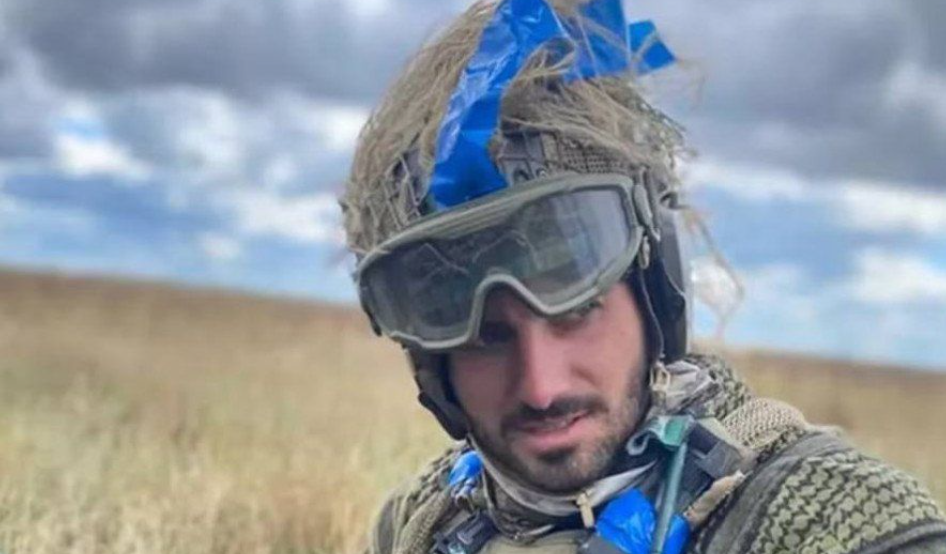
Nearly four years after he quietly volunteered to fight for Ukraine, Conor Kennedy has found himself back on the front line of a different battle.
This time, the weapon isn't a rifle.
It's a courtroom.
A Russian court has authorized the arrest in absentia of Conor Kennedy, son of U.S. Health Secretary Robert F. Kennedy Jr., accusing him of acting as a mercenary while serving with Ukrainian forces. Russian authorities have reportedly placed the 32-year-old American on an international wanted list and say he could face up to ten years in prison if captured.
On the surface, this looks like another legal case.
In reality, it is something far more strategic.
It is the collision of war, politics, symbolism, and international legitimacy.
The Volunteer Russia Never Forgot
Conor Kennedy publicly revealed in 2022 that he had joined Ukraine's International Legion after being deeply affected by Russia's invasion. According to his own account, he had no prior military experience and intentionally concealed his identity from most people around him to avoid special treatment. He later described serving alongside Ukrainian forces in the Kharkiv region and said he had been willing to risk his life for the cause.
What's remarkable is not that Russia objects to foreign volunteers.
Russia has issued similar rulings against citizens of the United States, Britain, Sweden, Colombia, Georgia, and other countries who fought on Ukraine's side.
What's remarkable is the surname.
Kennedy.
Few names carry more political weight in the United States.
Few names are more deeply embedded in twentieth-century geopolitics.
And few names create more headlines.
That is precisely why this story matters.
More Than a Criminal Case
The Kremlin's position is straightforward.
Foreign nationals participating in military operations against Russian forces are often portrayed by Russian authorities as mercenaries rather than lawful military volunteers. The case against Kennedy follows that established narrative. [yahoo.com], [wionews.com]
But geopolitical messaging rarely depends solely on legal arguments.
The arrest warrant arrives at a moment when negotiations surrounding Ukraine remain politically sensitive and international support for Kyiv continues to shape relations between Russia and the West.
By targeting a member of one of America's most recognizable political families, Moscow ensures that the story reaches audiences far beyond military analysts and diplomats.
A court document becomes a geopolitical statement.
The International Legion Effect
The case also highlights an often-overlooked aspect of the war.
Ukraine's International Legion transformed the conflict from a regional war into a global cause for thousands of volunteers.
Some arrived with military experience.
Others did not.
They came from different countries, backgrounds, and political beliefs.
What united them was a decision to fight.
For Russia, those volunteers often represent foreign interference.
For many supporters of Ukraine, they represent international solidarity.
The legal interpretation depends largely on which side of the conflict is speaking.
The political significance, however, is undeniable.
Foreign volunteers have become part of the story of the war itself.
The Shadow of History
There is another layer to this case that makes it unusually symbolic.
The Kennedy name is inseparable from Cold War history.
John F. Kennedy faced the Soviet Union during the Cuban Missile Crisis, one of the most dangerous moments in modern history.
Now, decades later, another Kennedy finds himself targeted by the Russian state in a conflict that has become the largest war in Europe since World War II.
The comparison is imperfect.
The circumstances are entirely different.
But the symbolism is impossible to ignore.
History has a habit of reappearing in unexpected forms.
The Real Message
The practical consequences of the warrant may be limited while Kennedy remains outside Russian jurisdiction.
The political consequences are another matter.
The case sends a broader signal to foreign volunteers considering involvement in Ukraine.
It reinforces Russia's narrative that participation in the war carries legal consequences beyond the battlefield.
At the same time, it reminds the world how internationalized this conflict has become.
The war is being fought in Ukrainian trenches.
But its political shockwaves reach Washington, Moscow, London, Bogotá, Stockholm, and beyond.
And that may be the real story here.
Not that Russia wants to arrest a Kennedy.
But that the war in Ukraine has become so globally intertwined that even one of America's most famous political surnames can unexpectedly become part of it.