Putin Says Russia Has “No Aggressive Plans” for Europe. Europe Has Heard This Kind of Reassurance Before.
Vladimir Putin has a message for Europe:
Russia has no intention of attacking you.
During an hour-long phone conversation with US President Donald Trump on September 8, Putin assured him that Moscow has “absolutely no aggressive plans” toward Europe, according to the Kremlin.
The statement sounds reassuring.
It also sounds uncomfortably familiar.
Because Europe has heard Russian assurances of peaceful intentions before.
Remember 2021?
In late 2021, Russia was assembling an enormous military force around Ukraine.
Satellite imagery showed troops, armor and equipment accumulating near the border. Western governments increasingly warned that Moscow could be preparing for a major invasion.
Russia repeatedly rejected those accusations.
Moscow insisted that Western governments were exaggerating the threat and portraying Russia as an aggressor while the Kremlin publicly denied that it was preparing to invade Ukraine.
Then came February 24, 2022.
Russian forces attacked Ukraine from multiple directions in the largest invasion Europe had witnessed in generations.
That history inevitably changes how today's assurances are received.
“No Aggressive Plans”
According to Kremlin foreign-policy adviser Yuri Ushakov, Putin used his conversation with Trump to reject European concerns about Russian intentions.
The Kremlin's argument is essentially that European governments are exaggerating the Russian threat to justify increasing military expenditure and continuing their support for Ukraine.
Putin reportedly described those concerns as myths.
The timing is significant.
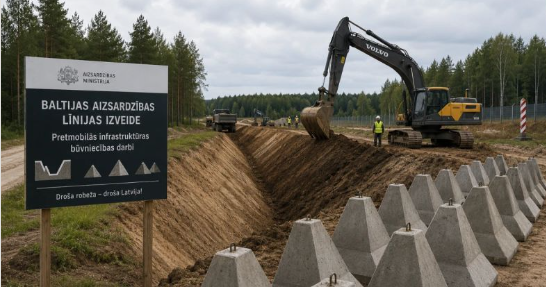
European governments are dramatically increasing defense spending, rebuilding ammunition stockpiles and investing in air defense, drones, long-range weapons and military infrastructure.
Russia, meanwhile, remains engaged in a major war against Ukraine.
So Europe faces a straightforward question:
Should it base its security planning on Moscow's stated intentions—or on demonstrated capabilities and behavior?
Trust Is Now a Strategic Resource
International politics depends partly on credibility.
Governments make statements every day that other governments must decide whether to believe.
But credibility can be destroyed.
Russia's behavior before the full-scale invasion of Ukraine left European governments with a powerful historical reference point: reassuring rhetoric does not necessarily predict subsequent military action.
That does not mean Putin's latest statement proves Russia intends to attack another European country.
It doesn't.
But it does mean European governments have strong reasons to treat verbal assurances differently than they might have before February 2022.
Security policy cannot be built around promises alone.
It must also consider military capabilities, force posture, industrial capacity and previous behavior.
Trump Wants the War Ended
The phone conversation itself was largely focused on attempts to end the war in Ukraine.
According to the Kremlin's account, Trump emphasized his desire to bring the conflict to an end quickly, arguing that peace could open the way toward restoring US-Russian relations and expanding economic ties.
Putin supported that objective in principle.
Yet Russia and Ukraine remain far apart over the fundamental conditions of any settlement.
And while diplomacy continues, missiles and drones continue to fly.
That contradiction is the central reality surrounding every new peace initiative.
Words are moving toward peace.
Weapons are still moving toward targets.
Europe Has a Different Calculation Now
Perhaps the most important consequence of the war is not that Europe believes Russia will necessarily attack NATO.
It is that European governments increasingly believe they cannot afford to discover too late that they were wrong.
That is why ammunition factories are expanding.
That is why air-defense procurement is accelerating.
That is why NATO's eastern members are strengthening their militaries.
And that is why Putin's latest assurance may have precisely the opposite effect from the one intended.
Before February 2022, “Russia does not intend to invade” could still be treated as meaningful reassurance.
After February 2022, European capitals have another data point.
Putin says Russia has no aggressive plans toward Europe.
Maybe it doesn't.
But Europe's emerging security doctrine can increasingly be summarized in four words:
Trust the promise. Prepare anyway.