Printing the Future of Security - How Heidelberger Druckmaschinen AG Is Industrialising Drone Defense
For most of its 175‑year history, Heidelberger Druckmaschinen AG helped distribute information. In 2026, it is positioning itself to protect the infrastructure that carries it.
The launch of ONBERG Autonomous Systems marks Heidelberg’s most visible leap yet into the European defense industry, driven by a rapidly evolving threat landscape where drones have become tools of espionage, sabotage, and hybrid warfare.
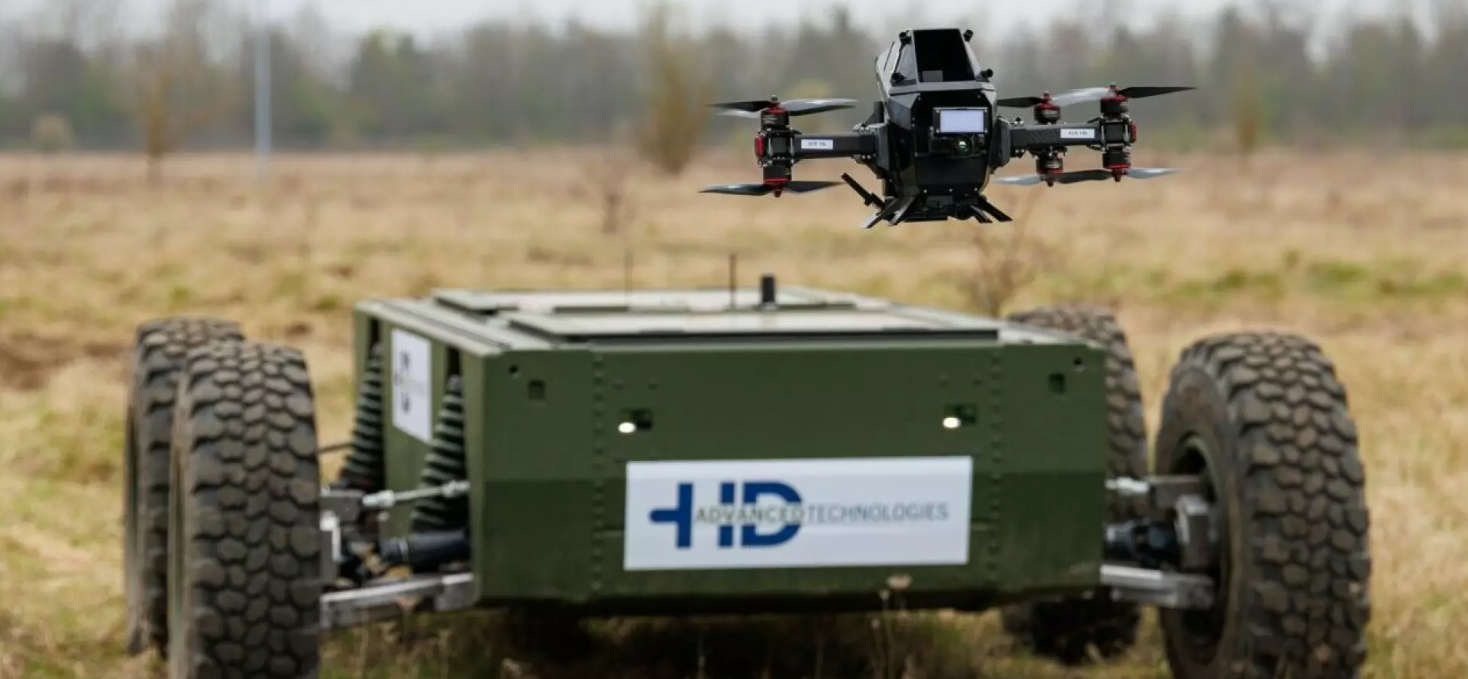
ONBERG is a joint venture between Heidelberg’s subsidiary HD Advanced Technologies and Ondas Autonomous Systems (OAS), an American‑Israeli provider of autonomous aerial security technologies. The operation is headquartered in Brandenburg an der Havel, a site Heidelberg plans to expand into a center of excellence for autonomous defense systems.
At its debut, ONBERG showcased integrated counter‑UAS solutions during a live demonstration for political and industry leaders. The symbolism mattered: Europe is no longer debating whether drone threats are theoretical. It is racing to build defenses at industrial scale.
The ONBERG model is deliberately comprehensive. Instead of offering individual sensors or isolated effectors, the joint venture is pursuing a holistic, layered architecture—melding detection, threat evaluation, and engagement into one autonomous system. According to company statements, this approach replaces the fragmented solutions that have often dominated the counter‑drone market.
Operationally, ONBERG aims to act as a single supplier: developing technology, integrating systems, and manufacturing at scale within Europe. Initial sales focus on Germany and Ukraine, with expansion across the EU planned in later phases.
Why Heidelberg?
The answer lies less in software than in industrial credibility. Heidelberg brings high‑precision manufacturing, supply‑chain management, and the ability to scale complex electromechanical systems—capabilities traditionally associated with heavy industry, not defense start‑ups.
This strategy builds on groundwork laid in July 2025, when Heidelberg signed a strategic MoU with VINCORION Advanced Systems, a company specializing in power and control systems for safety‑critical military and civilian platforms. That agreement marked Heidelberg’s formal entry into defense manufacturing, focusing on industrialisation rather than weapons design.
ONBERG extends that logic into autonomous systems. Ondas contributes battle‑tested counter‑UAS and ISR technologies, while Heidelberg supplies production depth and European manufacturing sovereignty. Executives on both sides frame the venture as a response to regulatory pressure on operators of critical infrastructure and to Europe’s broader push for technological independence in security‑relevant domains.
What makes this move provocative is not that Heidelberg is diversifying—but where it is diversifying. Counter‑drone defense sits at the intersection of civilian protection, military necessity, and industrial policy. It is a market driven less by speculation than by urgency.
In that sense, Heidelberg’s shift is emblematic of a wider transformation: Europe’s industrial champions are no longer content to be suppliers of tools. Increasingly, they are becoming architects of security infrastructure.
For a printing‑press maker, that is a radical rewrite of the company manual.

.jpg)