Pocket Defender - How Sentrycs’ Scout Is Redefining Counter-Drone Power at SOF Week

At SOF Week in Tampa, where special operations meet cutting-edge technology, one message is becoming unmistakably clear: mobility is the new dominance.
And Sentrycs’ Scout system embodies exactly that shift.
In a space traditionally defined by heavy, fixed counter-UAS systems and layered infrastructure, Scout enters as a disruption—a portable, battery-powered, cyber-over-RF solution that challenges conventional assumptions about how drone threats should be neutralized.
Because modern battlefields don’t wait.
From Ukraine to the Middle East, drones have fundamentally reshaped tactical reality. They are cheap, expendable, and everywhere. More importantly, they move faster than procurement cycles and doctrine updates. Countering them requires something equally agile—not just in response time, but in deployment, adaptability, and footprint.
This is where Scout positions itself.
Unlike traditional counter-drone solutions that rely on kinetic interception or large-scale electronic warfare systems, Scout operates in the cyber-over-RF domain. It doesn’t shoot down drones. It takes control of them—detecting, identifying, and mitigating threats through radio frequency manipulation. In operational terms, that means quieter engagements, reduced collateral risk, and a more controlled response.
But the real innovation isn’t just in how Scout neutralizes threats.
It’s in how it moves.
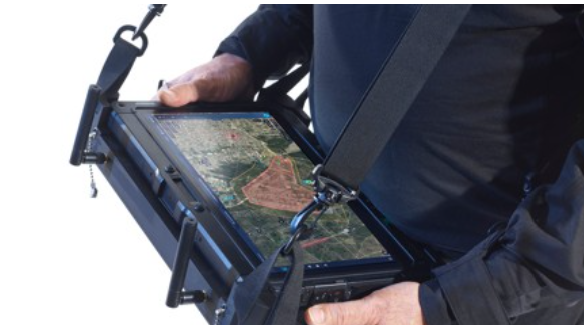
Battery-powered and fully portable, the system is designed for rapid deployment by a single operator. No vehicles. No heavy logistics. No setup delays measured in hours. This reflects a deeper trend in special operations and modern warfare: decentralization. Units are expected to operate independently, move quickly, and maintain tactical awareness in environments where traditional support structures are limited—or non-existent.
Scout turns counter-UAS capability into something a unit can carry, deploy, and rely on instantly.
At SOF Week, that resonates.
Special operations forces are not looking for systems that work only in controlled environments. They need tools that perform in urban density, contested spectrum spaces, and unpredictable conditions. A portable cyber-over-RF system aligns directly with those demands, offering both stealth and precision in environments where visibility can be a liability.
But beyond the operational appeal, Scout reflects a broader evolution in defense thinking.
Counter-drone warfare is no longer about brute force. It is about control—of signals, data, and decision timing. Kinetic solutions still have their place, but they are increasingly complemented, if not replaced, by more sophisticated electronic and cyber approaches. The ability to quietly neutralize a threat without escalating a situation is becoming a strategic advantage.
In that sense, Scout is less a product and more an indicator of where the industry is heading.
The question now is how widely this model will scale.
As militaries and security agencies face an explosion in drone threats—from commercial off-the-shelf systems to increasingly advanced autonomous platforms—the demand for flexible, deployable countermeasures is rising fast. Systems like Scout lower the barrier to entry for effective defense, making advanced C-UAS capability accessible at the tactical edge.
But they also introduce new challenges. Operating in the RF spectrum means navigating increasingly congested environments, managing interference, and ensuring secure, reliable performance under pressure. The effectiveness of cyber-over-RF solutions will depend not just on technology, but on integration, training, and operational doctrine.
Still, the direction is clear.
At SOF Week, amid the noise of innovation and competition, Scout stands out not because it is the biggest system on display—but because it reflects a mindset shift. Lightweight. Fast. Adaptable. Precise.
In a domain where threats are becoming smaller and more unpredictable, defense is following suit.
The age of portable airspace control has arrived.
And it fits in a backpack.