Ondas and DZYNE Technologies Big Bet on Autonomous Warfare. The Drone Arms Race Just Got a New Powerhouse
The defense technology industry is entering a new era.
For years, military innovation focused on building better drones. Longer flight times. Better cameras. More secure communications. Greater automation.
That era is ending.
The new battlefield demands something far more ambitious: integrated autonomous ecosystems capable of finding, tracking, disrupting, protecting, and striking targets across vast operational areas with minimal human intervention.
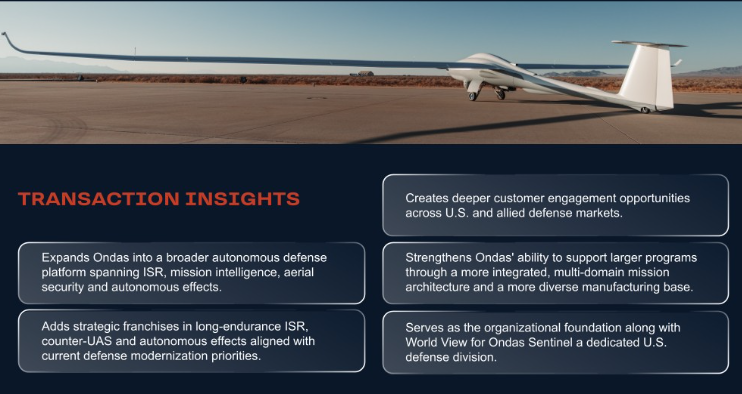
With its acquisition of DZYNE Technologies, Ondas Holdings is making a clear statement.
The company no longer wants to be a drone manufacturer.
It wants to become a full-spectrum autonomy provider.
And in today's rapidly evolving defense environment, that is a much bigger opportunity.
The Shift From Platforms to Ecosystems
Military planners increasingly understand that individual platforms rarely decide modern conflicts.
The decisive factor is how effectively systems work together.
A surveillance drone that can remain airborne for extended periods gains exponentially greater value when connected to electronic warfare systems, counter-drone technologies, autonomous strike capabilities, and real-time intelligence networks.
The acquisition of DZYNE appears designed around exactly this logic.
The addition of long-endurance ISR platforms such as ULTRA and LEAP expands Ondas' ability to provide persistent surveillance across operational theaters. These systems are designed to remain in the air longer, observe larger areas, and deliver intelligence that commanders can act upon immediately.
But intelligence alone is no longer enough.
Military forces increasingly require the ability to identify threats and respond autonomously in real time.
This is where the broader DZYNE portfolio becomes strategically important.
The New Military Formula
The modern defense equation is changing rapidly.
See. Understand. Decide. Act.
Every military force is trying to compress that cycle.
ISR platforms provide the "see" function.
AI-enabled systems support understanding and decision-making.
Autonomous effects platforms deliver action.
The combination creates a self-reinforcing operational architecture capable of functioning at speeds human organizations alone struggle to match.
Ondas appears to be positioning itself directly inside this transformation.
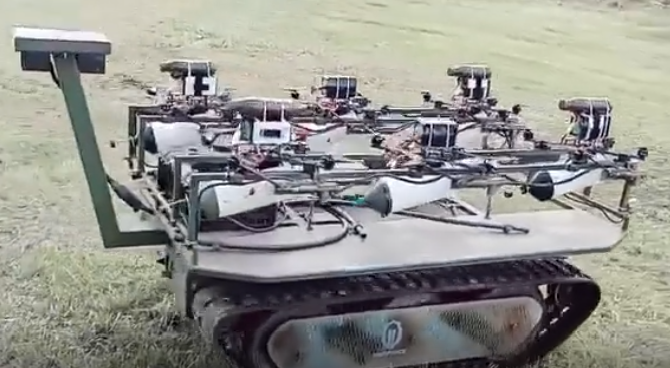
By combining surveillance capabilities with counter-UAS solutions such as Dronebuster and autonomous platforms like Blitz and Grasshopper, the company moves beyond intelligence gathering into operational execution.
That transition mirrors one of the most significant trends visible across Ukraine, the Indo-Pacific, and U.S. defense modernization programs.
The winners of future conflicts may not be those who possess the largest fleets.
They may be those who connect sensors, software, and autonomous systems most effectively.
The Age of Attritable Warfare
Perhaps the most important word in modern defense planning is not autonomy.
It is attritability.
Military strategists increasingly recognize that future conflicts could consume equipment at extraordinary rates. Expensive, exquisite systems remain valuable, but they cannot be everywhere at once.
Attritable autonomous platforms provide a different model.
Instead of relying solely on a small number of costly assets, militaries can deploy larger numbers of affordable systems that are expendable, scalable, and rapidly replaceable.
That concept has become particularly influential within U.S. defense planning.
Programs across multiple military branches are exploring how autonomous platforms can extend operational reach while reducing risk to personnel.
The addition of DZYNE's technologies positions Ondas squarely within that conversation.
Its expanded portfolio now addresses multiple layers of the autonomous battlespace, from intelligence collection to aerial security and autonomous mission execution.
Why This Matters Beyond Ondas
The significance of this acquisition extends beyond a single company.
It reflects a broader transformation underway across the defense sector.
The next generation of military contractors will not be defined by a single aircraft, vehicle, or sensor.
Instead, they will compete to deliver integrated autonomous architectures capable of supporting entire operational campaigns.
Governments increasingly demand systems that can scale quickly, integrate seamlessly, and operate under contested conditions.
Endurance matters.
Autonomy matters.
Rapid deployment matters.
Data superiority matters.
The companies capable of combining all four will gain a significant advantage in future procurement cycles.
A Glimpse of the Future Battlefield
The battlefield emerging today looks profoundly different from the one military planners imagined a decade ago.
Drone swarms. Persistent ISR. Autonomous effects. Counter-drone defenses. AI-assisted mission management.
These are no longer experimental concepts.
They are becoming operational requirements.
Ondas' acquisition of DZYNE is more than a corporate transaction.
It is a reflection of where modern defense is heading.
The race is no longer just about building better drones.
It is about building autonomous ecosystems capable of sensing, deciding, and acting at machine speed.
And that race is accelerating.

.jpg)