Occupation Isn't Peace. The Story of Two Ukrainian Teenagers the World Must Not Forget
Wars are often measured in territory gained or lost, military equipment destroyed, or strategic objectives achieved. Yet behind every front line are individual lives that become symbols of a much larger tragedy.
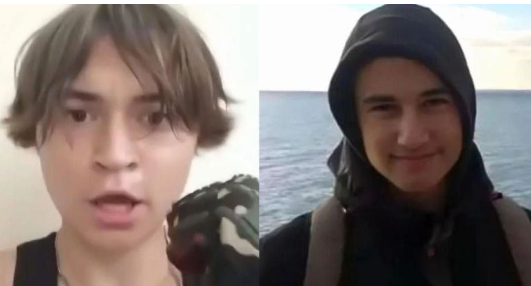
One such story is that of Tigran Ogannisian and Mykyta Khanganov, two Ukrainian teenagers from occupied Berdiansk whose deaths continue to resonate three years later.
According to Ukrainian authorities and human rights reporting, both boys openly expressed pro-Ukrainian views while living under Russian occupation. They reportedly faced detention, interrogation, intimidation and criminal accusations before they were killed in June 2023. Ukraine later posthumously awarded both teenagers the Order of Freedom, recognizing their courage.
Their reported final words—"Glory to Ukraine!"—have become a powerful symbol for many Ukrainians.
Beyond the tragic loss of two young lives lies another painful reality.
Their families have continued to seek information about where the boys' bodies were buried. The absence of clear answers has deepened their grief and illustrates one of the many humanitarian consequences that accompany armed conflict and military occupation.
Stories like this challenge one of the most common simplifications surrounding war.
Occupation is often described in military or geopolitical terms. For civilians, however, it can mean entirely different realities: disrupted education, restricted freedoms, family separation, fear, detention and uncertainty about the future.
Young people are frequently among those most affected.
Whether through displacement, interrupted schooling or direct exposure to violence, children and teenagers often carry the longest-lasting consequences of conflict.
The deaths of Tigran and Mykyta have therefore become more than an isolated incident. They represent, for many Ukrainians, the human cost of occupation and the risks faced by civilians who express political identity under military control.
International organizations have repeatedly emphasized the importance of investigating alleged violations of international humanitarian law and ensuring accountability where crimes against civilians may have occurred. Independent documentation and future judicial processes remain essential to establishing the full facts in individual cases.
At the same time, remembrance itself carries significance.
Names, photographs and personal stories prevent statistics from replacing individual lives. They remind audiences that every conflict is experienced not only by soldiers but also by families, classmates, neighbors and communities.
Three years later, questions remain unanswered.
For the families, the search for truth continues.
For the international community, the broader challenge remains ensuring that allegations involving civilian deaths receive independent investigation and that humanitarian law is respected regardless of which side controls a particular territory.
History is ultimately written not only by military victories but also by whether justice follows tragedy.
For many, remembering Tigran Ogannisian and Mykyta Khanganov is part of that pursuit.