MicaSense from EagleNXT Beyond Human Vision. The Drone Sensor Race Is Entering a New Era
The next battlefield in drone technology is not faster aircraft, longer flight times, or bigger batteries.
It is vision.
And not the kind visible to the human eye.
As the commercial drone industry gathers for Commercial UAV Expo, one message is emerging louder than ever: the future belongs to sensors capable of seeing what humans cannot. The latest generation of multispectral payload technology promises to transform drones from flying cameras into airborne intelligence platforms capable of detecting hidden patterns, measuring biological activity, and delivering actionable insights in real time.
For years, drones have democratized aerial imaging. Construction firms used them to monitor projects. Farmers surveyed fields from above. Utilities inspected infrastructure without putting workers at risk.
But conventional cameras have always faced the same limitation.
They see the world exactly as humans do.
Multispectral sensors change that equation completely.
By capturing data across multiple bands of light beyond the visible spectrum, these systems reveal information invisible to standard cameras. Plant stress appears before leaves change color. Infrastructure degradation becomes detectable before visible damage occurs. Environmental shifts emerge long before they become obvious to field inspectors.
What appears to be a healthy landscape can suddenly reveal hidden vulnerabilities.
What looks like a successful crop can expose areas suffering from water shortages, nutrient deficiencies, or disease.
The implications extend far beyond agriculture.
Energy companies increasingly need earlier warnings about infrastructure failures. Environmental agencies require more precise monitoring capabilities. Mining operators seek greater visibility into changing site conditions. Public safety teams need faster situational awareness during emergencies.
The challenge is no longer collecting data.
The challenge is seeing the right data.
That is why the drone market is rapidly shifting from image acquisition toward intelligence extraction. The value no longer lies in taking photographs. The value lies in understanding what those photographs reveal.
This transition mirrors a broader transformation occurring throughout the technology industry.
Sensors are becoming smarter.
Data processing is becoming faster.
Artificial intelligence is becoming more capable of identifying patterns that humans might miss.
The result is a new generation of drone platforms that function less like cameras and more like analytical instruments.
For operators, that means fewer flights to obtain critical insights. For organizations, it means earlier detection of risks and opportunities. For entire industries, it may fundamentally change how assets, resources, and environments are managed.
Yet technological evolution rarely stands still.
As sensor capabilities improve, expectations rise just as quickly. End users want higher precision, lighter payloads, faster processing, seamless integration, and lower operational costs. The pressure on manufacturers is relentless.
Innovation is no longer optional.
It is survival.
Commercial UAV Expo has long been a barometer for where the industry is heading. This year, growing attention around advanced multispectral payload technology suggests a significant shift in market priorities. Drone operators are asking more sophisticated questions. Enterprises are demanding deeper insights. Decision-makers increasingly care less about imagery and more about intelligence.
The winners in this race will not simply build better drones.
They will build better eyes.
Eyes capable of turning invisible signals into business decisions.
Eyes capable of transforming millions of data points into clear operational advantages.
Eyes capable of revealing a world hidden in plain sight.
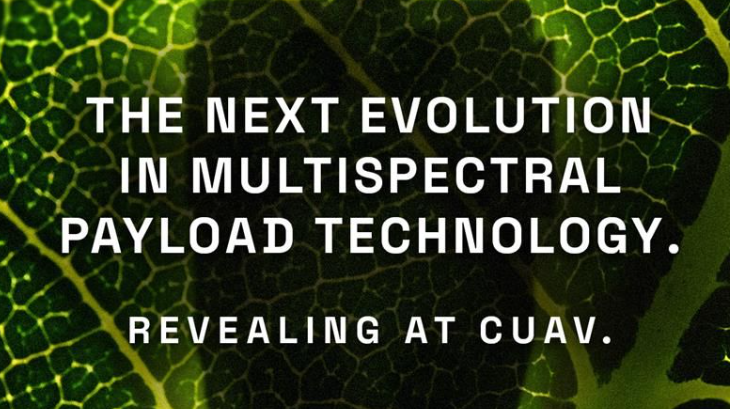
The next evolution in multispectral payload technology is not about taking better pictures.
It is about redefining what it means to see.
And for an industry built around aerial perspective, that may be the most disruptive innovation of all.