IPET Systems I7. Why Endurance Is Becoming the Most Valuable Weapon in the Sky
In the drone industry, attention often gravitates toward artificial intelligence, autonomous navigation, advanced sensors, and sophisticated payloads.
But none of those capabilities matter if the aircraft cannot stay in the air long enough to complete its mission.
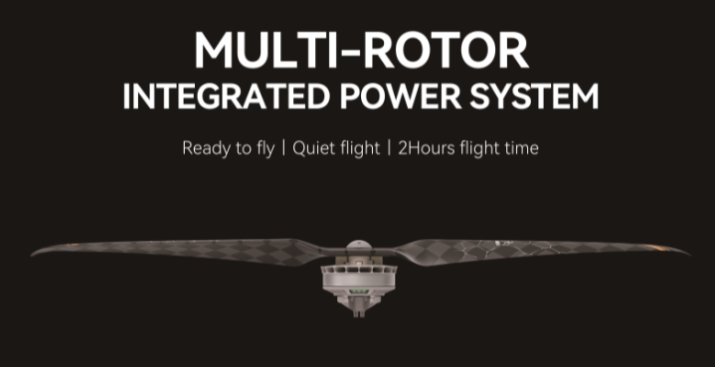
That reality is driving a quiet revolution in drone propulsion, and systems like IPET's Integrated I7 Motor are emerging at the center of the industry's next technological battleground: endurance.
For years, UAV manufacturers competed primarily on flight controllers, imaging capabilities, communication systems, and software innovation. Today, however, commercial operators, public safety agencies, industrial inspectors, logistics providers, and defense organizations face a different challenge.
Flight time.
Every additional minute in the air translates into greater operational effectiveness, broader coverage areas, reduced deployment costs, and improved mission success rates. In the professional UAV sector, endurance is no longer a technical specification. It is rapidly becoming a competitive advantage.
The Integrated I7 Motor System appears designed specifically for this challenge.
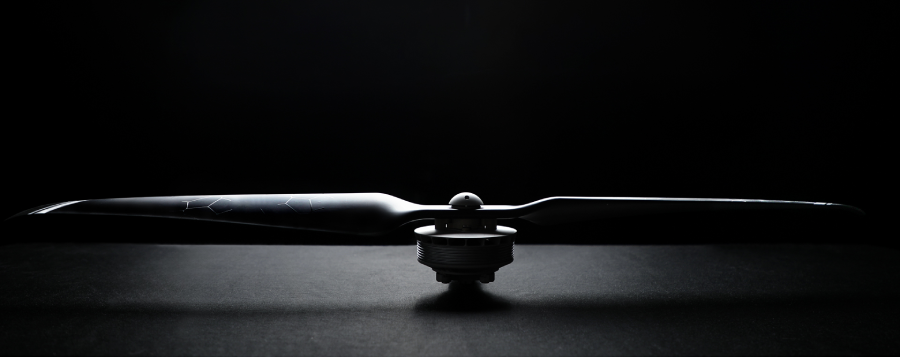
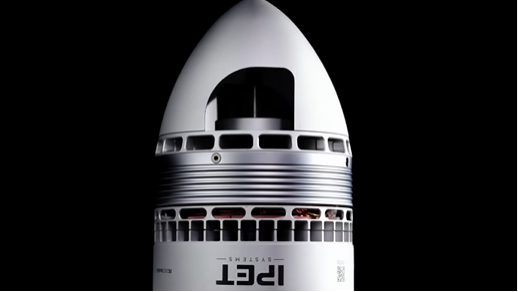
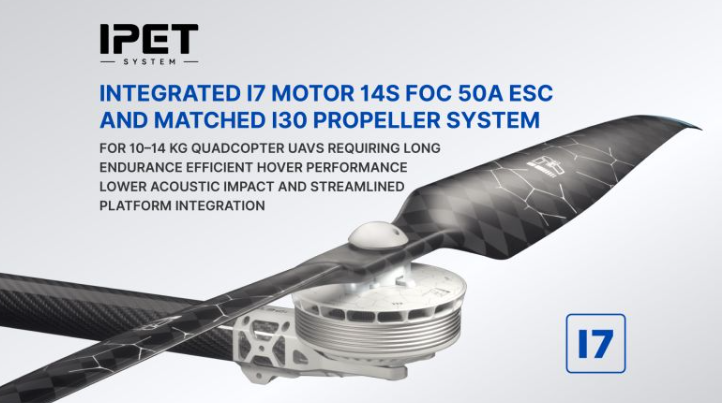
Targeted at quadcopter UAVs in the 10-14 kg class, the system combines a motor, electronic speed controller, and matched propeller architecture into a unified solution optimized for efficiency and reliability. Instead of treating propulsion as a collection of separate components, the approach focuses on system-level integration.
That may sound like an engineering detail.
In reality, it could be a market-defining trend.
The aviation industry learned decades ago that performance improvements emerge when critical subsystems are engineered together rather than independently. Drone manufacturers are increasingly reaching the same conclusion.
An integrated propulsion platform promises several advantages.
Reduced weight.
Improved energy efficiency.
Streamlined installation.
Enhanced reliability.
Better overall performance.
For professional UAV operators, particularly those conducting repeated daily missions, these incremental gains can generate significant operational benefits over time.
The market driving this demand is expanding rapidly.
Industrial inspection drones survey pipelines, power lines, solar farms, and telecommunications infrastructure. Emergency responders rely on UAVs for search-and-rescue operations and disaster assessment. Agricultural operators monitor vast areas of farmland. Logistics companies continue exploring autonomous delivery solutions.
Across all these applications, endurance determines mission value.
The longer a platform can remain airborne, the fewer launch cycles are required, the lower maintenance burden becomes, and the greater the return on investment.
Noise reduction is also becoming increasingly important.
As drones move closer to populated environments, acoustic signatures are attracting greater scrutiny from regulators, enterprise customers, and local communities. Lower acoustic impact can improve operational acceptance while expanding deployment opportunities in urban and industrial settings.
This is where propulsion innovation intersects with broader market requirements.
Performance today involves more than thrust.
Operators demand efficiency.
Authorities demand safety.
Communities demand lower noise.
Organizations demand reliability.
Meeting all these requirements simultaneously has become one of the drone sector's greatest engineering challenges.
The specifications highlighted for the I7 system suggest that manufacturers increasingly recognize that professional UAV users want complete solutions rather than isolated components. The integrated architecture reflects a broader shift toward simplifying deployment while improving operational consistency across fleets.
That shift mirrors developments seen in other technology sectors.
Customers no longer purchase individual parts.
They purchase outcomes.
A drone operator does not buy a motor merely to generate lift. The operator buys aerial productivity, mission readiness, and operational efficiency.
As the UAV industry matures, propulsion systems may become one of the most decisive differentiators separating commercial-grade platforms from truly professional mission-critical aircraft.
The companies that master endurance, reliability, efficiency, and integration will likely define the next generation of unmanned aviation.
Because in a crowded market filled with sensors, software, and artificial intelligence, one truth remains unchanged:
The drone that stays airborne longer often wins.
And the race for endurance is only just beginning.