Lantronix, Teledyne FLIR OEM, and Gremsy Are Turning Edge AI into a Standard Feature
Lantronix’s collaboration with Teledyne FLIR OEM and Gremsy is a clear signal of where the market is heading: toward software-defined, AI-native drones built on standardized, compliant, production-ready compute platforms.
Not prototypes.
Not lab demos.
Deployable systems.
From Payload-Centric to Compute-Centric Drones
Modern UAV missions increasingly depend on what happens onboard rather than after landing.
Object detection.
Target classification.
Thermal-visual fusion.
Tracking.
Autonomous navigation.
Edge analytics.
All of these require real-time processing at the sensor edge.
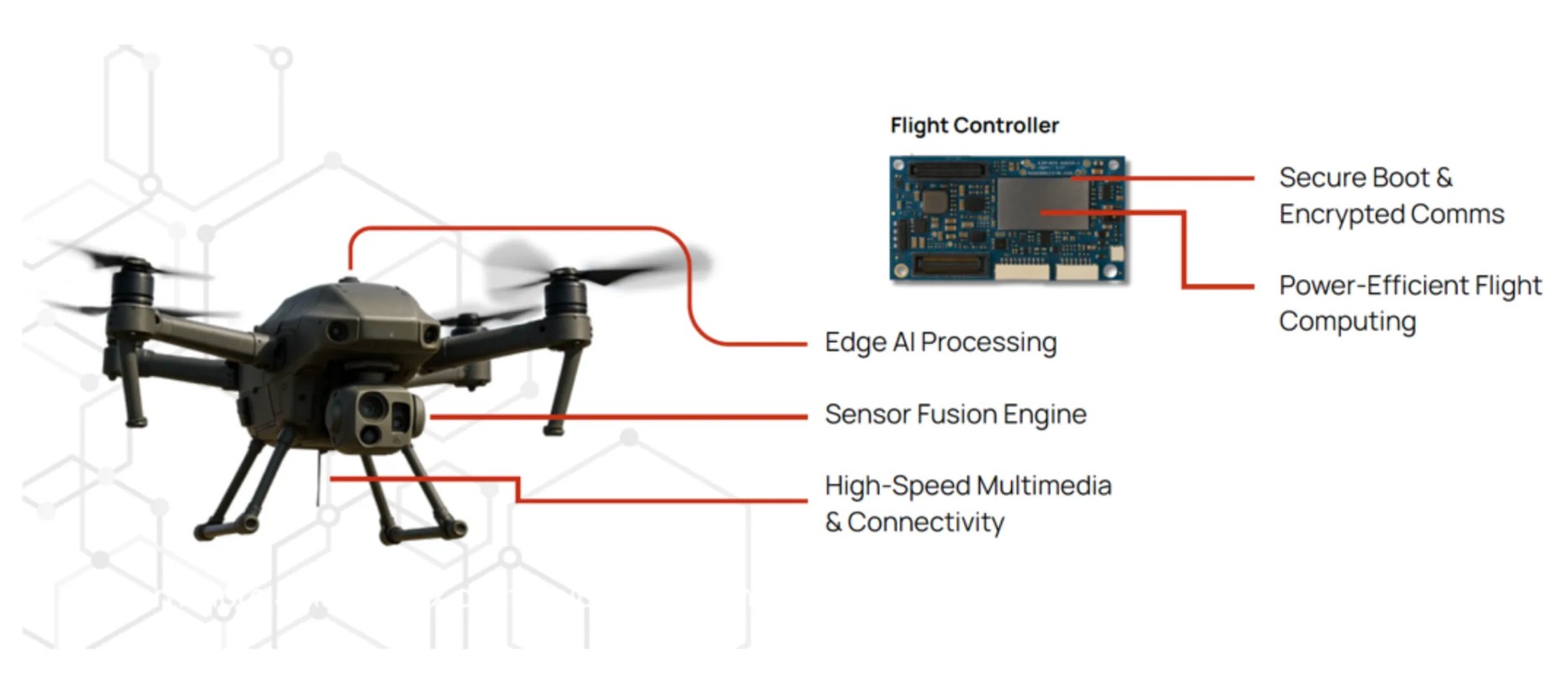
Lantronix’s Open-Q System-on-Modules (SOMs), including the Open-Q 5165RB and 8250CS families, provide the compute backbone for this transition. Based on Qualcomm QRB5165 and QCS8250 processors, they deliver up to 15+ TOPS of on-device AI while remaining low-SWaP (size, weight, and power) optimized.
This is the difference between a drone that records video and a drone that understands what it sees.
Why Compliance Now Shapes Architecture
Drone OEMs face an unusual constraint.
They must innovate fast.
And they must comply with NDAA/TAA regulations.
These two goals often clash.
Lantronix’s Open-Q SOMs address this directly by offering production-ready, NDAA/TAA-compliant compute platforms. For OEMs, this removes a major barrier:
No need to redesign hardware late in development.
No last-minute compliance surprises.
No supply-chain uncertainty.
Compliance becomes a built-in property, not an afterthought.
That alone can shave months off development timelines.
Vision That Thinks: Teledyne FLIR OEM
Sensors are no longer passive components.
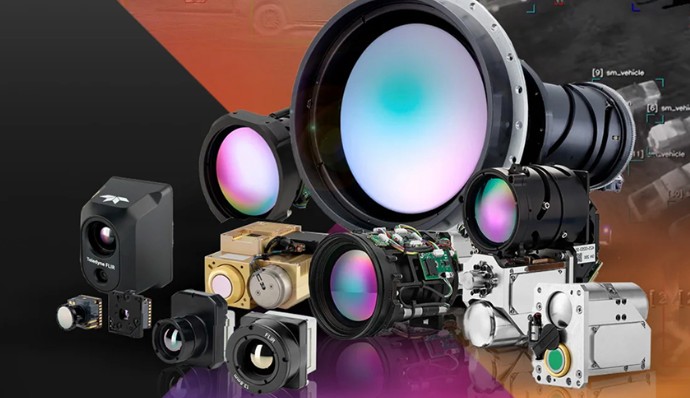
Teledyne FLIR OEM’s Hadron 640R infrared camera modules, combined with Prism software, bring super-resolution thermal imaging and real-time AI detection directly into the payload.
When paired with Lantronix SOMs, this creates a tightly coupled sensing-and-compute stack:
Thermal + visible streams.
Synchronized.
Processed locally.
Actionable immediately.
This architecture enables onboard situational awareness instead of post-mission analysis.
As Michael Walters, VP of Product Management at Teledyne FLIR OEM, states:
“Together with Lantronix, we’re accelerating development of secure, AI-enabled camera solutions.”
Stabilization Meets Intelligence: Gremsy
Gremsy’s role completes the picture.
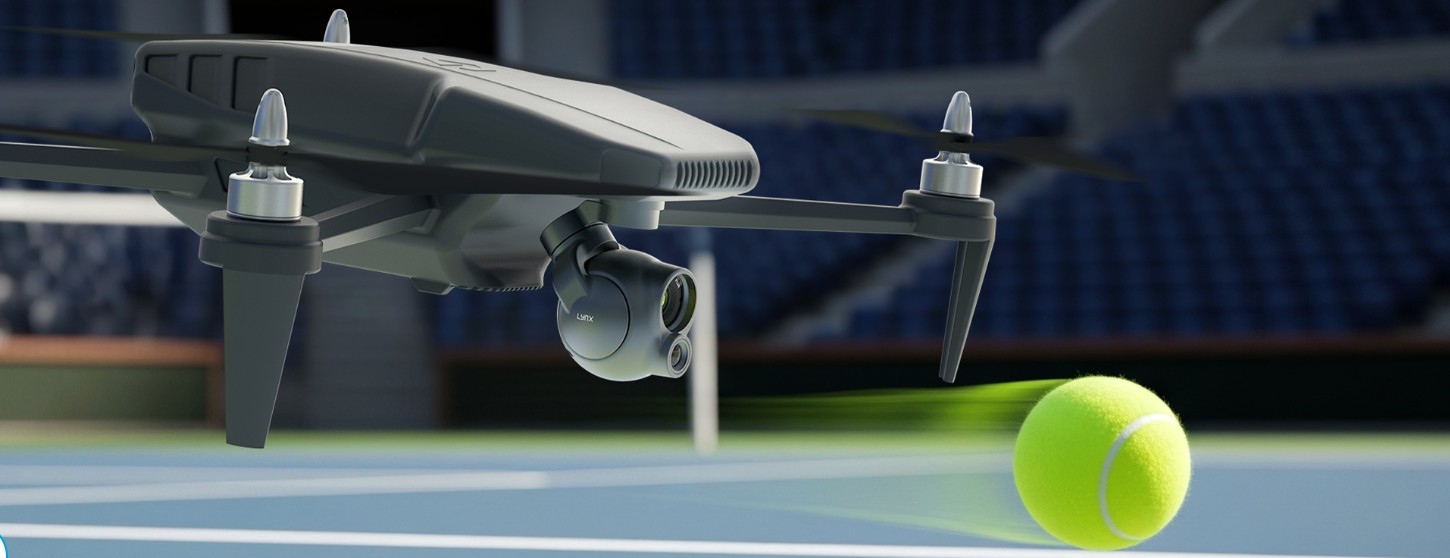
Its advanced gimbal stabilizers and ISR camera payloads (such as the Lynx platform) integrate the compute and sensing stack into rugged, flight-ready systems.
The result is not just stabilized imagery.
It is stabilized, analyzed, contextualized imagery.
Gremsy highlights Lantronix as “a valued contributor to our next-generation platform,” reflecting how deeply compute is now embedded into payload design itself.
Gimbals are becoming intelligent subsystems.
What This Stack Enables
When Lantronix SOMs, Teledyne FLIR sensors, and Gremsy payloads are combined, OEMs gain:
- Faster time-to-market
- Onboard AI analytics
- Longer mission endurance through low-SWaP design
- Scalable architecture across multiple UAV models
- Secure, compliant hardware foundation
In practical terms, this means drone platforms that:
Detect and classify objects in real time.
Reduce bandwidth needs by transmitting insights instead of raw video.
Support autonomy features without external compute.
Scale from small tactical UAVs to larger ISR platforms.
This is not about a single drone.
It is about an ecosystem approach to building many drones.
The Bigger Trend: Standardized Intelligence Layers
Historically, every drone OEM built its own compute stack.
That approach does not scale.
Lantronix’s SOM-based strategy mirrors what happened in smartphones and automotive:
Standard hardware layers.
Custom software differentiation.
OEMs can now focus on:
Autonomy algorithms.
Mission software.
User experience.
Vertical-specific capabilities.
Instead of reinventing compliant compute every product cycle.
This shift accelerates the entire industry.
Why It Matters
Drones are becoming flying computers.
Not accessories with propellers.
Platforms that cannot support onboard AI, secure connectivity, and regulatory compliance will struggle to remain competitive.
Lantronix’s collaboration with Teledyne FLIR OEM and Gremsy shows what the next-generation drone stack looks like:
Edge AI at the core.
Sensors tightly integrated.
Compliance built-in.
Scalable by design.
The future of UAVs will not be defined by who has the sharpest camera.
It will be defined by who has the smartest onboard brain.