From Seeing Targets to Finishing Missions: Teledyne FLIR Pushes Autonomy One Step Further

Autonomy in modern warfare no longer hinges on whether a system can see a target—but whether it can decide, track, and act without human intervention. With the latest upgrade to its Prism‑SKR software, Teledyne FLIR OEM is making clear that the era of software as a passive sensor layer is ending.
Announced in early April 2026, the updated Prism‑SKR evolves from an automated target recognition tool into a closed‑loop autonomy platform. The change is more than semantic. By combining mission execution and intelligent supervision in a single architecture, the software now supports end‑to‑end autonomous mission flows—from tasking to terminal guidance—across a range of guided and unmanned weapon systems.
Beyond Target Detection
Previously positioned as a seeker solution, Prism‑SKR is now designed to manage the entire mission lifecycle. It integrates perception‑based automatic target recognition (ATR) with planning, execution, and real‑time supervision, allowing systems to operate even in communications‑degraded or highly contested environments.
According to Teledyne FLIR OEM, the platform supports loitering munitions, drones, interceptors, counter‑UAS systems, and first‑person‑view (FPV) platforms—categories that have rapidly converged on the modern battlefield. Rather than treating autonomy as a bolt‑on, Prism‑SKR embeds it at the core of mission logic.
The Pixel‑Lock Moment
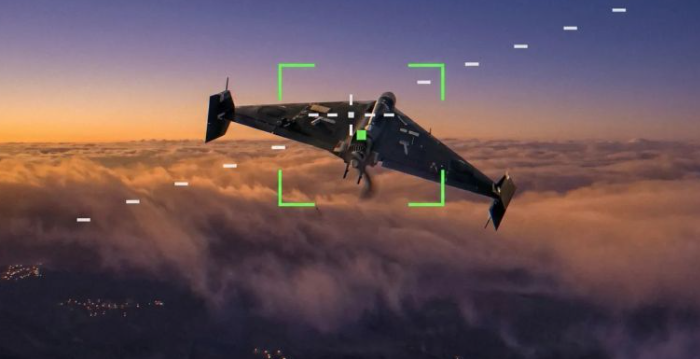
One of the most significant additions is pixel‑lock target tracking, explicitly designed to address the most fragile phase of autonomous missions: the final seconds.
In FPV and loitering systems, manual control often collapses at the terminal stage due to jamming, latency, or signal loss. Pixel‑lock allows the software to maintain a precise visual lock on the designated target even after operator input is interrupted, enabling stable terminal guidance when humans can no longer intervene.
This feature alone signals a shift in responsibility—from operator‑controlled engagement to algorithmic commitment.
Terrain, Targets, and 3D Decisions
The upgrade also introduces interactive 3D aim‑point selection and terrain‑aware operations, giving autonomous systems contextual awareness rather than simple line‑of‑sight targeting. Combined with persistent re‑identification tracking, the software can maintain awareness of a target as conditions change, including partial obscuration or temporary sensor degradation.
Crucially, Prism‑SKR supports graduated levels of autonomy. Operators can transition from AI‑assisted control to full autonomy depending on mission rules, legal constraints, or operational risk—an approach aligned with evolving NATO and allied concepts of human‑machine teaming.
Built for the Edge, Not the Lab
Unlike cloud‑dependent autonomy concepts, Prism‑SKR is designed to run at the edge. The software operates on low‑power embedded platforms such as NVIDIA Orin and Teledyne FLIR OEM’s AVP system‑on‑module, making it suitable for size‑, weight‑, and power‑constrained platforms.
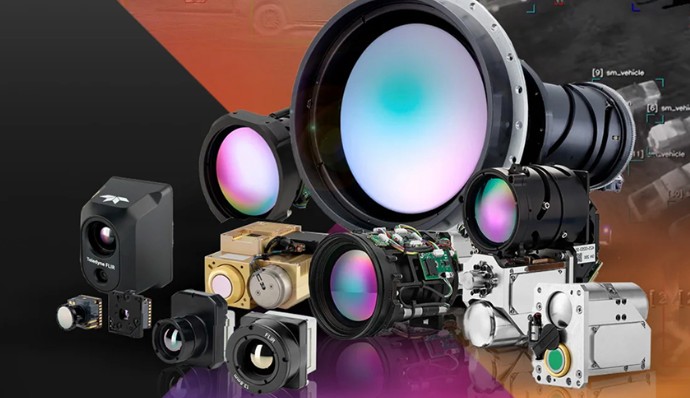
An open architecture, comprehensive API, and SDK support OEM integration, while compliance with Weapon Open Systems Architecture (WOSA) standards allows Prism‑SKR to slot into existing development pipelines with minimal friction. Compatibility with FLIR’s Boson and Neutrino infrared sensors—and integrator‑selected visible cameras—further reinforces its platform‑agnostic intent.
Autonomy as the Center of Gravity
What Teledyne FLIR OEM is offering is not just upgraded software, but a redefinition of autonomy’s role. In a battlespace increasingly shaped by electronic warfare, attritable systems, and compressed decision timelines, the ability to close the loop—sense, decide, act—onboard may matter more than raw performance.
Prism‑SKR suggests that autonomy is no longer an experimental add‑on. It is becoming the center of gravity in modern weapon system design.

.png)