Hensoldt and Bosch. How Germany’s Industrial Heartland Is Becoming Europe’s Defense Engine
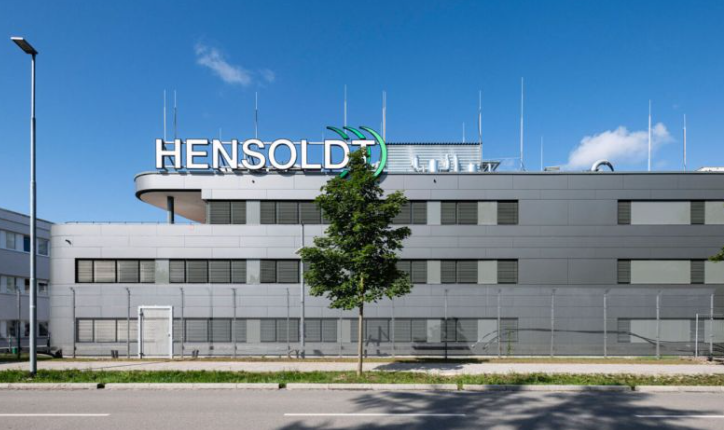
For decades, Stuttgart represented the beating heart of Germany’s automotive industry.
The region built legends. Mercedes-Benz, Porsche, Bosch, and countless suppliers transformed German engineering into a global benchmark for innovation and precision.
Now, another industry is arriving at the gates of Germany’s industrial capital.
Defense.
Hensoldt’s decision to establish a new Software-Defined Defence and Engineering Competence Center in the Stuttgart region, supported by a cooperation agreement with Bosch, is more than a hiring initiative. It is a signal of a profound transformation taking place across Europe’s industrial landscape.
The headline sounds straightforward: Hensoldt plans to create around 300 jobs and develop advanced software architectures for connected defense systems.
The real story is much bigger.
Europe’s defense industry is increasingly becoming the destination for highly skilled engineers previously associated with the automotive sector.
And that trend could redefine the continent's technological future.
The Great Talent Transfer
For years, Germany’s automotive industry was the dream destination for software engineers, system architects, electronics specialists, and mechanical engineers.
Today, the equation is changing.
Electric vehicle transitions, digital disruption, global competition, and economic pressures have forced automakers and suppliers to rethink workforce structures. At the same time, Europe’s rapidly expanding defense sector is facing a different challenge.
Demand is exploding.
Ukraine’s war against Russian aggression, growing security concerns, NATO modernization programs, and increased military spending have created unprecedented demand for advanced technology.
The defense sector suddenly needs exactly the people the automotive sector spent decades training.
Software engineers.
Systems architects.
Embedded developers.
Electronics experts.
Data specialists.
The overlap is remarkable.
Modern military systems increasingly resemble highly connected digital platforms rather than traditional weapons.
That reality explains why Hensoldt is moving aggressively into software-defined defense capabilities.
Why Software Has Become the New Battlefield
Historically, defense companies competed through hardware superiority.
Bigger radars.
Stronger sensors.
More capable aircraft.
More advanced missiles.
Today, software increasingly determines battlefield effectiveness.
Defense platforms must be networked.
They must share data instantly.
They must integrate information from land, sea, air, cyber, and space domains.
They must receive updates continuously.
The military world is rapidly adopting principles long familiar to automotive software teams.
Connected ecosystems.
Continuous integration.
Digital architectures.
Platform engineering.
Lifecycle software management.
This convergence is precisely why Hensoldt’s Leinfelden center will focus on software-defined defense systems and the industrialization of its Multi-Domain Operations software suite, MDOcore.
In simple terms: future defense competition may be won as much by software developers as by weapons engineers.
Bosch and Hensoldt: An Unlikely but Logical Partnership
At first glance, a partnership between Bosch and Hensoldt might surprise observers.
One company is synonymous with automotive technology.
The other with radar systems, sensors, electronic warfare, and military applications.
Yet from a technology perspective, the relationship makes perfect sense.
Both operate in highly complex environments where reliability is mission-critical.
Both rely on advanced software engineering.
Both require sophisticated systems integration.
Both work with safety-critical technologies.
Germany’s defense sector increasingly understands that future competitiveness depends not only on weapons expertise but also on digital engineering excellence.
Bosch has built world-class software capabilities.
Hensoldt wants to leverage them.
This is not merely recruitment.
It is strategic industrial transformation.
The Emergence of a European Defense Technology Ecosystem
What is happening in Stuttgart reflects a broader shift within Europe.
Defense is no longer viewed solely as a security necessity.
It is becoming an industrial growth engine.
Hensoldt hired approximately 1,200 people in 2025 and plans another 1,600 hires this year. Similar growth patterns can be observed across major European defense players.
The implications extend far beyond Germany.
Europe is increasingly investing in sovereign technologies.
Digital resilience.
Advanced sensors.
Artificial intelligence.
Electronic warfare.
Counter-drone systems.
Integrated battlefield networks.
The race to build these capabilities requires talent on a scale not seen in decades.
The result is the emergence of a new industrial reality:
Europe's defense sector is becoming one of its most powerful technology employers.
A New Era for German Engineering
The symbolic significance of Hensoldt opening a major defense software center in the heart of Germany’s automotive ecosystem cannot be overstated.
For generations, Stuttgart engineers built vehicles that moved people.
Increasingly, they may help develop systems that protect nations.
The shift does not signal the decline of German engineering.
It signals its evolution.
The factories may change.
The software may change.
The mission may change.
But the fundamental asset remains the same:
World-class engineering talent.
And in an increasingly uncertain world, that talent is becoming one of Europe’s most strategic resources.