Germany’s CARD Review Shows How Europe Is Rewiring Its Defence Playbook
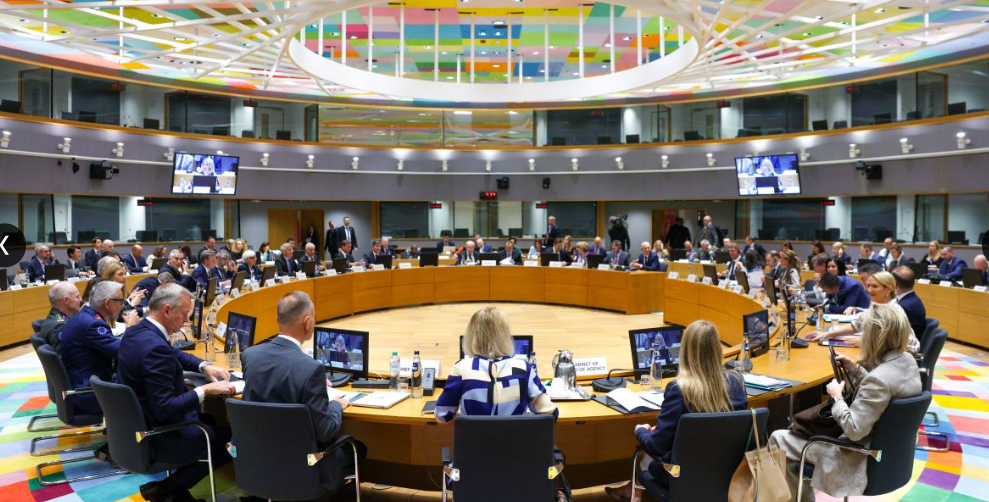
At the end of March, Germany hosted its bilateral CARD meeting at the Federal Ministry of Defence in Berlin. On paper, it was another stop in the European Defence Agency’s tour of the 27 EU Member States. In practice, it revealed how Europe’s largest economy is reshaping its military thinking—and how EU defence coordination is moving from principle to execution.
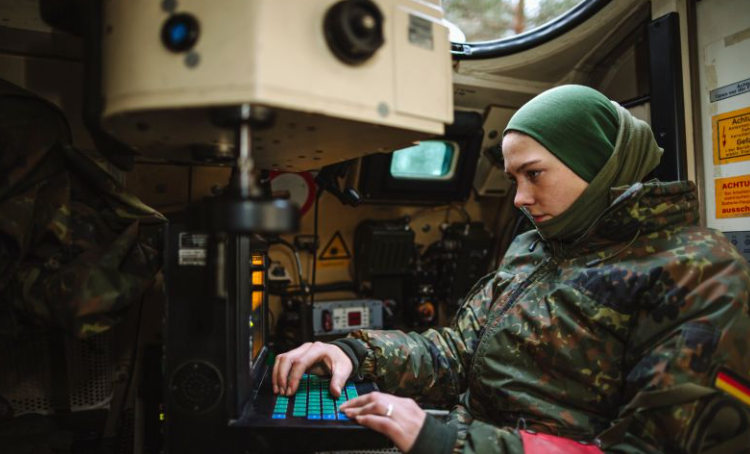
The discussions focused on a familiar but increasingly consequential set of priorities: capability development, defence readiness, and operations across all military domains. What stood out, however, was the emphasis on flexible, software‑defined solutions—a concept that until recently lived more comfortably in technology conferences than defence ministries.
Germany’s focus on Software Defined Defence reflects a broader shift underway across Europe. Instead of relying solely on static platforms upgraded once a decade, armed forces are looking for systems that can be updated in near real time, adapted to mission needs, and integrated seamlessly with allies. Interoperability is no longer a nice‑to‑have. It is the baseline assumption.
This is exactly the kind of conversation CARD was built to enable.
The Coordinated Annual Review on Defence is designed to give EU Member States a shared picture of the defence landscape—what capabilities exist, where gaps are emerging, and which investments could be made collaboratively rather than in isolation. Historically, defence planning in Europe has been fragmented, with national programmes moving ahead independently and often redundantly. CARD aims to change that by synchronising planning cycles and highlighting opportunities where cooperation delivers more than competition.
Germany’s bilateral review fits neatly into that ambition.
Rather than detailing individual procurement decisions, the meeting focused on how national priorities align with EU capability development goals. This includes strengthening readiness across land, air, sea, cyber, and space domains, while ensuring that systems developed nationally can plug into joint and NATO‑aligned operations.
The stress on flexibility is particularly telling. Modern conflict has exposed a core weakness in many European armed forces: hardware that cannot keep pace with fast‑moving technological change. By embedding software adaptability into defence planning, Germany is signalling that future capability development must anticipate constant evolution—from electronic warfare environments to command‑and‑control architectures.
EDA’s role in this process is deliberately understated but strategically central.
Through CARD, the Agency supports Member States by offering analysis, comparative insight, and structured dialogue. The aim is not to dictate national choices, but to reduce inefficiencies, flag duplication, and steer investments toward shared priorities. Over time, this is meant to translate into stronger European defence coherence—and more effective use of rising defence budgets.
Germany’s engagement also reinforces the political relevance of CARD. As the EU’s largest economy and one of its biggest defence spenders, Germany’s approach sets a reference point for others. When Berlin frames software‑driven adaptability and interoperability as core principles, it nudges the wider European debate in the same direction.
What CARD does not do is deliver instant solutions. Capability development remains slow, certification cycles are long, and national sovereignty in defence remains firmly protected. But the review establishes a common operating picture—a prerequisite for any serious collaboration.
Seen in that light, the March meeting was less about Germany alone and more about the direction of European defence as a whole. Flexibility over rigidity. Integration over isolation. Software over hardware‑only thinking.
As EDA continues its bilateral visits across all Member States, the accumulated effect of these conversations will matter more than any single meeting. Together, they shape how Europe understands its own defence posture—and how prepared it is to adapt when the security environment shifts again.