Germany Is Buying Leopard 2A8 Tanks Again. The Netherlands Is Making Sure It Can Keep Them Fighting.

For years, European militaries treated the tank as something increasingly difficult to justify.
Too heavy.
Too expensive.
Too Cold War.
The Netherlands went particularly far. In 2011, it disposed of its own main battle tank fleet as defense budgets tightened and the strategic assumptions of the era shifted toward expeditionary operations.
Now the tank is back.
And this time, the Netherlands is not only buying the machine.
It is rebuilding the industrial ecosystem required to keep that machine operational.
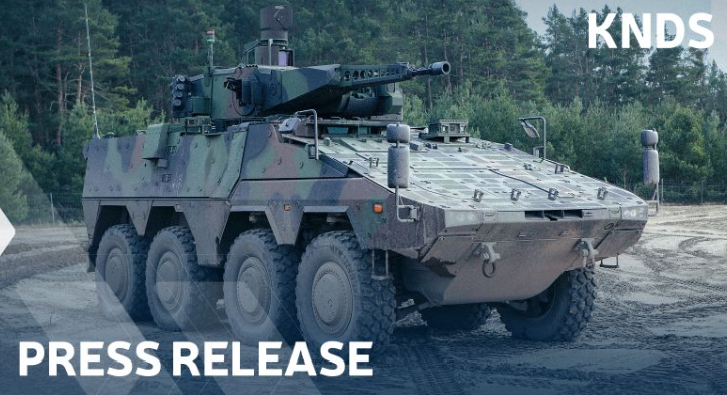
KNDS Deutschland and Dutch company Van Halteren Technologies have signed a memorandum of understanding covering future maintenance of the Netherlands' Leopard 2A8 fleet, including the bridge-laying variant.
Under the plan, much of that maintenance would take place in the Netherlands.
It may sound like an after-sales contract.
Strategically, it is much more interesting.
Because Europe's rearmament problem is no longer simply:
“Can we buy enough weapons?”
It is becoming:
“Can we keep them fighting after the warranty mentality ends?”
The Netherlands Is Getting Its Tanks Back
The Dutch Army is acquiring at least 46 Leopard 2A8 main battle tanks, plus four driver-training vehicles, with an option for another six tanks.
Deliveries are scheduled to begin in 2028 and conclude by 2031.
The budget sits in the broad range of €1 billion to €2.5 billion.
That represents a remarkable reversal.
The Netherlands eliminated its independent main battle tank capability in 2011. Dutch personnel subsequently maintained armored warfare expertise through deep military cooperation with Germany, notably through 414 Tank Battalion.
Now the Netherlands is rebuilding sovereign ownership of heavy armor.
That says something important about how radically European security assumptions have changed.
A capability considered expendable fifteen years ago is again considered essential.
The tank didn't return because armies suddenly became nostalgic.
The threat environment brought it back.
Buying the Tank Is the Easy Part
A Leopard 2A8 is an extraordinarily sophisticated piece of machinery.
But owning one and fielding one are not the same thing.
A tank requires fuel, ammunition and trained crews.
It also requires spare parts.
Specialized tools.
Diagnostic equipment.
Track maintenance.
Powerpack support.
Transmission expertise.
Recovery capability.
Software support.
Technical documentation.
And technicians who know exactly what to do when dozens of tonnes of armored vehicle decide they are no longer moving.
That distinction becomes critical during sustained operations.
Military capability is not measured by how many tanks appear in an inventory spreadsheet.
It is measured by how many can leave the maintenance area when somebody actually needs them.
A country can own 46 tanks.
What matters on Monday morning is how many are operational.
That Makes Van Halteren More Interesting Than It Looks
Van Halteren Technologies is not arriving in the Leopard ecosystem from nowhere.
The Dutch company already works with KNDS around systems including the PzH 2000 self-propelled howitzer and the Fennek reconnaissance vehicle.
It is also involved with engine and transmission systems for the new Dutch tanks.
The new memorandum would move that partnership deeper into through-life support.
That matters because maintenance knowledge is itself a defense capability.
If critical servicing requires equipment to travel abroad, readiness acquires another dependency.
Every border crossed adds logistics.
Every external maintenance queue adds time.
Every distant technical bottleneck potentially removes equipment from operational availability.
Local support shortens that chain.
And in a crisis, shorter chains are valuable.
The Most Important Part of a Tank May Be the Workshop Behind It
Ukraine has delivered countless lessons about modern warfare, but one of the least glamorous may ultimately be among the most important:
Machines break. A lot.
Not only because they are hit.
Tracked vehicles operate under extreme mechanical stress.
Engines fail.
Tracks wear.
Electronics malfunction.
Suspension systems take punishment.
Mud, cold, dust and constant movement expose weaknesses that peacetime exercises may never reveal at the same scale.
That means maintenance is not a secondary activity behind combat.
Maintenance generates combat power.
A brilliant crew without a functioning vehicle is infantry.
A tank awaiting a component is infrastructure.
A repair team returning that tank to service creates military capability almost as directly as the factory that built it.
Europe spent decades optimizing defense around smaller inventories and peacetime efficiencies.
War rewards a different metric:
regeneration speed.
€600 Million Tells Another Story
The Dutch program also has an industrial dimension.
Around €600 million of the overall budget is expected to flow toward Dutch companies.
That matters politically, naturally.
Large defense purchases become easier to explain when domestic companies participate.
But industrial participation has strategic value beyond jobs.
It creates technical knowledge inside the country.
It creates supplier relationships.
It gives local industry experience with the platform.
And it establishes infrastructure that can potentially support future requirements.
European defense is increasingly moving away from a model where each country simply purchases a finished product and toward a model where procurement also builds distributed industrial capacity.
That may be one of the biggest changes underway in Europe's rearmament.
German Tank, Dutch Support, NATO Capability
The Leopard 2A8 program is also an example of something Europe desperately needs more of:
common platforms supported by multinational industrial networks.
The Netherlands ordered through a framework established by Germany's Federal Office of Bundeswehr Equipment, Information Technology and In-Service Support.
Dutch tanks will operate within an exceptionally close German-Dutch military relationship.
Their crews already have experience operating alongside German forces.
The new tanks are set to be stationed at Lohheide in Lower Saxony, alongside leased Leopard 2A6MA2s.
National boundaries remain.
Operational structures increasingly cross them.
This matters because fragmented fleets are expensive.
Every unique platform creates its own training needs, spare-parts system, ammunition requirements, maintenance expertise and modernization program.
Standardization creates the opposite effect.
More users potentially mean deeper spare-part inventories.
More technicians.
More common training.
Larger modernization batches.
More resilient supply chains.
In European defense, interoperability is not just about radios talking to one another.
Sometimes it begins with two armies buying the same gearbox.
NATO Wants Heavy Forces Again
The return of Dutch tanks also fits the wider NATO shift toward heavier land warfare.
Alliance planning has increasingly pushed European members toward capabilities suitable for territorial defense and high-intensity combat.
That requires armor.
Artillery.
Engineers.
Air defense.
Logistics.
Ammunition.
And large support structures capable of keeping all of them operational for more than a spectacular first week.
The Netherlands' decision therefore reflects more than national procurement preference.
It represents Europe's wider return from an era of smaller expeditionary forces toward preparations for sustained continental defense.
That is a profound institutional reversal.
Leopard 2A8 Is a Platform. Readiness Is the Product.
There is always a temptation to judge major defense programs through headline numbers.
Forty-six tanks.
Another six potentially.
Billions of euros.
Delivery dates.
Armor specifications.
Firepower.
But those numbers describe inventory.
They do not automatically describe military power.
A tank battalion becomes credible when crews are trained, ammunition exists, logistics are functioning, spare parts are available and damaged equipment can return to service quickly.
The Netherlands appears to be rebuilding several pieces of that ecosystem simultaneously.
Vehicles from KNDS.
Industrial participation from Dutch suppliers.
Existing German-Dutch military integration.
Domestic maintenance through Van Halteren Technologies.
That is a much more serious approach than simply parking new tanks in a depot and declaring a capability restored.
Europe's Rearmament Is Entering Phase Two
The first stage of European rearmament has been dominated by announcements.
New tanks.
New artillery.
New fighters.
New ammunition plants.
Larger budgets.
The next stage is harder.
It is about readiness.
Can industry deliver spare parts fast enough?
Can workshops handle wartime maintenance volumes?
Are enough technicians trained?
Can damaged vehicles be regenerated rapidly?
Are supply chains resilient if one component becomes unavailable?
Can allied fleets support one another?
Those questions do not produce dramatic promotional videos.
But they determine whether a military force survives sustained operations.
The Dutch Leopard 2A8 maintenance agreement points toward that next phase.
A country that once concluded it no longer needed its own tanks is now not only bringing them back.
It is making sure the capability to maintain them comes back too.
And that may be the more important reversal.
Because Europe's future deterrence will not ultimately be measured by how many weapons it can purchase in peacetime.
It will be measured by how many it can keep operational when peace is no longer guaranteed.