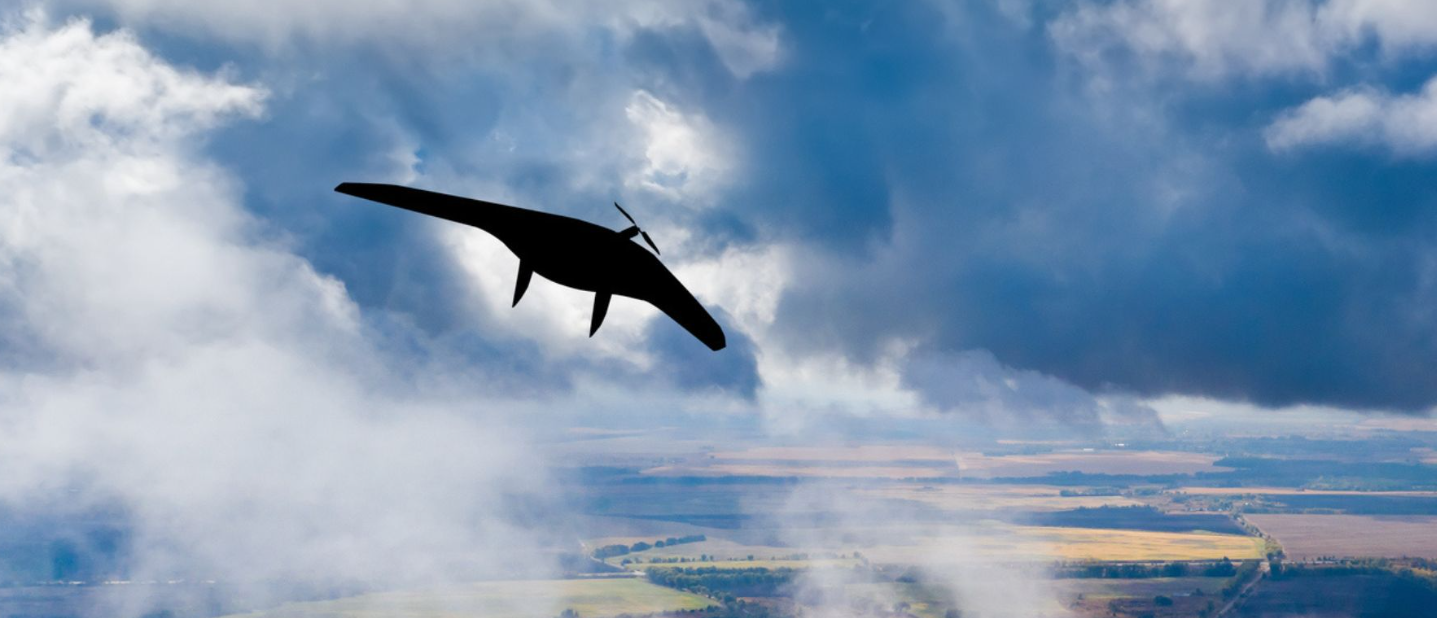
Germany and Japan Are Turning AI Drones Into a Strategic Partnership
Germany and Japan are moving closer on defense, and this time the cooperation is not just political.
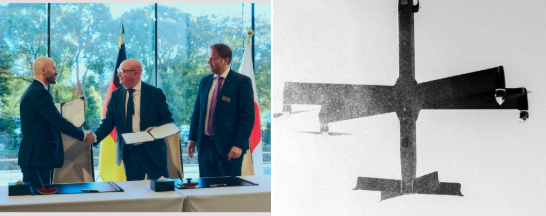
During German Chancellor Friedrich Merz’s visit to Tokyo, STARK signed a Memorandum of Understanding with Mitsubishi Chemical Group to cooperate on the production of AI-driven unmanned systems for Japan.
The timing matters.
At the German-Japanese Business Summit, Chancellor Merz described defense and security cooperation as a key priority in the bilateral relationship. The agreement between STARK and Mitsubishi Chemical fits directly into that direction: German defense technology combined with Japanese industrial capability.
The focus is on unmanned systems powered by artificial intelligence.
That puts the cooperation in one of the most important areas of modern defense development. Unmanned systems are increasingly important because they can support reconnaissance, surveillance and other missions while reducing the direct exposure of personnel. Adding AI can make these systems faster in processing information, more autonomous in certain tasks and more useful in complex environments.
For Japan, the partnership could support the development of the Japanese Self-Defense Forces with locally supported production and technology cooperation.
The local element is especially important.
Defense procurement is no longer only about buying finished equipment from abroad. Many countries want domestic industrial participation, local supply chains and long-term access to technology and production capacity. By working with Mitsubishi Chemical Group, STARK gains a major Japanese industrial partner with deep manufacturing experience and local presence.
For Japan, that can make the cooperation more practical than a simple export deal.
It also reflects a wider change in the German-Japanese relationship.
For years, economic ties between Germany and Japan were mainly associated with automotive, chemicals, machinery and industrial technology. Defense and security are now becoming a more visible part of that relationship.
Chancellor Merz’s remarks at the business summit show that the political side is moving in the same direction as the industrial side.
The MoU is still an early step. A memorandum of understanding does not automatically mean that large-scale production will begin immediately. What it does show is intent: both companies want to explore cooperation and create a basis for future production of unmanned systems for Japan.
That alone is significant.
Defense markets are becoming more international, but at the same time more focused on trusted partners. Countries increasingly want suppliers that can offer not only technology but also industrial cooperation, local production and long-term support.
This is where the STARK-Mitsubishi partnership could become strategically interesting.
If the cooperation develops further, it could create a model in which European defense technology is adapted and produced with Japanese industrial participation. That would support Japan’s own defense capabilities while also strengthening industrial links between two major democratic economies.
The bigger story is not only about drones.
It is about how defense cooperation is changing.
Governments are setting closer security priorities, while companies are building the industrial relationships needed to support them. In this case, political cooperation between Germany and Japan is being matched by a concrete industrial agreement.
The message is clear: Berlin and Tokyo are no longer talking only about defense cooperation.
They are starting to build it.