German AI Robotics Meets the Next Generation of Networks - SHIVAA Agricultural Robot And Many More
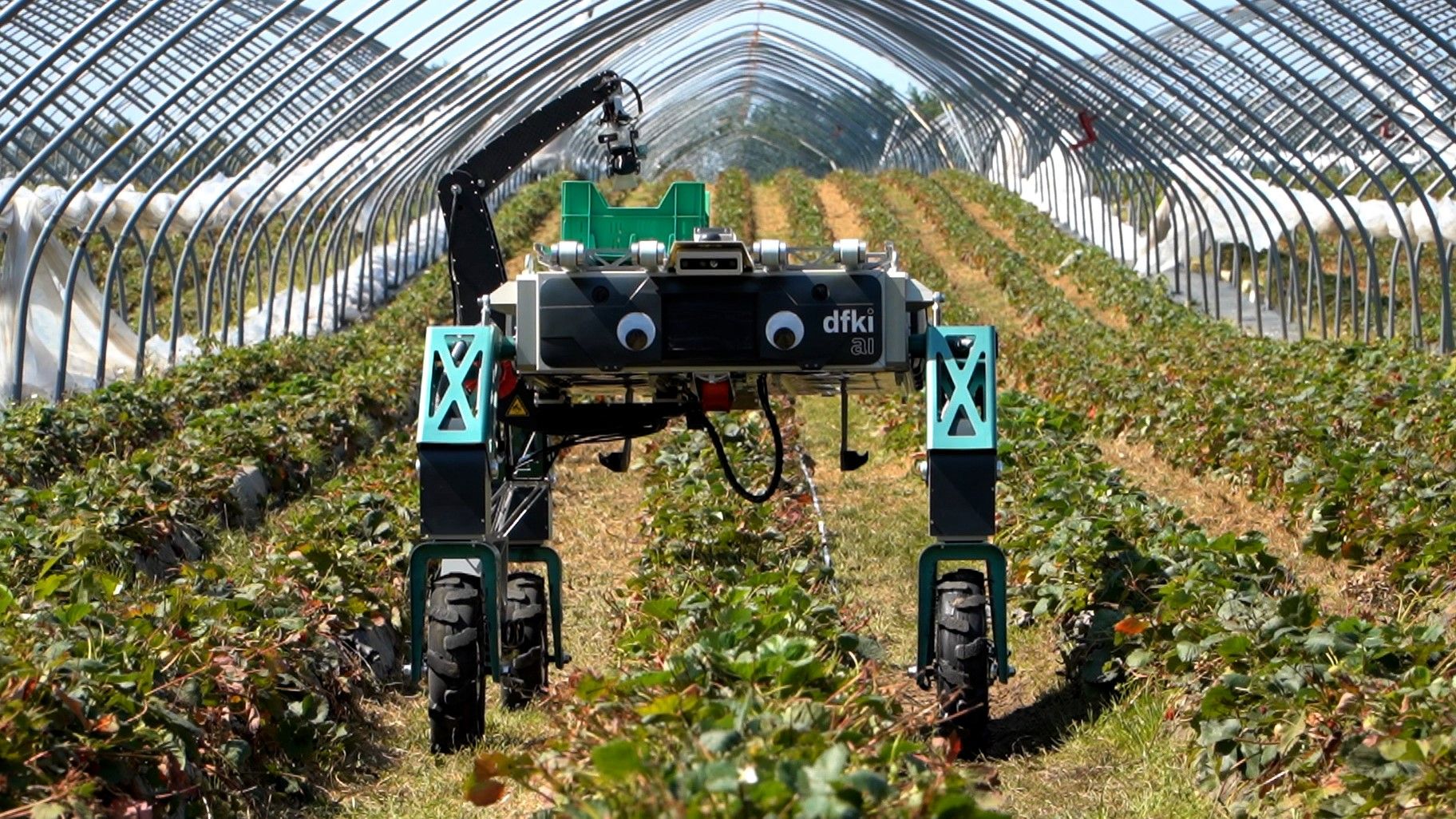
The SHIVAA agricultural robot from the German Research Center for Artificial Intelligence (DFKI) represents more than just another experimental machine. It is part of a broader vision in which AI-powered robots operate seamlessly across farms, factories, oceans, and disaster zones—connected through ultra-fast 6G networks.
At the German Robotics Conference 2026 in Cologne, DFKI presented a portfolio of advanced robotic systems that highlight the growing intersection between autonomous machines and next-generation communication infrastructure.
The event, organized in collaboration with the Robotics Institute Germany (RIG), is becoming one of Europe’s most important platforms for turning cutting-edge robotics research into real-world industrial applications.
DFKI’s demonstration portfolio spans a remarkable range of environments—from underwater infrastructure to agriculture, disaster response, and even space exploration.
SHIVAA: AI for Precision Agriculture
Among the showcased systems is SHIVAA, an agricultural robot designed for delicate fruit harvesting.
Modern agriculture faces several challenges: labor shortages, rising costs, and the need for sustainable production methods. Autonomous robots like SHIVAA aim to address these issues through AI-powered perception and manipulation.
Using advanced computer vision algorithms, the robot can identify ripe fruit and harvest it without damaging the plant. This type of precision harvesting is particularly valuable for crops where manual labor has traditionally been essential.
Agricultural robotics is rapidly becoming one of the most promising fields in automation, and SHIVAA demonstrates how AI can combine sensing, mobility, and manipulation in complex outdoor environments.
Robotics for Extreme Environments
Beyond agriculture, DFKI presented several robotic systems designed for environments where human work is difficult or dangerous.
One such project is MARIOW, a robotic system designed for underwater infrastructure maintenance. Offshore wind farms, pipelines, and maritime installations require constant inspection and repair—tasks that currently rely heavily on human divers.
MARIOW combines a robotic arm with AI-based path planning, enabling autonomous welding operations underwater. The technology could significantly reduce the need for hazardous diving missions while increasing maintenance efficiency.
Another system, KRIS, focuses on disaster response.
Developed under the ROMATRIS project, KRIS is a robotic assistant capable of transporting loads of up to 150 kilograms across rough terrain. The robot can be controlled through intuitive gestures or operate in a “follow-me” mode, allowing emergency responders to focus on critical tasks rather than heavy logistics.
Humans and Machines Working Together
DFKI also demonstrated a multimodal exoskeleton system designed as a human-machine interface.
Such exoskeletons can be used for multiple purposes:
- teleoperation of robots in hazardous environments
- rehabilitation therapy for stroke patients
- astronaut training and microgravity simulation
The technology highlights a key trend in robotics: rather than replacing humans entirely, many systems aim to augment human capabilities.
In this vision of robotics, machines become extensions of human operators.
The Role of 6G Connectivity
Perhaps the most transformative element of DFKI’s research portfolio lies in robot networking.
Modern robotics increasingly relies on real-time communication between machines, sensors, and control systems.
Through the Open6GHub+ project, DFKI demonstrated how future 6G mobile networks could enable ultra-low-latency communication between robots and industrial systems.
Such connectivity is crucial for synchronized robotic operations in factories, where even millisecond delays can disrupt complex automated processes.
6G technology could enable:
- coordinated robot fleets
- real-time teleoperation
- distributed AI processing
- fully networked smart factories
In other words, the next generation of robotics may depend not only on smarter machines but also on faster and more reliable communication networks.
Europe’s Push for Technological Sovereignty
The technologies presented at the German Robotics Conference reflect a broader ambition: strengthening Europe’s technological independence in robotics and artificial intelligence.
As global competition intensifies, the ability to develop and deploy advanced robotic systems domestically is increasingly viewed as a strategic capability.
Institutions like DFKI play a central role in bridging the gap between academic research and industrial deployment.
From underwater maintenance to agricultural automation, the technologies demonstrated in Cologne show how robotics is expanding into nearly every sector of the economy.
And as AI becomes embedded in physical machines, the future of robotics may depend as much on networks and data as on motors and sensors.
%20(1).jpg)
.png)