From Prototype to Arsenal: Rusty Dagger's $12M Leap Could Redefine Affordable Precision Strike
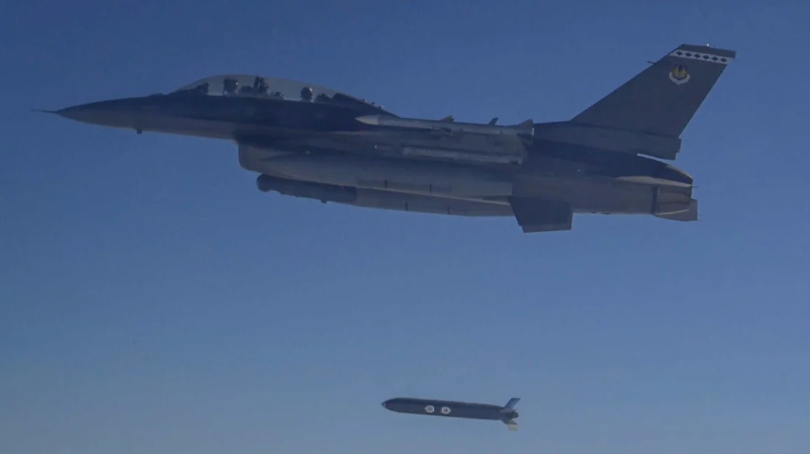
The U.S. Air Force has taken another major step toward transforming the economics of long-range precision warfare. On June 18, the Air Force Research Laboratory awarded Zone 5 Technologies a $12 million contract to advance manufacturing technology for the AGM-188A Rusty Dagger, a compact cruise missile designed for affordable, large-scale production.
While new missile programs often attract attention because of their range, speed or payload, this contract focuses on something arguably more important: manufacturing.
Modern conflicts have demonstrated that industrial capacity is becoming just as decisive as battlefield performance. Precision weapons may be technologically impressive, but if they cannot be produced quickly and in large numbers, their strategic value is limited during prolonged conflicts.
That is precisely the challenge Rusty Dagger aims to solve.
Originally launched under the Extended Range Attack Munition (ERAM) initiative in early 2024, the program sought to create a long-range strike weapon that could be manufactured faster and at significantly lower cost than existing cruise missiles. In just over two years, the project has progressed from concept to a Phase III Small Business Innovation Research (SBIR) contract—a remarkably fast pace in the defense acquisition world.
Unlike many traditional missile programs led by major defense primes, Rusty Dagger has been developed by Zone 5 Technologies, a relatively small California-based company. The SBIR framework enables innovative smaller firms to move quickly while transitioning successful prototypes into production.
The latest contract is particularly significant because Phase III is no longer about proving that the missile works. It is about proving that it can be built efficiently at scale.
One of Rusty Dagger's biggest advantages lies in its compatibility with existing aircraft. The missile fits within the dimensions and weight envelope of the widely used Mk 82 500-pound bomb. That means numerous Western aircraft—and potentially many Ukrainian combat aircraft already equipped for Mk 82 weapons—could integrate the missile with minimal modifications.
This dramatically reduces integration costs while accelerating deployment.
Technically, the missile combines turbojet propulsion, precision guidance and long-range stand-off capability in a lightweight package. The system is designed to provide a cost-effective alternative to significantly more expensive cruise missiles, potentially allowing operators to employ larger numbers of precision weapons during sustained operations.
The Air Force's decision to invest specifically in manufacturing technology highlights an increasingly important reality for modern militaries: production speed has become a strategic capability.
Factories are now as critical as laboratories.
According to the contract, work will primarily take place in Miamisburg, Ohio, with completion expected by September 2027. Establishing manufacturing expertise in Ohio also suggests preparations for higher-volume industrial production rather than limited prototype assembly.
The timing comes as Western defense industries continue to reassess supply chains, production capacity and stockpile resilience following lessons learned from the war in Ukraine.
Adding further intrigue, Russian military-affiliated Telegram channels recently claimed that Rusty Dagger missiles were allegedly used during an attack on the Sborka semiconductor facility near Voronezh. The reports remain unverified and have not been confirmed by either the United States or Ukraine. If eventually confirmed, however, such an operation would represent the missile's first known combat use and demonstrate both its operational range and precision.
Whether or not those reports prove accurate, the broader trend is already clear.
Future missile competitions may no longer be won solely by the fastest or longest-range weapon, but by the system that can be manufactured by the thousands while maintaining precision, affordability and rapid deployment.
Rusty Dagger may ultimately become less significant for what it can destroy—and more significant for how efficiently it can be built.