From Kyiv to Europe: The New Arsenal of Democracy Is Built on Learning, Not Steel
For generations, military power was measured in steel.
More tanks. More artillery. More aircraft. Larger factories.
The equation seemed simple: whoever produced the most would ultimately prevail.
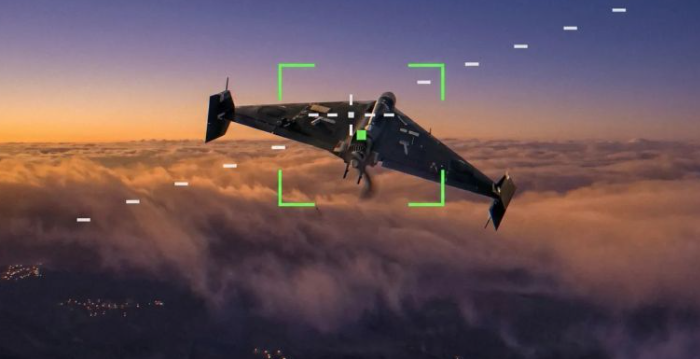
But on a battlefield transformed by drones, artificial intelligence, electronic warfare, and continuous adaptation, quantity alone no longer guarantees advantage.
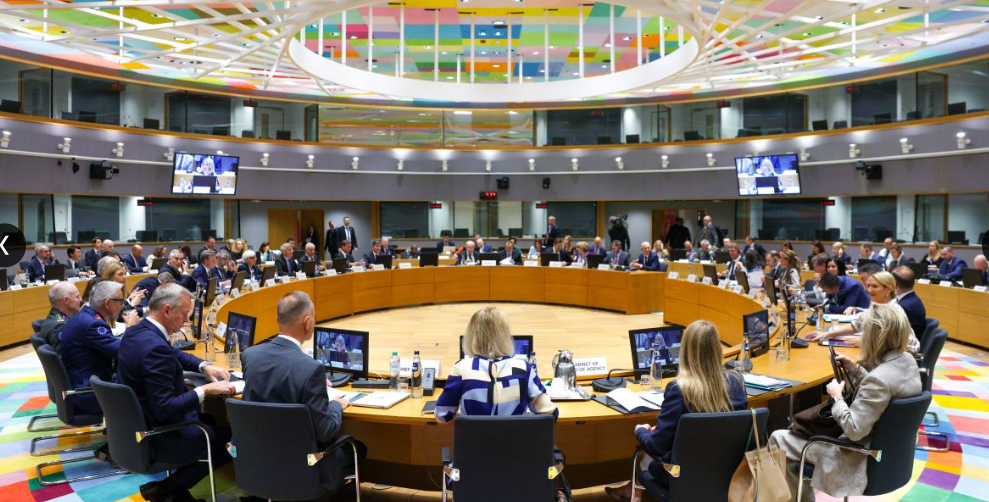
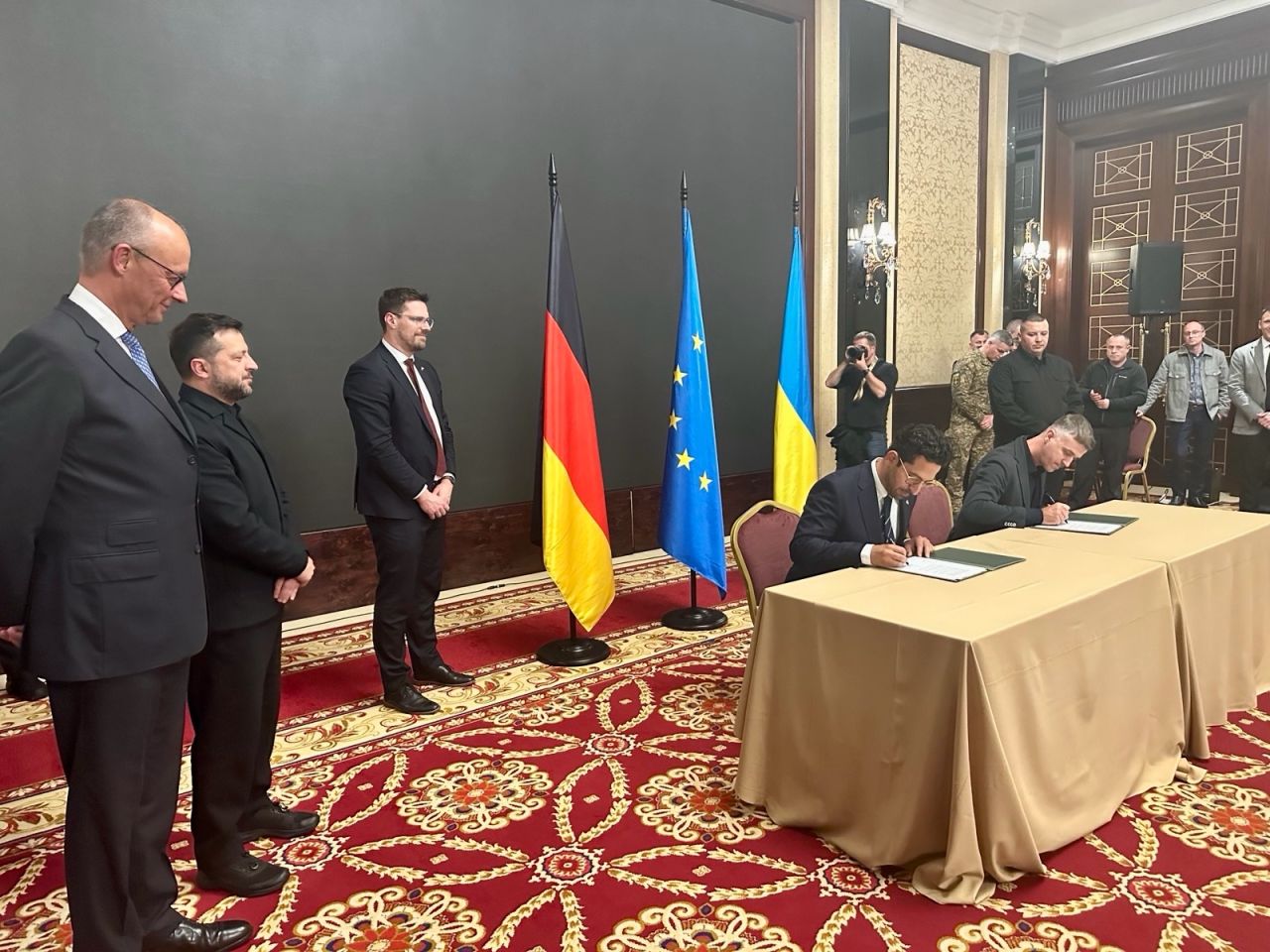
The visit of German Chancellor Friedrich Merz and Federal Minister Katherina Reiche to Kyiv highlights a strategic reality that is becoming increasingly clear across Europe:
The future of defense belongs not to those who manufacture the most weapons, but to those who learn the fastest.
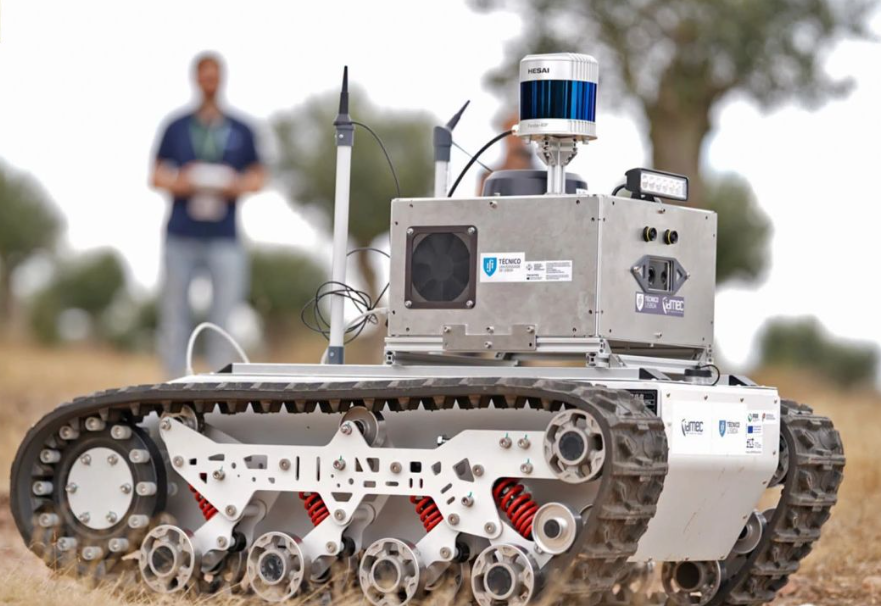
That is what makes the newly announced strategic partnership between ARX Robotics and Ukrainian company Roboneers far more significant than a typical industrial agreement.
It is not simply about building unmanned ground vehicles.
It is about building a mechanism that transforms combat experience into technology faster than an adversary can adapt.
And that may become one of the most important strategic assets in Europe.
For decades, European defense industries operated in an environment characterized by long procurement cycles and lengthy development programs. Major systems often took years or even decades to move from concept to deployment.
War in Ukraine has shattered that model.
On today's battlefield, a capability that provides an advantage in January may require modification by March.
A drone works until it is jammed.
A sensor succeeds until it is deceived.
An algorithm dominates until an adversary develops a countermeasure.
The result is a new form of competition where the decisive variable is not the technology itself but the speed at which that technology evolves.
Ukraine has become the world's most intense laboratory for this process.
Every day generates new operational data.
Every week reveals new vulnerabilities.
Every month forces adaptation.
The most successful systems are not necessarily the most sophisticated. They are the systems that can be modified, tested, deployed, and improved repeatedly at speed.
This is why the ARX-Roboneers partnership deserves attention.
The strategic value is not simply the vehicle.
It is the cycle.
Operational experience from Ukraine is collected.
Engineers convert that experience into software updates, AI improvements, new tactics, and new system architectures.
Those improvements return directly to operational users, generating fresh data and initiating another cycle.
The process repeats continuously.
Learning becomes industrialized.
This represents a profound shift in how military power is generated.
Throughout much of modern history, defense industries transformed resources into equipment.
Tomorrow's defense industries will increasingly transform information into capability.
The critical resource will not merely be manufacturing capacity.
It will be learning capacity.
Germany's support for Ukraine therefore carries implications that extend far beyond the battlefield.
Europe is attempting to build strategic autonomy in an increasingly dangerous world.
Yet autonomy cannot be achieved solely through production.
It requires ecosystems capable of innovation, iteration, and rapid adaptation.
The partnership announced in Kyiv points toward precisely such a model.
A model where European industrial capability combines with Ukrainian operational experience.
A model where software evolves as rapidly as hardware.
A model where battlefield lessons become industrial advantage.
And perhaps most importantly, a model where Europe no longer views Ukraine only as a recipient of security assistance, but as a producer of strategic knowledge.
That distinction matters enormously.
Because the next generation of European defense champions may not emerge from traditional procurement programs alone.
They may emerge from the fusion of combat experience, artificial intelligence, robotics, software development, and rapid industrial scaling.
The battlefield is increasingly becoming a development laboratory.
The question is no longer whether Europe can manufacture enough capability.
The question is whether Europe can learn faster than the threats it faces.
Kyiv suggests that Europe is beginning to understand the difference.
And that realization may prove more important than any individual weapon system ever built.