From EVE to STEVE. How a Project Eagles Is Pushing the Boundaries of Aerospace Innovation
The world's wildfire problem is growing faster than ever. Longer fire seasons, rising temperatures, and increasingly extreme weather events are forcing researchers, engineers, and governments to rethink how fires are detected and managed. While satellites and manned aircraft remain critical tools, a new generation of unmanned aerial systems is emerging with a singular mission: finding fires before they become disasters.
One such project is now entering its next phase.
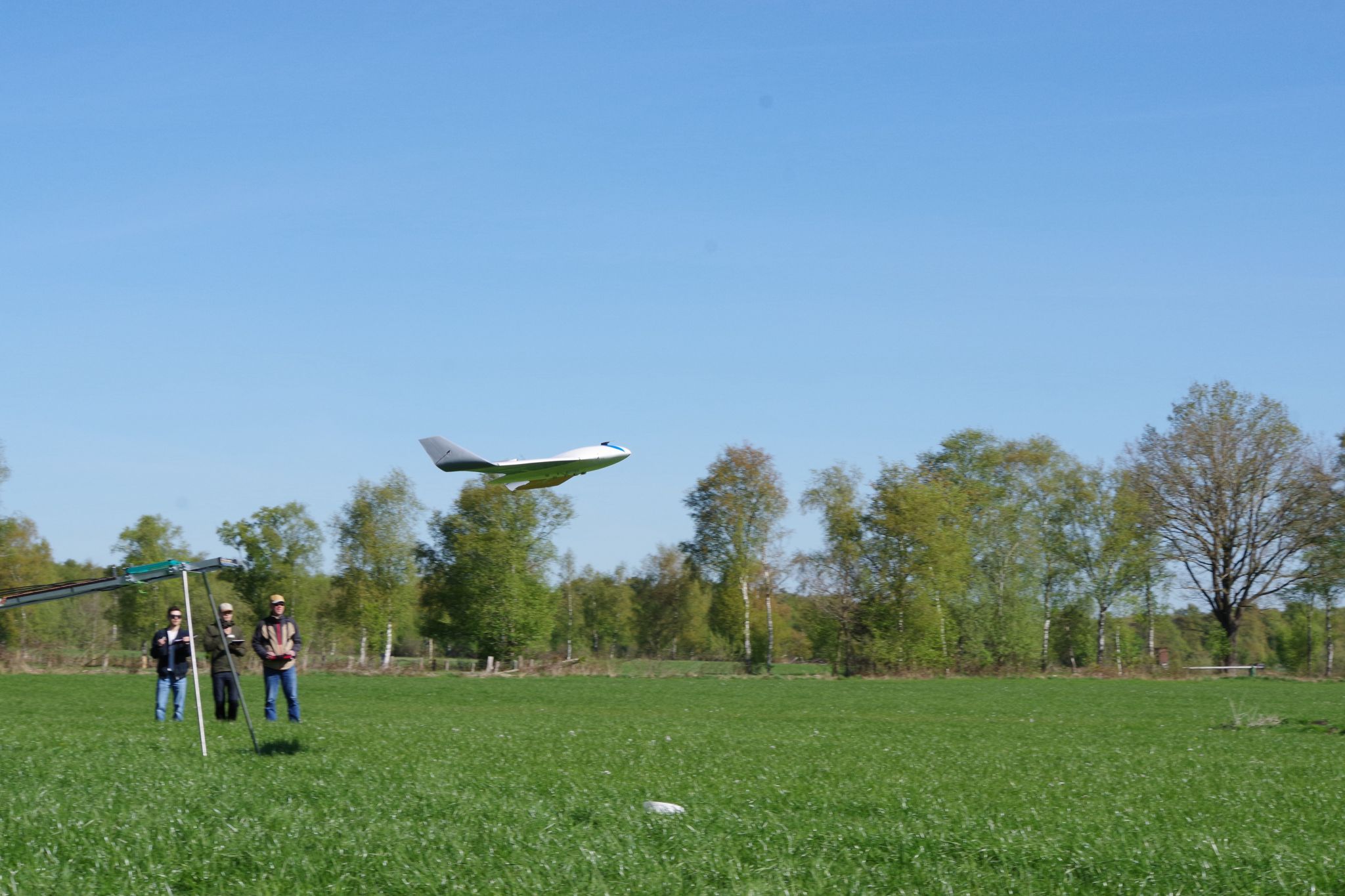
After successfully developing and testing its first wildfire early-detection UAV, known as EVE, the engineering team behind the platform is unveiling its next-generation successor: Smartly Tuned EVE, or STEVE.
Although the name may sound lighthearted, the engineering ambitions behind the project are serious. STEVE represents a comprehensive redesign aimed at improving weight efficiency, structural performance, and operational effectiveness—three factors that often determine whether an unmanned aviation concept transitions from prototype to real-world capability.
The announcement marks a significant milestone in the project's evolution.
Unlike many drone developments that focus primarily on software enhancements, sensor upgrades, or autonomous navigation systems, STEVE's development begins at the most fundamental level: the airframe itself. Engineers have taken lessons learned during the construction and testing of EVE and translated them into a new structural design intended to overcome limitations identified in the first-generation platform.
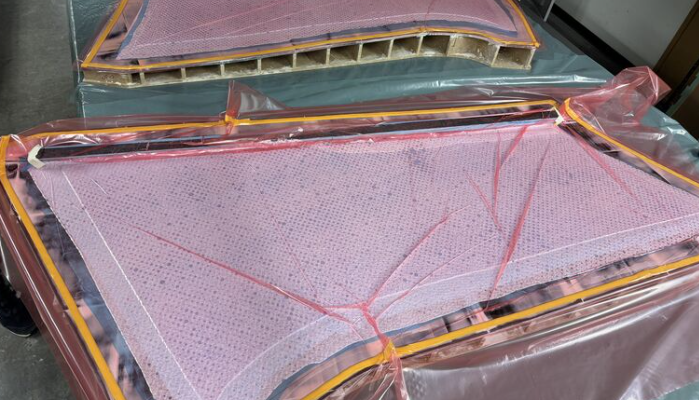
Recent images from the project reveal the completion of one of the most critical stages of aircraft manufacturing—the lamination process for STEVE's first wing.
For aerospace engineers, composite wing construction is where innovation becomes tangible. Material selection, fiber orientation, resin control, temperature management, and manufacturing precision all influence the final performance of the aircraft. Small improvements in structural efficiency can yield substantial gains in endurance, payload capacity, range, and flight stability.
In wildfire detection missions, those gains matter.
Early-warning drones must often remain airborne for extended periods while monitoring vast and remote areas. Every gram removed from the structure can potentially be converted into additional sensor capability, longer flight endurance, or greater operational flexibility. For teams building specialized UAVs, weight is not merely a specification—it is a strategic advantage.
What makes STEVE particularly interesting is its development philosophy.
Rather than rushing toward mass production or commercial deployment, the project appears rooted in iterative engineering. Engineers are using practical flight experience, manufacturing feedback, and real-world testing data to inform each design decision. This approach mirrors the development paths used by many successful aerospace programs, where continuous refinement often delivers greater long-term performance than rapid scaling.
The timing is noteworthy.
As governments worldwide search for new ways to address wildfire threats, interest in autonomous aerial monitoring systems continues to grow. Drones are increasingly viewed as force multipliers, capable of providing persistent surveillance in conditions that may be difficult, dangerous, or expensive for traditional aircraft.
In that context, early-detection platforms like STEVE represent more than experimental engineering projects. They are potential contributors to a broader shift in how environmental monitoring and disaster prevention are conducted.
The project's focus on advanced composite manufacturing also highlights an important trend within modern aerospace development. Technologies once limited to major aircraft manufacturers are becoming increasingly accessible to smaller engineering teams, startups, and research groups. This democratization of aerospace innovation is accelerating development cycles and enabling ambitious projects that would have been difficult to pursue just a decade ago.
Yet despite advances in software, automation, and artificial intelligence, the success of any aircraft still depends on physical engineering fundamentals.
A perfect algorithm cannot compensate for inefficient aerodynamics.
A sophisticated sensor cannot overcome a poorly optimized airframe.
And no autonomous capability can eliminate the importance of structural excellence.
That is why STEVE's first wing represents more than another prototype milestone. It symbolizes the transition from concept to capability—a moment when ideas begin taking physical form.
Whether STEVE ultimately becomes a breakthrough platform for wildfire prevention remains to be seen. But its development already demonstrates something important: innovation in aerospace is often driven not by giant corporations alone, but by determined engineering teams willing to build, test, learn, and build again.
From EVE to STEVE, the journey reflects a simple truth familiar to every aerospace engineer:
The future of flight is not invented in a single prototype.
It is engineered through relentless iteration.