From Battlefield to Nordic Factory Floor. How Ukraine's War Robots Are Rewiring Europe's Defense Industry
The future of European defense may no longer be designed in laboratories, drafted in government offices, or debated at international summits.
Increasingly, it is being forged on Ukraine's front lines.
In a move that underscores the rapid transformation of Europe's defense landscape, Ukrainian robotic systems developer Tencore and Finnish technology leader Insta Defence & Aviation have announced a landmark partnership to manufacture Ukrainian unmanned ground vehicles (UGVs) in Finland.
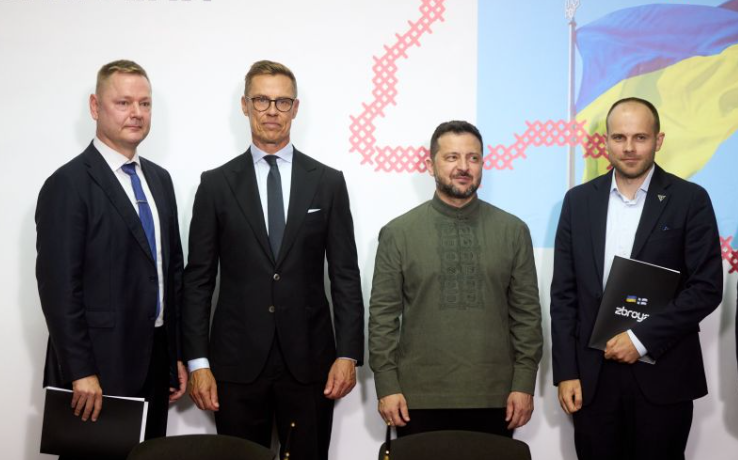
The initiative, unveiled under the Build with Ukraine framework and formalized through a Joint Statement of Intent signed in the presence of the Presidents of Ukraine and Finland on August 23, represents far more than another defense contract. It signals the emergence of a new industrial model where wartime innovation developed under the harshest conditions becomes the foundation for Europe's next generation of military capabilities.
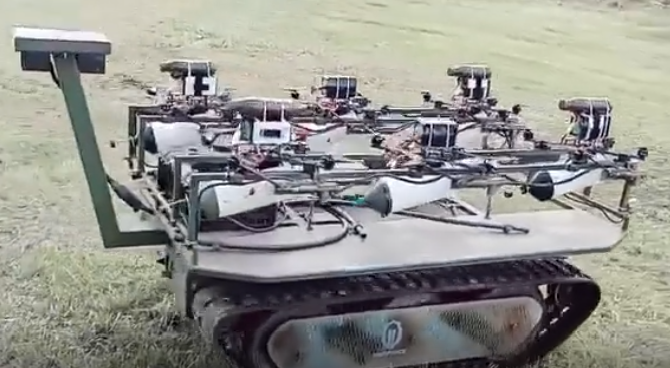
At the center of the agreement stands TerMIT 2.0, a combat-proven robotic platform designed to support military logistics, evacuation missions, and frontline operations. The first production benchmark of the partnership is ambitious: 320 TerMIT 2.0 complexes designated for the Defense Forces of Ukraine.
Yet the strategic significance extends well beyond the numbers.
For decades, defense innovation flowed from established Western manufacturers toward smaller partner nations. Ukraine has dramatically reversed that equation. After more than four years of high-intensity warfare, Ukrainian companies have become among the world's fastest innovators in drones, robotics, electronic warfare, and autonomous systems.
What began as a survival necessity is rapidly becoming an exportable competitive advantage.
The Finnish-Ukrainian partnership reflects a growing recognition that Ukraine's defense technology sector now offers something Europe urgently needs: solutions tested not in simulations, but in active combat.
Finnish industry brings the manufacturing depth. Ukraine brings battlefield experience.
Together, the combination could become a blueprint for the continent.
The production model itself is noteworthy. Rather than relying on a single large facility, manufacturing will be distributed across a network of Finnish industrial partners. Such an approach significantly increases resilience, expands production capacity, and reduces vulnerability to disruptions. It also mirrors lessons learned from Ukraine's wartime industrial adaptation, where decentralization has become a critical survival and growth strategy.
Perhaps most importantly, the agreement effectively creates a secure production footprint outside Ukraine while preserving direct connections to operational requirements from the battlefield.
That may prove decisive.
European nations are racing to rebuild defense inventories, expand industrial capacity, and reduce dependence on lengthy procurement cycles. Traditional defense giants remain essential, but the speed demanded by modern warfare increasingly favors agile companies capable of rapidly iterating technology based on real-world feedback.
Ukraine has mastered that cycle under extraordinary circumstances.
The partnership also demonstrates how defense cooperation is evolving into something deeper than procurement. It is becoming industrial integration.
Finland gains access to cutting-edge robotic systems refined in active combat. Ukraine gains expanded manufacturing capacity and access to one of Europe's most advanced engineering ecosystems. Europe gains another layer of strategic resilience precisely when security concerns continue to reshape policy priorities across the continent.
The symbolism is equally powerful.
When Tencore and Insta first signed a Memorandum of Understanding on February 24, the collaboration was a promising industrial project. Six months later, it has grown into a partnership receiving direct visibility at the highest political levels in both countries.
That trajectory reflects a broader shift underway across Europe.
Ukraine is no longer viewed solely as a recipient of military assistance. Increasingly, it is becoming a provider of defense innovation, operational expertise, and technological leadership.
The question is no longer whether Ukrainian defense technology can compete globally.
The question is how quickly Europe can integrate it.
The signing in Helsinki offers one possible answer.
The war that forced Ukraine to become one of the world's most dynamic defense innovation ecosystems is now reshaping industrial policy beyond its borders. As robotic systems roll off Finnish production lines and make their way toward Ukrainian forces, a new chapter of European defense integration is being written.
And it is being written not with speeches, but with robots.