Frankenburg’s Mark I - Why Affordability Is Becoming the Ultimate Air Defence Advantage
The defence industry has spent decades chasing precision, sophistication, and technological superiority. At Eurosatory 2026, a different narrative emerged—quieter, but far more disruptive.
Affordability is no longer a compromise. It is becoming strategy.
The unveiling of Frankenburg’s Mark I guided air defence missile marks more than just a new product launch. It signals a broader transformation in how modern warfare is being engineered, produced, and ultimately fought. In a world defined by mass drone warfare and continuous attrition, the equation has changed. Cost is no longer a secondary factor. It is the battlefield multiplier.
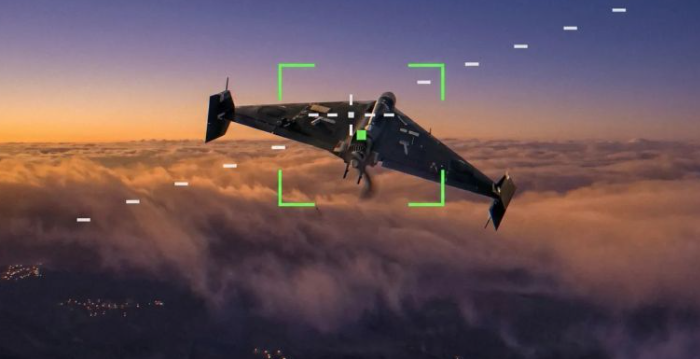
For years, air defence systems were built around scarcity: highly capable, highly expensive interceptors designed to neutralize high-value targets. That model is under pressure. The proliferation of low-cost drones has flipped the economic logic of war. When a $500 drone forces a $100,000 interception, the math becomes unsustainable.
The answer is now clear: scale must meet scale.
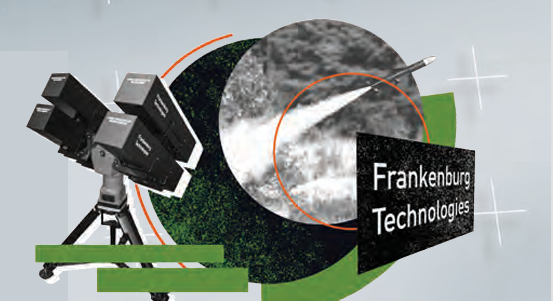
Frankenburg’s Mark I appears to be designed precisely for that reality. A low-cost, mass-manufacturable guided interceptor capable of engaging targets at speeds exceeding 1,000 km/h is not just a technical achievement—it is an economic statement. Designed to integrate into existing defence architectures, the system emphasizes compatibility over reinvention, and scalability over exclusivity.
And critically, it is not being presented as a standalone product.
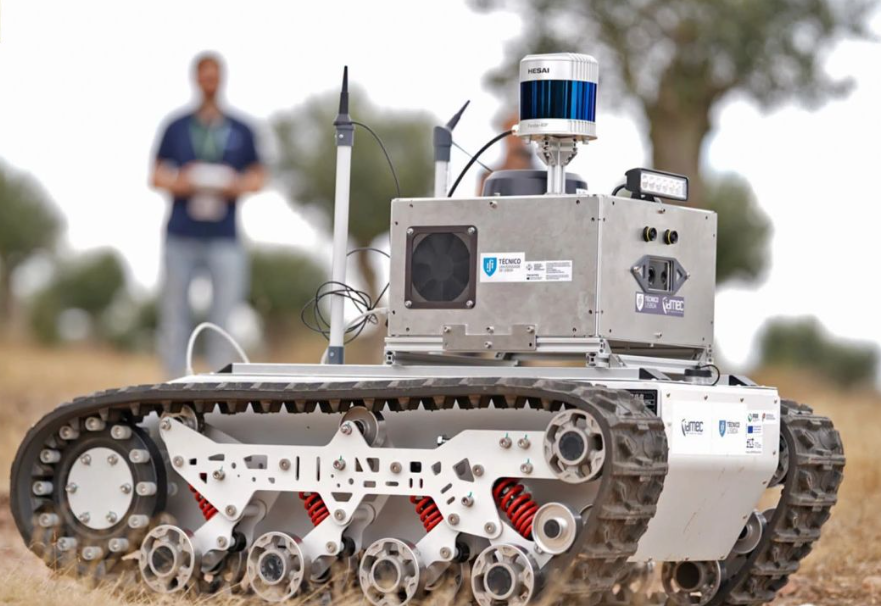
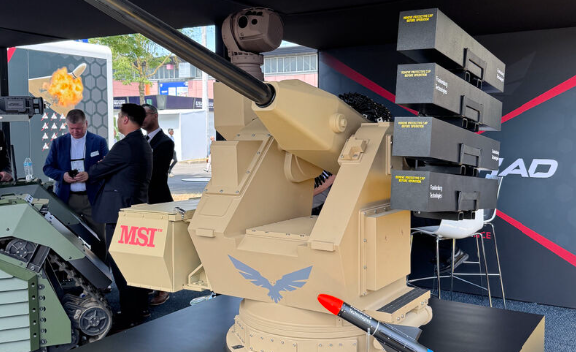
At Eurosatory, the missile was shown embedded within multiple operational contexts: ground-based launch systems, airborne platforms, layered air defence networks, counter-UAS ecosystems, and even mobile robotic solutions. This is not about building a missile. It is about building a node within a system.
That distinction matters.
Modern defence ecosystems are increasingly defined by interoperability. No single system wins wars. Networks do. The ability to plug into existing platforms—from traditional defence contractors to emerging autonomous systems—suggests an understanding that the future of defence is not modular hardware, but integrated capability.
This shift also reflects a broader industrial evolution.
The defence sector is beginning to adopt principles long associated with high-tech manufacturing: iterative design, scalable production, and cost-sensitive engineering. The emphasis is no longer solely on cutting-edge breakthroughs, but on repeatable, distributable solutions. In other words, defence is becoming more like industry—and less like bespoke engineering.
However, this transformation introduces its own tensions.
Affordability requires standardization. Standardization can constrain innovation. Balancing these forces will define the next generation of defence competition. The companies that succeed will not be those that build the most advanced systems—but those that can deliver reliable, integrated, and cost-effective solutions at scale.
The Mark I sits directly within this emerging paradigm.
It acknowledges a fundamental truth: in modern conflicts, the question is no longer “Can you intercept?” but “Can you keep intercepting?” Sustainability, both operational and financial, is the new benchmark of effectiveness.
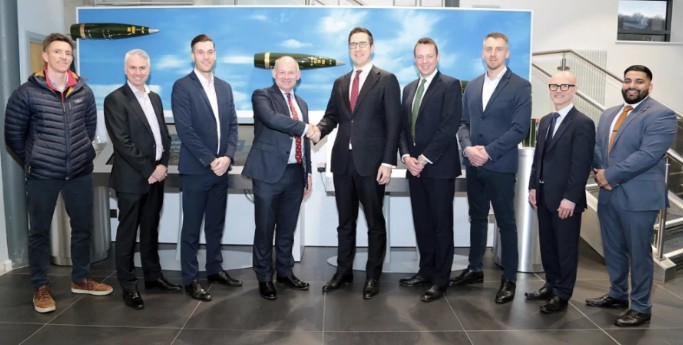
The presence of multiple integration partnerships—across air, land, and autonomous robotic platforms—also highlights another critical trend: collaboration is no longer optional. The complexity of modern defence systems demands ecosystems, not silos. No single player owns the battlefield.
At Eurosatory, the message was clear for those willing to see it.
The future of air defence will not be defined by the most advanced missile. It will be defined by the missile that can be built, deployed, and replaced at scale—without breaking the system that relies on it.
In this context, “affordable” is no longer a limitation.
It is the new standard.