Forget Flying Taxis - Why $2 Drone Deliveries Will Crush the Last Mile Economy
For years, the spotlight in Advanced Air Mobility (AAM) has been dominated by sleek passenger eVTOL concepts promising urban air taxi networks. Billion-dollar forecasts and futuristic visuals have fueled the narrative. But beneath the hype, a quieter—and far more disruptive—revolution is already underway.
It’s not about flying people. It’s about delivering packages.
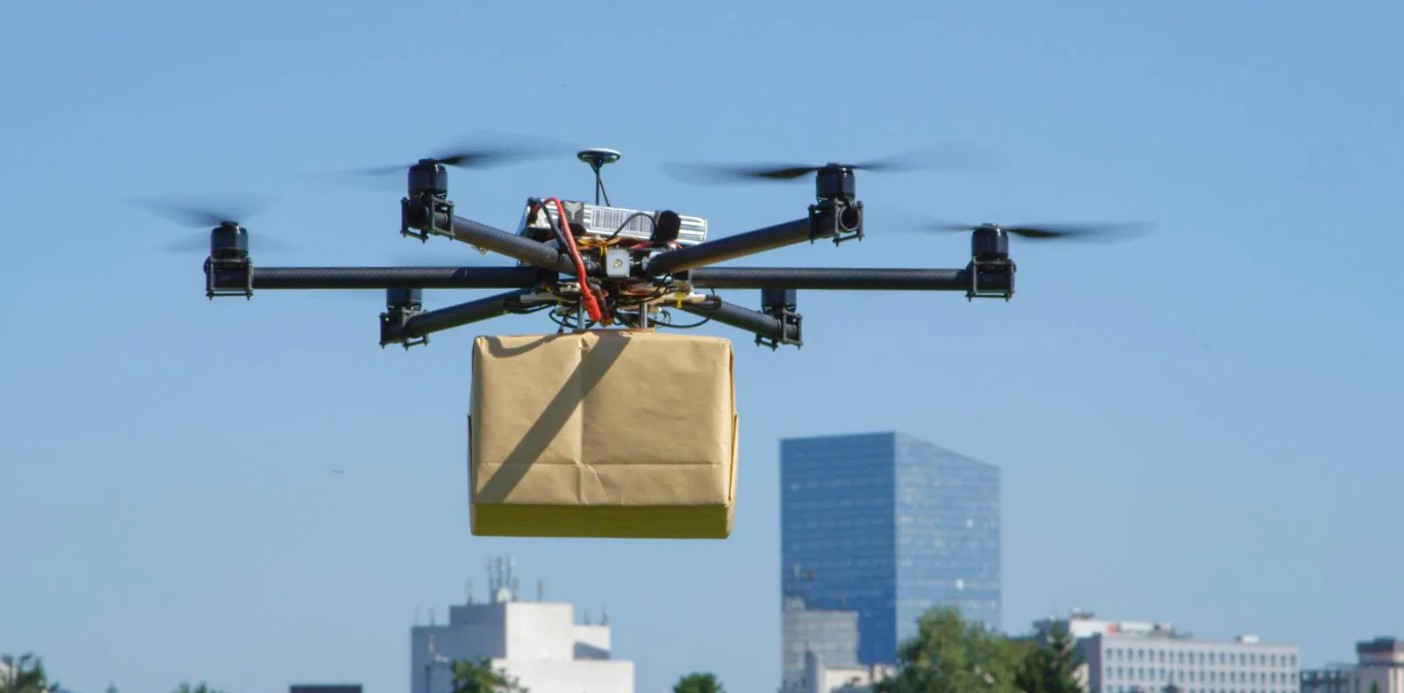
While passenger eVTOL dreams continue to face regulatory, infrastructure, and economic hurdles, small unmanned aerial systems (sUAS) are rapidly transforming the $400 billion global courier, parcel, and postal industry. According to a recent report by PwC Drone Powered Solutions, drone deliveries are moving from pilot projects to scalable operations—with real economics, real demand, and real impact.
The numbers are striking. From just 5 million B2C drone deliveries in 2024, the market is projected to explode to over 800 million deliveries within the next decade. At the same time, unit economics are improving dramatically. Current delivery costs—ranging between $6 and $25—are expected to drop to around $2 per delivery by 2034. That’s not just competitive with traditional last-mile logistics—it’s transformative.
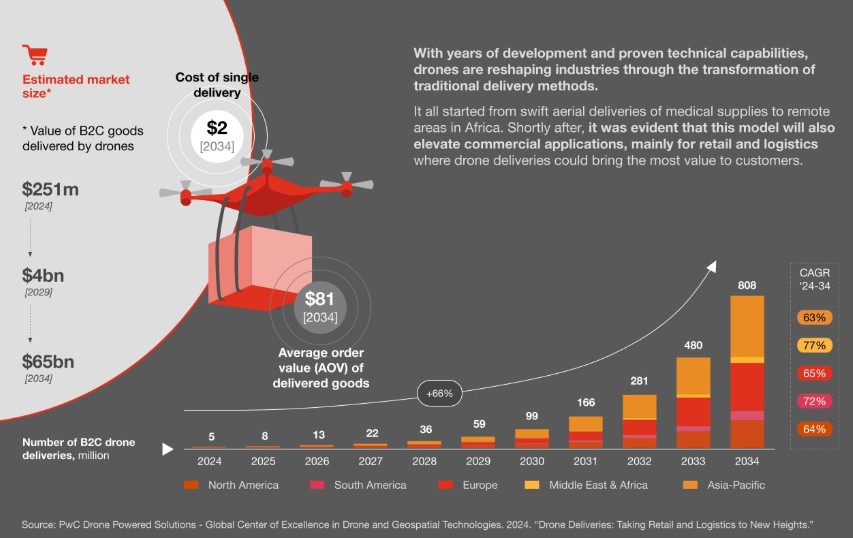
This is where the real disruption lies.
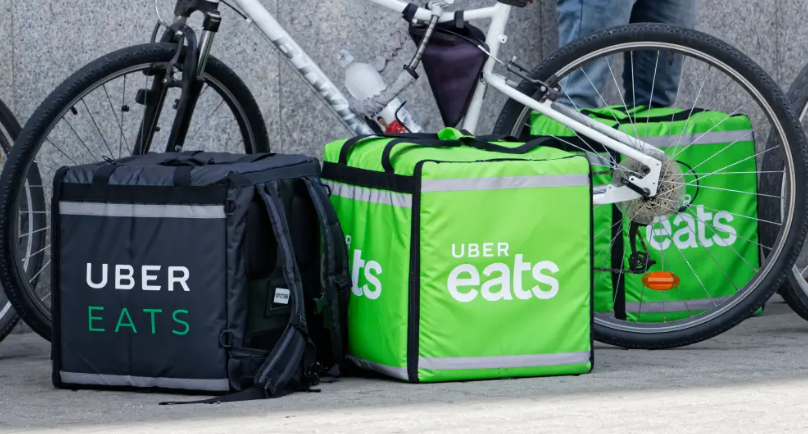
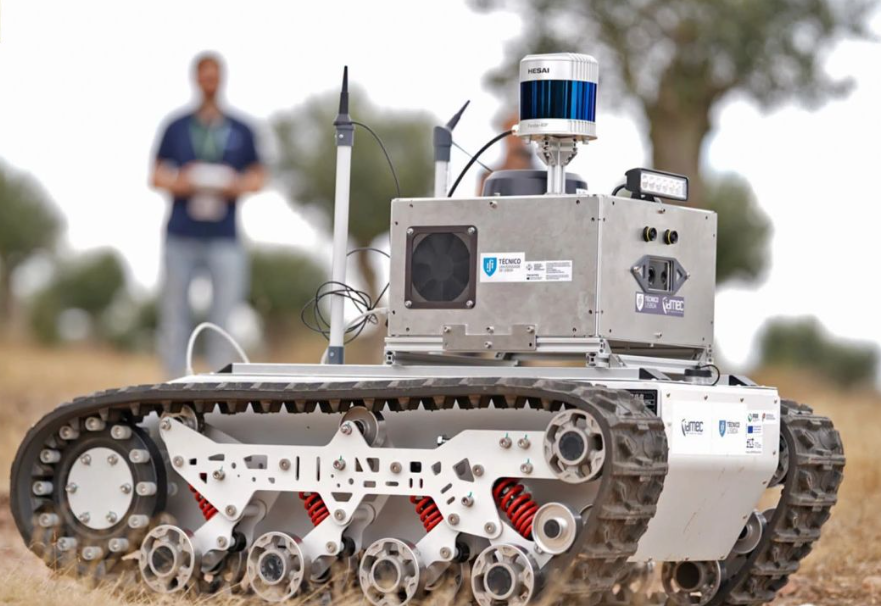
Traditional delivery models rely heavily on ground-based transport: vans, motorbikes, and bicycles navigating congested urban environments or covering long rural distances. These systems are labor-intensive, time-consuming, and increasingly expensive. Drones, by contrast, offer a direct, point-to-point solution that bypasses traffic, reduces delivery times, and lowers operational costs.
The impact is particularly pronounced in suburban and rural areas. Unlike dense urban centers, where regulatory constraints and infrastructure limitations slow adoption, less populated regions provide ideal conditions for drone deployment. Here, drones can bridge accessibility gaps, delivering goods to areas where traditional logistics struggle to operate efficiently.
This creates a powerful value proposition: faster deliveries, lower costs, and expanded market reach.

Retailers and logistics companies are already beginning to recognize this shift. Drone deliveries are not just about convenience—they are about unlocking new business models. By enabling rapid, cost-effective delivery, companies can reach previously underserved customers, improve retention, and create entirely new revenue streams.
The environmental benefits add another layer of appeal. A single delivery drone can reduce carbon emissions significantly compared to combustion-engine vehicles, with estimates suggesting savings of up to 45 tons of CO₂ per year. In an era where sustainability is becoming a core business priority, this advantage cannot be ignored.
Yet challenges remain.
Urban deployment continues to be a complex puzzle. Safety concerns, limited landing zones, and the need for new infrastructure—such as rooftop hubs—slow down large-scale adoption in cities. Regulatory frameworks are still evolving, and public acceptance is not guaranteed. These factors suggest that urban drone delivery will develop gradually, rather than explosively.
But this does not diminish the broader trajectory.
The real story is not about replacing every delivery method overnight. It’s about gradual substitution—targeting use cases where drones offer clear advantages. Medical deliveries, time-sensitive shipments, and remote logistics are already proving to be strong entry points.
Over time, as technology matures and regulations adapt, the scope will expand.
What makes this shift particularly significant is its scalability. Unlike passenger eVTOLs, which require complex certification, infrastructure, and high capital investment, delivery drones can be deployed incrementally. They do not need passengers, airports, or air traffic integration at the same level. They need demand—and that demand already exists.
This is why the narrative around AAM needs to evolve.
The future of aerial mobility is not just about moving people faster. It’s about moving goods smarter. And in that future, drones are not a niche solution—they are a foundational layer of the logistics ecosystem.
The trillion-dollar dreams of flying taxis may still capture headlines. But the real revolution is happening closer to the ground—one package at a time.