Brazil’s Food Delivery Giant Is Betting on the Sky by Speedbird Aero

If you think drone delivery is still a Silicon Valley experiment, Brazil just proved you wrong.
In January 2026, Speedbird Aero announced a strategic investment from iFood — Latin America’s undisputed delivery heavyweight. But this isn’t just another startup funding story. It’s a signal that one of the world’s most active food delivery ecosystems is preparing for lift-off.
Literally.
With 180 million monthly deliveries, 60 million customers, and half a million couriers, iFood dominates Brazil’s urban logistics landscape. Now it’s putting money into a future where some of those deliveries won’t move through traffic at all.
They’ll fly.
The Infrastructure Shift No One Is Talking About
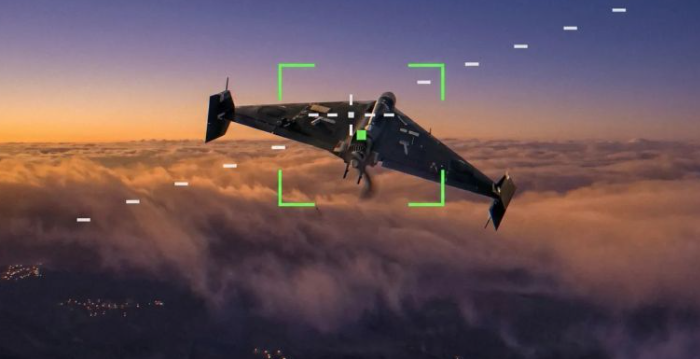
Speedbird Aero is not a flashy newcomer. It is currently the only company in Brazil certified by ANAC for BVLOS (Beyond Visual Line of Sight) drone operations with two cargo-approved aircraft models.
That certification matters.
BVLOS is the difference between experimental hobby flights and scalable commercial air logistics. It means drones can operate beyond the pilot’s direct line of sight — a prerequisite for real urban deployment.
Speedbird has already conducted nearly 40,000 commercial drone missions and runs what it claims is the longest-operating food drone delivery service in the world, active since 2020 in Sergipe. In October, it secured Brazil’s first permanent authorization for safe drone flights over populated areas.
This isn’t concept. It’s infrastructure.
Why iFood Is Making This Bet
iFood isn’t replacing its couriers. It’s augmenting them.
Brazil’s megacities present logistical nightmares: congestion, informal settlements, geographic barriers, and sprawling residential complexes. Traditional last-mile delivery struggles in areas where time, cost, and safety collide.
Drones change the geometry of cities.
One of the first new routes under development connects a shopping center in Greater São Paulo with nearby residential complexes. In dense, high-demand zones, drones could cut delivery times dramatically while reducing operational friction.
The strategy is clear: use air mobility where ground mobility breaks down.
And the numbers are compelling. Projections estimate Brazil’s drone delivery market could exceed 40 million deliveries annually within the next few years.
In a country already comfortable with high-volume app-based logistics, that’s not science fiction. That’s market evolution.
A $5.8 Million Signal, Not Just Capital
The $5.8 million bridge round — backed by investors from Portugal, the United States, and Brazil — isn’t massive by global venture standards.
But it’s strategic.
It positions Speedbird to accelerate manufacturing, expand routes, and scale operations within Brazil — its home market — while leveraging international credibility.
More importantly, it signals confidence from an industry giant that understands operational complexity at scale.
iFood processes 180 million orders per month. If even a fraction transitions to aerial support in high-friction zones, the operational model of urban delivery begins to shift.
The Quiet Urban Mobility Revolution
Globally, drone delivery has often been framed as futuristic or niche. But in Brazil, it’s becoming pragmatic.
The model emerging here isn’t about replacing jobs or automating everything. It’s about hybrid logistics — ground couriers supported by autonomous aerial systems.
This distinction matters.
Urban air mobility debates often collapse into binary narratives: humans vs. machines. What Speedbird and iFood are building is collaborative infrastructure — drones handling long or inefficient segments, humans managing local interface and service.
That blend may prove more realistic — and more scalable — than fully autonomous fantasies.
The Bigger Picture
Brazil is not just testing drones.
It’s testing the future of high-volume urban air logistics in one of the most complex metropolitan environments in the world.
If it works here, it works anywhere.
Speedbird’s expansion into São Paulo — one of the largest urban mobility markets globally — will be a critical proving ground. Regulatory maturity, dense population, and massive delivery demand create a unique stress test.
And if projections of 40 million annual drone deliveries materialize, Brazil won’t just be adopting innovation.
It will be leading it.
The sky above Brazilian cities is no longer empty.
It’s becoming infrastructure.

.jpg)