Flying Organs, Not Hype - Dufour Aerospace’s UAV Mission Signals a Turning Point in Healthcare Supply Chains
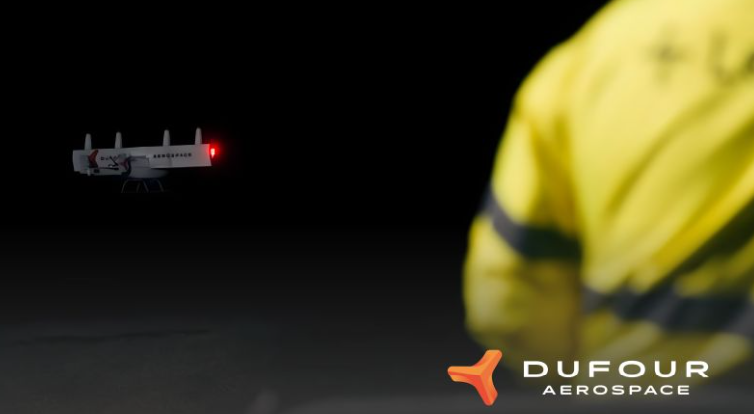
Imagine a world where life-saving tissues don’t wait in traffic, don’t depend on airport schedules, and don’t lose viability because of logistics delays. That future is no longer theoretical—it is already taking shape in the skies above western France.
In a groundbreaking operation, Dufour Aerospace has helped deliver a living tissue graft using an unmanned aerial vehicle (UAV), marking a major step forward in how healthcare systems can handle time-critical logistics. More than just a technical success, this mission signals a shift in how medical supply chains could operate in the near future: faster, more precise, and dramatically more resilient.
What sets this operation apart is not simply the use of a drone—but the type of drone. The message is clear from the outset: this is not about consumer-grade gadgets. This is about certified, redundant aircraft systems designed for mission-critical operations. When human lives depend on the integrity and timing of delivery, reliability becomes non-negotiable. Dufour Aerospace positions itself firmly in this high-stakes category, redefining drones as part of professional aviation infrastructure rather than experimental tools.
The mission itself involved transporting a medical graft along a predefined route using a UAV equipped for long-range logistics. It is the first operation of its kind in France—an important milestone that demonstrates that drone delivery is no longer confined to pilot projects or controlled environments. It works in real-world conditions, with real medical consequences.
Speed is at the heart of this transformation. In organ and tissue transport, minutes can directly impact viability and outcomes. Traditional methods—road transport or helicopters—introduce variables like traffic congestion, scheduling delays, and high operational costs. UAVs, by contrast, offer a direct, point-to-point solution. They reduce uncertainty and create a logistics channel that is both predictable and scalable.
Yet, the success of this mission wasn’t just about technology—it was about coordination. Multiple partners played critical roles: Leeft led the operational logistics, the CR2TI UMR 1064 laboratory at CHU de Nantes ensured medical oversight, and IGL contributed expertise in organ preservation. This multi-actor ecosystem reflects a deeper truth: innovation in healthcare is never isolated. It requires the seamless integration of technology, medicine, and logistics.
The complexity of such coordination is openly acknowledged. According to CEO Sascha Hardegger, these operations involve “many different actors” and extremely limited time windows. But rather than being a limitation, this complexity becomes an asset—it provides real-world feedback that drives continuous improvement. Each mission is not just a delivery; it’s a learning cycle that enhances reliability, safety, and efficiency.
Technologically, Dufour Aerospace’s tilt-wing aircraft plays a defining role. Unlike conventional drones, it can operate without a runway, taking off and landing vertically while maintaining the efficiency of forward flight. This versatility opens up new logistical possibilities. Hospitals, labs, and clinics could send and receive critical materials directly—without relying on centralized hubs or traditional infrastructure.
Beyond performance, there is an emerging sustainability angle. UAV-based transport has the potential to reduce reliance on fuel-intensive vehicles and streamline delivery routes. While still in early stages, such systems could align medical logistics with broader environmental goals—an increasingly relevant factor in modern healthcare systems.
Perhaps the most compelling aspect of this development is its broader implication: a shift from reactive to proactive healthcare logistics. Instead of managing delays and constraints, systems can be designed to eliminate them. UAVs enable a future where delivery timing is optimized, risks are minimized, and patient outcomes are improved through logistics precision.
Of course, challenges remain. Scaling such operations will require regulatory alignment, standardized procedures, and robust operational frameworks. But this mission demonstrates that the foundation is already in place.
This is not about drones replacing existing systems overnight. It is about augmenting them—creating a hybrid logistics network where air mobility plays a critical role when time is the most valuable resource.
The message is clear: healthcare logistics is taking off—literally. And in this new reality, the sky may become the fastest path to saving lives.