Flying Objects Technologies: Is GPS Becoming the Weakest Link in Modern Drones?

Satellite navigation has been the invisible backbone of aviation, drones, ships and autonomous systems. But recent conflicts and growing electronic warfare capabilities have exposed an uncomfortable reality:
What happens when GPS disappears?
As jamming and spoofing incidents become increasingly common, reliable navigation can no longer depend on GNSS alone. The future of autonomy demands resilient systems capable of operating in challenging environments.
This is where Flying Objects Technologies positions itself.
Beyond Traditional Navigation
Based in Paris, Flying Objects Technologies specializes in introducing, advising, and implementing advanced technologies for flying platforms.
Rather than focusing on a single component, the company supports manufacturers and operators with complete expertise in critical mission systems, including:
- GNSS-denied navigation;
- Detect-and-Avoid (DAA) technologies;
- Jam-resistant datalinks;
- Civilian communication systems.
Their mission is straightforward:
Make autonomous platforms reliable when conditions are far from ideal.
The GNSS Challenge
Satellite navigation has transformed aviation and unmanned systems, but it also introduced a single point of failure.
Interference can occur due to:
- Electronic warfare;
- Intentional jamming;
- Signal spoofing;
- Urban environments;
- Terrain masking;
- Multipath effects.
Whether for drones, aircraft, ships, ground vehicles, or other autonomous systems, losing positioning capability can compromise an entire mission.
Flying Objects Technologies has developed expertise in selecting and integrating both civilian and military navigation solutions, helping operators maintain performance when GNSS signals become unreliable.
Preventing Collisions Before They Happen
As airspace becomes increasingly crowded, another challenge emerges: safe coexistence.
Detect-and-Avoid systems are becoming essential for advanced air mobility, BVLOS operations, and autonomous aviation.
Flying Objects Technologies provides hardware and software solutions that help manufacturers and airspace managers reduce collision risks both in the air and on the ground.
The ability to "see and avoid" is quickly evolving from a desirable feature into a regulatory necessity.
Connectivity Under Pressure
Navigation alone is not enough.
Without a stable communication link, operators lose access to telemetry, command and control functions, and real-time video transmission.
Modern drones require reliable datalinks capable of delivering:
- High availability;
- Strong throughput;
- Data integrity;
- Resistance against interference.
Flying Objects Technologies supports both civilian and more resilient communication architectures, recognizing that connectivity has become one of the most critical elements of autonomous operations.
More Than Hardware
Technology selection is often just as important as technology itself.
Many manufacturers face challenges when integrating rapidly evolving solutions into their platforms.
Flying Objects Technologies acts as a bridge between emerging technologies and practical implementation, helping customers identify the most suitable systems for their applications.
Their expertise spans multiple vehicle categories, including:
- Aircraft;
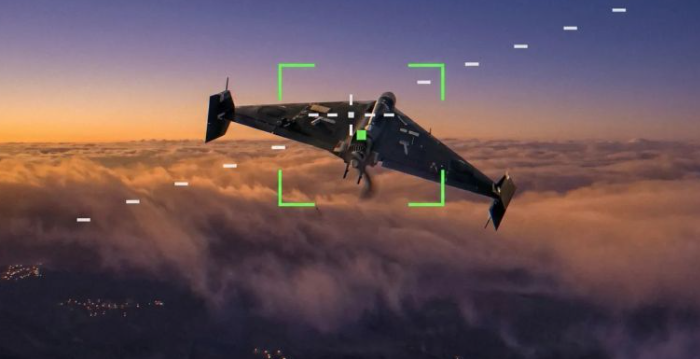
- Drones;
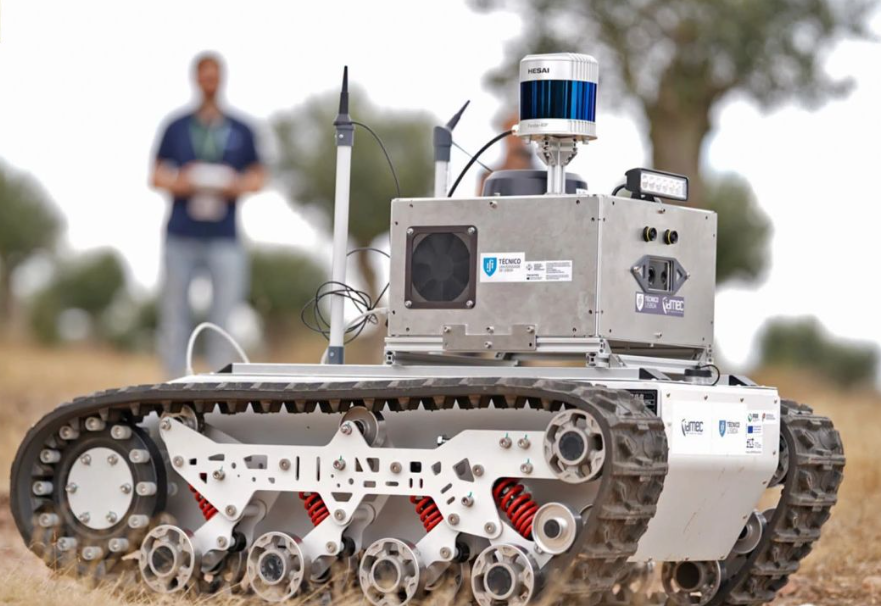
- Ground vehicles;
- Maritime platforms.
A New Reality for Autonomous Systems
For years, GNSS availability was taken for granted.
Today, resilience has become the new priority.
The ability to continue operating despite jamming, spoofing, or communication disruptions is no longer a niche requirement—it is rapidly becoming a fundamental expectation.
Perhaps the question is no longer:
"Can your platform fly?"
But rather:
"Can your platform still operate when GPS doesn't?"