Europe's Next Defense Giant Isn't in Germany, France, or Britain. It's in Portugal.
For decades, Europe's defense industry followed a predictable map.
Germany built tanks.
France built fighters.
Britain built warships.
The major defense champions emerged from the continent's traditional industrial powers.
That map may be becoming obsolete.
Because one of Europe's fastest-growing defense companies is not headquartered in Paris, Berlin, or London.
It is based in Lisbon.
And its rise tells us something profound about the future of military power.
Tekever's recent valuation of $6.4 billion, following a $580 million funding round, is not simply another startup success story. It is evidence that the next generation of defense companies is being built according to completely different rules.
The company making headlines today is not producing fighter aircraft, submarines, or armored vehicles.
It is producing something potentially more important:
Learning speed.
The New Defense Champions Are Different
The traditional defense industry was built around massive platforms.
Programs requiring decades.
Factories employing thousands.
Procurement cycles stretching across political generations.
Success depended on scale, capital, and government relationships.
The drone revolution is rewriting that formula.
A company can now emerge from relative obscurity and become strategically relevant in only a few years.
Not because it builds larger systems.
Because it adapts faster.
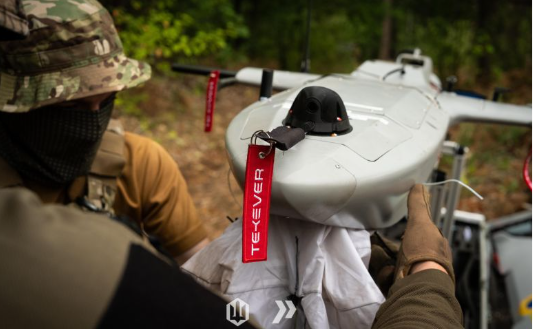
Tekever's growth reflects exactly this shift.
Its AR3 and AR5 systems have become widely known, but the real story is not any individual drone.
It is the ecosystem behind them.
A company capable of rapidly designing, deploying, improving, and scaling autonomous systems occupies a very different position from traditional defense contractors.
The value no longer resides solely in hardware.
It increasingly resides in software, data, operational feedback, and continuous development cycles.
The Ukraine Effect
No discussion of Europe's new defense economy can ignore Ukraine.
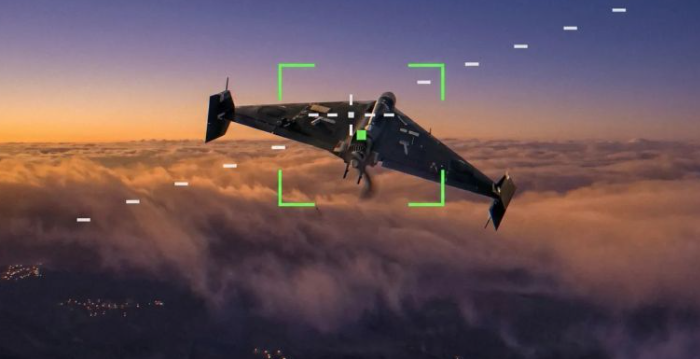
The war has transformed drones from specialist equipment into central military assets.
Equally important, it has transformed battlefield experience into commercial value.
Every mission produces data.
Every operational challenge generates feedback.
Every adaptation becomes a competitive advantage.
Companies capable of incorporating real-world operational lessons rapidly are gaining an advantage that traditional development timelines struggle to match.
This is precisely why investors are taking companies like Tekever seriously.
The future defense market is unlikely to reward those who simply manufacture equipment.
It will reward those who can evolve equipment continuously.
The ARX and the Next Battlefield
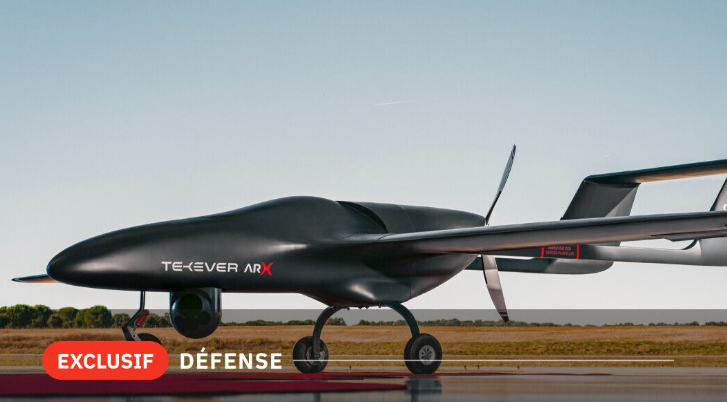
Perhaps the most revealing detail is Tekever's planned ARX platform.
A 12-meter wingspan unmanned aircraft capable of deploying and managing swarms of smaller drones.
At first glance, it appears to be another large unmanned system.
In reality, it represents a potential change in military thinking.
For over a century, military effectiveness was measured through individual platforms.
The best aircraft.
The fastest fighter.
The most capable ship.
Tomorrow's battlefield may operate differently.
The most important system may be the one coordinating dozens or hundreds of autonomous assets simultaneously.
The commander increasingly becomes an orchestrator of machines.
The platform becomes a network.
And the network becomes the capability.
The Real Product Is Not the Drone
This is where many analysts still underestimate what is happening.
Tekever is not selling drones.
At least not primarily.
It is selling persistence.
Information.
Connectivity.
Data.
Autonomy.
Learning cycles.
And that may be significantly more valuable than the aircraft themselves.
The twentieth century defense industry focused on mass production.
The twenty-first century defense industry increasingly focuses on mass adaptation.
Who can improve fastest?
Who can integrate AI fastest?
Who can deploy updates faster?
Who can convert operational experience into capability most efficiently?
These are rapidly becoming the defining questions.
Portugal's Unexpected Moment
There is a lesson here for Europe.
Innovation no longer emerges exclusively from traditional industrial centers.
Lower barriers to entry, software-driven development, artificial intelligence, and autonomous systems are redistributing opportunity.
The next defense giant may emerge from Portugal.
Or Estonia.
Or Finland.
Or a startup that does not yet exist.
The geography of military innovation is becoming flatter.
And far more competitive.
The Real Arms Race
Many people still believe the new arms race is about drones.
They are only partially correct.
The real competition is not between drone manufacturers.
It is between learning ecosystems.
The company that learns fastest.
The company that adapts fastest.
The company that scales innovation fastest.
That company gains an advantage regardless of where it is located.
Tekever's rise therefore says something bigger than the success of a Portuguese technology firm.
It signals a transformation of defense itself.
The future may belong not to the largest defense companies.
But to the fastest.
And that should make every traditional industry leader in Europe pay attention.