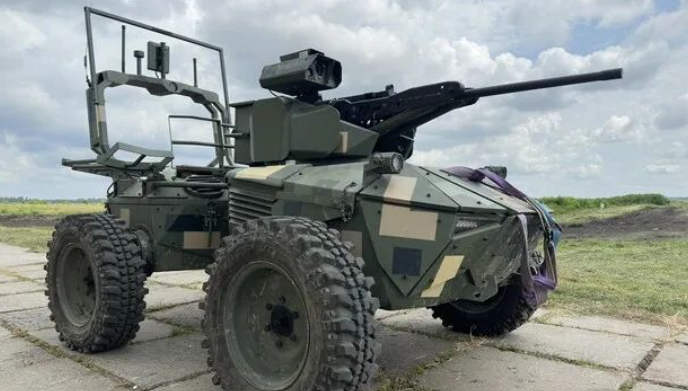
TEKEVER and NYX - Britain’s Bet on AI Wingmen Signals a New Era of Autonomous Warfare

UK Ministry of Defence has selected TEKEVER to spearhead Project NYX, a bold initiative designed to bring autonomous “loyal wingman” drones into direct cooperation with Apache attack helicopters. Behind the technical language lies a simple but profound transformation: the future of warfare is no longer purely human.
Project NYX is not just another procurement programme. It is a strategic pivot. At its core is the development of uncrewed rotary platforms—drones capable of flying alongside human pilots, sensing, deciding, and acting in real time across contested environments. From reconnaissance to electronic warfare and even precision strike support, these systems are built to extend both the reach and survivability of traditional crews.
But what makes this programme stand out is not only its ambition—it’s its urgency.
The timelines are aggressive, the expectations high, and the political message unmistakable: the UK intends to lead, not follow, in the race for autonomous military capability. In an era where conflicts increasingly hinge on speed, data, and adaptability, Project NYX represents a gamble that autonomy and artificial intelligence can deliver decisive advantage.
TEKEVER’s role is central. Known for its operational deployment of autonomous systems in Ukraine, the company brings hard-earned battlefield experience rather than theoretical promise. This is not innovation from a laboratory—it is innovation forged in real conflict. The integration of advanced sensing, resilient communications, and AI-driven mission management reflects lessons drawn from a war that has already redefined drone warfare.
And yet, NYX is about more than just technology. It is about doctrine—how wars are fought and who fights them.
The concept of “loyal wingmen” shifts the dynamic fundamentally. Human pilots, long at the center of aerial warfare, are no longer alone in decision-making loops. Instead, they are supported—and potentially outpaced—by autonomous counterparts capable of processing data and reacting faster than any human could. The line between assistance and autonomy becomes increasingly blurred.
This raises uncomfortable but unavoidable questions. If machines identify targets, prioritize threats, and execute missions, where does accountability lie? How much control remains in human hands? And at what point does efficiency begin to overshadow ethical oversight?
The UK government appears willing to engage with these questions, but also to push forward despite them. Project NYX is embedded within a broader strategic push for sovereign capability—ensuring that critical military technologies are developed and controlled domestically. TEKEVER’s £400 million OVERMATCH investment, including a new autonomy hub in Bristol, reinforces this ambition.
The Bristol centre is more than an engineering facility; it is designed as a nucleus for future innovation. By connecting defence, academia, and industry, it aims to create a vertically integrated ecosystem—from design and manufacturing to deployment and support. The goal is clear: build a sustainable, scalable advantage in autonomy that extends beyond a single programme.
Economically, the stakes are equally significant. Projections suggest that OVERMATCH could contribute up to £1.7 billion to the UK economy by 2035. But the real value lies in strategic resilience—control over supply chains, talent, and intellectual property in a domain increasingly seen as critical to national security.
Still, the launch of Project NYX reflects a broader global reality. Nations are no longer asking whether to adopt autonomous systems, but how quickly and how far they are willing to go. The battlefield of tomorrow will not simply be populated by soldiers and vehicles—it will be shaped by algorithms, data streams, and machines capable of independent action.
In this context, Project NYX is both a technological leap and a philosophical one. It challenges long-held assumptions about warfare, control, and responsibility. It offers power—but demands trust in systems that are still evolving.
For the British Army, the promise is clear: enhanced effectiveness, greater survivability, and faster decision-making in increasingly complex environments. But the risks are equally evident. When machines become partners in combat, the nature of war itself begins to shift in ways that are difficult to fully predict.
Project NYX may well define the next chapter of military innovation. The real question is whether humanity will remain firmly in control of the systems it creates—or gradually become dependent on them.

.jpg)