Europe Draws Red Lines - Why Kaja Kallas’ Rejection of Schröder Matters for Ukraine Peace Talks
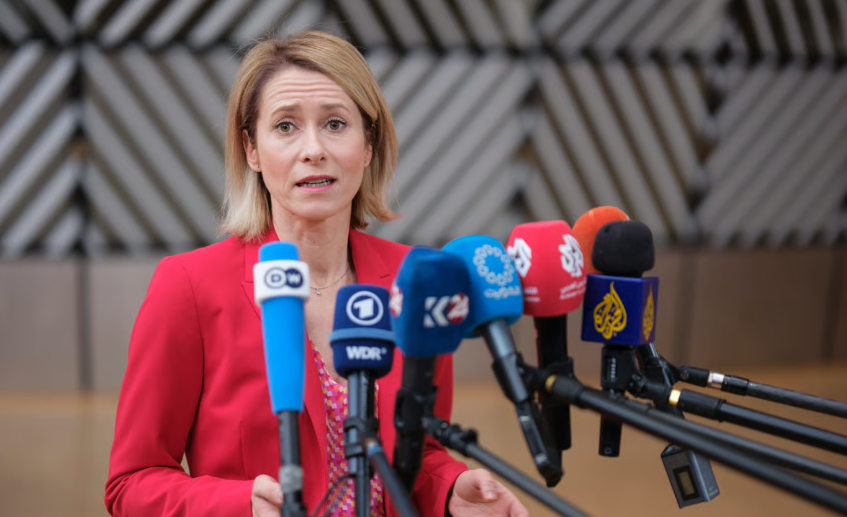
European Union foreign policy chief Kaja Kallas has drawn a clear and consequential line in Europe’s approach to potential peace negotiations between Russia and Ukraine. By firmly rejecting Russian President Vladimir Putin’s suggestion that former German Chancellor Gerhard Schröder represent Europe in peace talks, Brussels has underscored two strategic priorities: safeguarding Europe’s credibility and asserting its autonomy in shaping regional security negotiations.
At the heart of Kallas’ rejection lies a fundamental principle of diplomacy: legitimacy. Kallas argued that allowing Moscow to propose Europe’s negotiator would undermine the EU’s sovereignty and weaken its negotiating position from the outset. Her remark that such an arrangement “would not be very wise” reflects broader European concerns that Russia seeks to shape not only the outcome of negotiations, but also their architecture.
Beyond procedural concerns, the choice of Schröder himself is highly contentious. The former German chancellor has long-standing professional ties to Russian state-owned energy companies, a fact that has damaged his standing in much of Europe since Russia’s invasion of Ukraine. Kallas’ assessment that Schröder would effectively be “sitting on both sides of the table” highlights anxieties over conflicts of interest and perceived bias. Diplomacy relies as much on trust as on technical skill, and Schröder’s history makes trust difficult to secure from Kyiv or EU member states alike.
This episode also reveals Europe’s ongoing struggle to define its role in peace efforts. Until now, the United States has acted as the principal mediator between Kyiv and Moscow, while European leaders have largely supported Ukraine through military aid, sanctions, and economic assistance. However, calls for more direct European involvement are growing. German Foreign Minister Johann Wadephul recently argued that Europe should be represented in talks through the so‑called E3 format—Germany, France, and the United Kingdom—reflecting a push for coordinated European leadership rather than individual intermediaries.
Kallas’ comments suggest that Europe’s participation in any future talks would be conditional, not automatic. She emphasized that Russia must demonstrate concrete willingness to reduce regional instability before deeper European engagement becomes possible. As an example, she pointed to the continued presence of Russian troops in Moldova, framing withdrawal as a potential confidence‑building measure. This linkage reinforces the EU’s broader argument that European security cannot be separated from Russia’s conduct beyond Ukraine’s borders.
The firm stance taken by Kallas also aligns closely with Ukraine’s own position. Ukrainian officials have publicly rejected Schröder as an acceptable mediator, arguing that Europe must be represented by figures trusted by both sides and free from compromised affiliations. This alignment between Brussels and Kyiv strengthens Europe’s claim to act as a principled stakeholder rather than a divided or opportunistic actor.
Strategically, Putin’s proposal may be interpreted as an attempt to exploit internal European divisions, particularly within Germany’s political landscape, where opinions on Schröder remain mixed. By rejecting the proposal decisively, the EU signals that unity, credibility, and transparency will outweigh nostalgia, personal relationships, or symbolic gestures in shaping Europe’s role in ending the war.
Ultimately, Kallas’ rejection of Schröder is about more than one individual. It reflects Europe’s effort to reclaim agency in discussions about its own security, while setting minimum standards for who can credibly speak on its behalf. Whether Europe succeeds in becoming a meaningful mediator remains uncertain, but the message from Brussels is unambiguous: Europe will not allow Moscow to define the terms—or the faces—of peace.