EASA’s SORA 2.5. Europe’s Drone Industry Just Got a New Rulebook

While much of Europe's defense and aviation industry remains focused on drone production, one of the most consequential developments for the sector occurred not on a battlefield or at an air show, but inside a regulatory document.
On 30 June 2026, the European Union Aviation Safety Agency (EASA) released a major revision of its Easy Access Rules for Unmanned Aircraft Systems (UAS), formally incorporating SORA 2.5 into the European drone regulatory framework.
To many observers, the update appears technical and bureaucratic.
In reality, it may become one of the most important milestones for Europe's rapidly evolving drone ecosystem.
Because in aviation, regulation is often what determines whether innovation scales or remains trapped in demonstrations and pilot projects.
For years, drone technology advanced faster than the rules governing it. Companies built increasingly capable aircraft, autonomous navigation systems, AI-driven sensors, and long-range operations concepts. Regulators struggled to keep pace.
The challenge was not a lack of innovation.
The challenge was trust.
How do authorities safely approve operations involving autonomous systems flying near people, infrastructure, airports, industrial facilities, or urban environments?
That question sits at the heart of modern drone regulation.
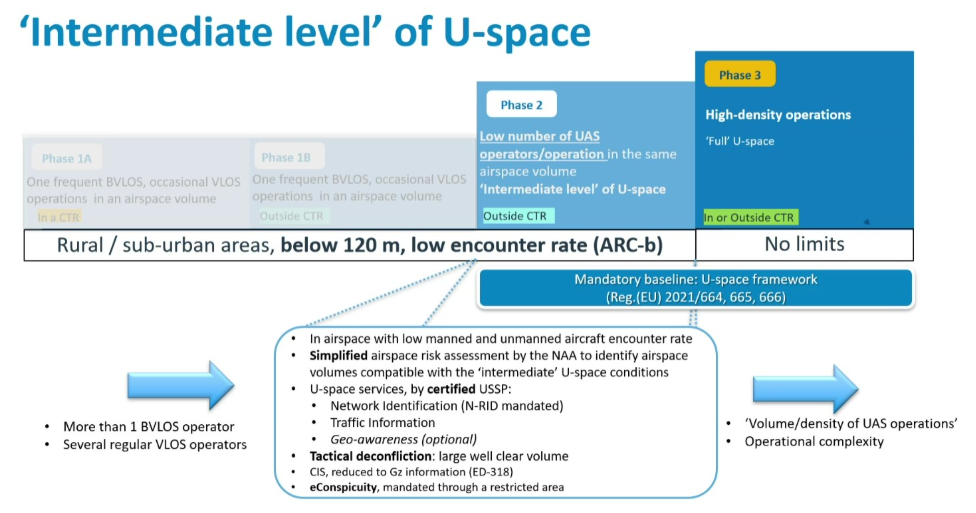
The answer increasingly lies in SORA — the Specific Operations Risk Assessment methodology developed by JARUS, the Joint Authorities for Rulemaking on Unmanned Systems.
SORA has become the de facto global language for evaluating drone operational risk.
With the integration of SORA 2.5 into EASA's Easy Access Rules, Europe is effectively standardizing the latest approach to measuring, mitigating, and approving complex drone operations across member states.
That may sound technical.
It is actually strategic.
The future drone economy will not be won by companies that simply build the best aircraft.
It will be won by those that can obtain regulatory approval for increasingly complex missions.
Inspection drones.
Medical logistics.
Urban air mobility.
Infrastructure surveillance.
Long-range BVLOS operations.
Counter-drone systems.
Autonomous security applications.
All depend not only on technical capability but on a credible, repeatable pathway to approval.
In that sense, regulation becomes a competitive advantage.
The inclusion of SORA 2.5 represents a broader shift occurring across the aviation industry.
The focus is moving away from merely certifying aircraft and toward certifying operational concepts.
A drone's safety is no longer judged solely by what it is.
Increasingly, it is judged by how, where, and under what conditions it operates.
That distinction matters enormously for companies working in advanced autonomy.
Modern drone missions involve multiple interacting technologies: artificial intelligence, machine vision, detect-and-avoid systems, communications networks, remote operators, cloud services, and automated decision support.
Evaluating such systems requires a more sophisticated framework than traditional aviation regulations were originally designed to provide.
SORA 2.5 moves in precisely that direction.
The timing is equally significant.
Across Europe, governments are accelerating investments in drone technology for both civilian and defense applications. Lessons from Ukraine, growing concerns about critical infrastructure protection, and expanding commercial opportunities have transformed drones from a niche market into a strategic industrial sector.
As the market matures, investors, insurers, operators, regulators, and customers increasingly demand predictability.
A clear regulatory framework is essential for that confidence.
Without it, scaling remains difficult.
With it, entirely new business models become possible.
Perhaps the most overlooked aspect of EASA's announcement is the publication format itself.
The agency is not merely updating regulations. It is modernizing access to them.
The new release is available through enhanced online tools, machine-readable XML formats, improved navigation systems, permanent article links, and upgraded search capabilities.
That may sound unremarkable, but it reflects a wider trend.
Aviation regulation itself is becoming digital.
Compliance is increasingly expected to integrate directly into software environments, operational platforms, safety management systems, and automated approval workflows.
The drone industry is not simply becoming more regulated.
It is becoming more data-driven, more scalable, and more standardized.
Which brings us to the larger picture.
For years, Europe has debated how to build a globally competitive drone industry. Funding programs, defense initiatives, and industrial strategies have attempted to accelerate innovation.
But innovation alone is never enough.
Industries become commercially successful when innovation meets predictable regulation.
That is why the June 2026 update may prove more important than it first appears.
SORA 2.5 is not merely another compliance document.
It is a framework that could determine which companies successfully scale across Europe and which remain stuck navigating fragmented approval processes.
The drone revolution is entering its next phase.
The winners may not be the organizations that fly first.
They may be the ones that understand the rulebook best.