Drones Planned to Protect Britain’s Undersea Cables from Russia
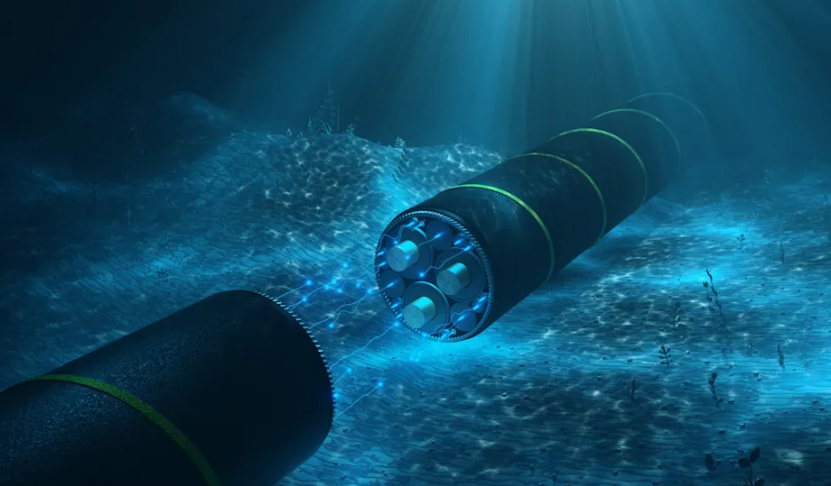
The next battlefield is not in the sky, nor on land—it lies deep beneath the ocean surface.
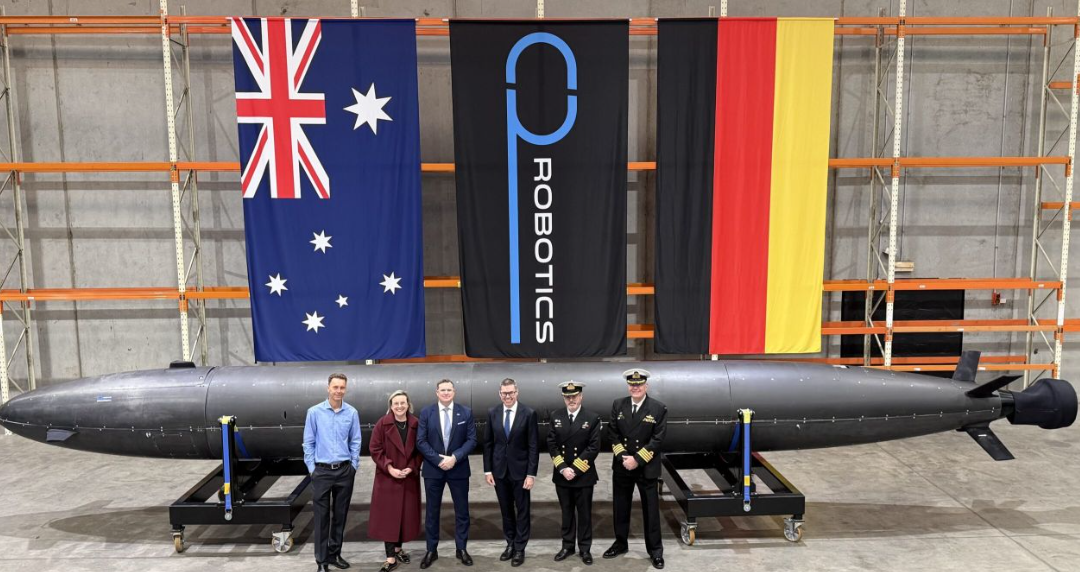
In a stark warning to geopolitical rivals, the United Kingdom, United States, and Australia are accelerating plans to deploy undersea drones and autonomous systems to defend one of the most fragile—and critical—pillars of modern society: subsea communication cables.
These cables carry £1.4 trillion in daily economic transactions, forming the invisible backbone of global finance, communications, and digital infrastructure. Yet they remain strikingly exposed.
Defence Secretary John Healey’s recent remarks signal a decisive shift. Under the AUKUS trilateral pact, the allies are expanding their focus beyond nuclear submarines toward advanced unmanned systems capable of detecting, deterring, and neutralizing threats below the surface.
This is more than a technical evolution—it is a strategic admission: the West’s economic lifelines are vulnerable.

From Deep-Sea Shadows to Strategic Reality
Recent events have turned theoretical concerns into operational urgency. British naval forces reportedly tracked a Russian Akula-class nuclear submarine and deep-sea research vessels surveying subsea infrastructure in the North Atlantic.
Such missions are not benign. They suggest the development of capabilities targeting cables that enable everything from financial markets to social media traffic.
Parliamentary warnings have been explicit: underwater cables are a “soft underbelly” of NATO infrastructure. In a future crisis, disruption—rather than direct confrontation—could become a preferred tactic.
Cut a cable, and economies stall. Communications fracture. Trust in infrastructure collapses.
This is hybrid warfare at its most silent—and potentially most disruptive.
Enter the Underwater Drone Era
The response is now taking shape through AUKUS. Healey’s vision centers on deploying autonomous underwater drones equipped with next-generation sensors and, potentially, defensive payloads.
These systems will serve three primary missions:
- Detection: Mapping and monitoring seabed infrastructure continuously
- Deterrence: Making covert sabotage significantly harder
- Response: Intervening rapidly when threats are detected
Unlike traditional naval patrols, drones offer persistence. They can remain underwater for extended periods, monitor vast areas, and operate in conditions too dangerous or costly for manned vessels.
This shift mirrors what has already happened in the air domain: cheaper, smarter, autonomous systems replacing large, expensive platforms for certain tasks.
Technology Meets Geopolitics
What makes this development particularly significant is its timing.
The AUKUS pact was originally framed as a submarine-focused Indo-Pacific initiative, with Australia expected to receive Virginia-class nuclear submarines over the coming decade. But the pivot toward underwater drones signals an expansion of scope.
The “High North,” North Atlantic, and Arctic regions are now firmly in focus.
These are areas where undersea infrastructure intersects with rising strategic competition, especially as melting ice opens new routes and access points.
In effect, the ocean floor is becoming the next frontier of geopolitical contestation—and surveillance.
A New Layer of Defense—or Escalation?
The deployment of undersea drones introduces both protection and risk.
On one hand, they enhance resilience:
- Continuous monitoring reduces detection gaps
- Autonomous response shortens reaction time
- Distributed systems improve survivability
On the other, they also lower the threshold for persistent surveillance and potential confrontation in contested waters.
The question is no longer whether subsea warfare capabilities will expand—but how quickly, and with what rules.
The Invisible War Has Begun
What is unfolding is not a future scenario—it is already underway.
From suspected surveillance missions to rapid technological rollouts, the competition for control beneath the waves is intensifying.
As governments invest in autonomous systems to guard cables and pipelines, one reality becomes clear:
The most critical infrastructure of the digital age is not in data centers or satellites—but lying quietly across the seabed.
And for the first time, armies are preparing drones to defend it.
%20(1)%20(1).jpg)