Drones Over Moscow - Ukraine’s Deepest Strike Yet Shatters Illusion of Untouchable Capital
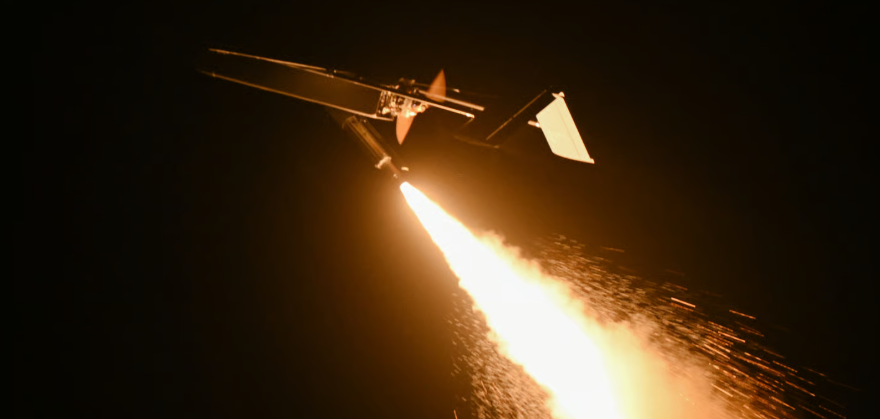
The war that Russia once sought to contain within Ukraine’s borders has once again reached its symbolic heart. This weekend, Kyiv launched what appears to be its largest long-range drone assault of the conflict, sending more than 1,300 unmanned aerial vehicles toward Moscow and its surrounding industrial belt. The scale alone is staggering. The implications are far more unsettling.
For years, Moscow has stood as a fortress—layered with advanced air defense systems, protected not only by missiles and radars but by a political narrative of invulnerability. That narrative now looks increasingly fragile. Ukrainian drones did not merely reach the capital; they struck it—targeting factories tied to precision weapons, oil infrastructure, and critical logistics nodes.
The message was unmistakable: nowhere is truly out of reach.
Even as Russian officials claimed that hundreds of drones were intercepted, the story unfolding on the ground suggested otherwise. Flights were diverted, operations disrupted, and residents once shielded from the direct consequences of war were forced to confront them. For a capital that has largely lived parallel to the conflict it commands, this psychological rupture may matter more than the physical damage.
Ukraine’s strategy appears to be evolving rapidly. What began as sporadic, symbolic strikes has transformed into coordinated, deep-penetration campaigns. These attacks are no longer isolated attempts to embarrass the Kremlin; they are methodical efforts to degrade industrial capacity and expose systemic vulnerabilities. By targeting electronic component plants and energy infrastructure, Kyiv is probing the arteries that sustain Russia’s military machine.
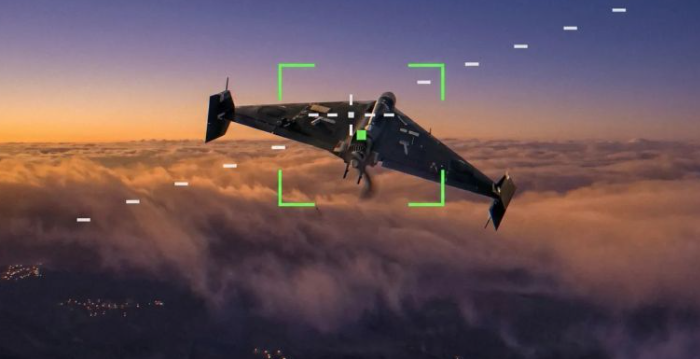
This latest barrage also marks a technological turning point. Ukraine’s use of increasingly sophisticated long-range drones—capable of carrying significant payloads across vast distances—signals a recalibration of modern warfare. It is cheaper, scalable, and difficult to fully defend against. Traditional air defense systems, designed for missiles and aircraft, now find themselves strained by swarms of low-cost, adaptive threats.
For Moscow, the implications are profound. The capital has long been Russia’s political, economic, and psychological anchor—a place meant to project strength and control. When that illusion cracks, even slightly, it resonates far beyond the blast radius of any strike. Domestic audiences notice. Markets notice. The global community notices.
What makes this moment particularly striking is its timing. The attack followed a major Russian offensive that inflicted significant casualties in Kyiv. Ukraine’s response was not only retaliatory—it was demonstrative. It reframed the conflict as reciprocal, signaling that escalation carries consequences not just on the front lines but deep within Russian territory.
Still, the numbers tell only part of the story. While casualties from the drone strikes were limited compared to front-line battles, their symbolic weight is substantial. A war that once seemed geographically contained is now increasingly borderless, where distance offers little guarantee of safety.
Russia’s leadership may attempt to downplay the event, emphasizing interception rates or minimizing operational disruptions. But narratives are difficult to control when visuals, disruptions, and fear spread faster than official statements. In the era of drone warfare, perception itself becomes a battlefield.
The deeper question now is not whether Ukraine can strike Moscow—it clearly can. The question is how Russia responds to a reality where its defenses are no longer absolute. Increased militarization of the capital, further escalation, or adaptive countermeasures are all possible paths. None promise stability.
This weekend’s barrage may not redefine the war overnight. But it redraws its emotional and strategic boundaries. Moscow is no longer just a command center of the conflict. It is becoming, however reluctantly, part of the battlefield.
And once a capital is drawn into the war it directs, the calculus changes—for everyone.