Su-57 Twin-Seater - Russia’s Stealth Jet Evolves Into a Drone Command Platform

For years, the Su-57 has symbolized Russia’s ambition to compete in fifth-generation airpower—a stealth fighter designed to rival Western platforms like the F-22 and F-35. Now, new images of a long-rumored twin-seat variant reveal that Moscow may be preparing the aircraft for a very different role: not just as a stealth fighter, but as a flying command center for drone warfare.
At first glance, the modification seems straightforward. The newly sighted aircraft features an elongated forward fuselage accommodating a second cockpit in tandem configuration. But in modern warfare, small structural changes often signal much larger doctrinal shifts. The addition of a second crew member is not just about training or export flexibility—it points to a transformation in how air combat is envisioned.
The second seat changes everything.
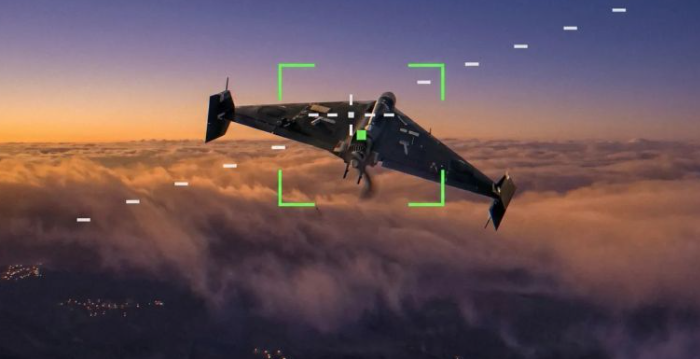
Traditionally, two-seat fighter variants have been associated with pilot training or complex mission management. In the case of the Su-57, however, the implications go further. Russian military thinking appears to be moving toward human-machine teaming in the air, where one crew member—the weapons system officer—can manage sensors, electronic warfare systems, and, crucially, swarms of unmanned combat drones operating alongside the jet.
This concept aligns with earlier reports and patents describing a “flying command post” capable of coordinating networked operations. In that vision, the Su-57 is no longer just a platform for delivering weapons; it becomes a node in a distributed combat system—one that blends stealth aviation with autonomous or semi-autonomous drone capabilities.
That pivot raises a provocative question: is stealth still the primary advantage, or is control over drone ecosystems becoming the real battlefield edge?
Russia is not alone in exploring this territory. China has already introduced its J-20S, a twin-seat stealth fighter with similar ambitions. The United States, meanwhile, is investing heavily in “loyal wingman” programmes designed to pair manned aircraft with autonomous drones. The Su-57 twin-seater suggests that Moscow is unwilling to be left behind in this race.
Yet the move is not without paradox.
Stealth aircraft are meticulously designed to minimize radar signature. Adding a second cockpit, increasing canopy size, and altering fuselage geometry inevitably introduce engineering challenges that risk undermining that advantage. Russian engineers appear to have addressed these issues through careful redesign, but the trade-off remains a subject of debate among analysts: how much stealth is sacrificed for operational complexity and control?
The answer may lie in changing priorities. In an age where drones can penetrate deep into enemy territory, strike airbases, and destroy high-value assets on the ground—as demonstrated by recent Ukrainian attacks—the vulnerability of expensive, elite platforms has become increasingly obvious. At least four Su-57 aircraft have reportedly been destroyed not in air combat, but on the ground, highlighting how asymmetric threats can neutralize high-end technology.
In that context, the twin-seat Su-57 begins to look less like a traditional fighter upgrade and more like an adaptation to a new reality. Instead of relying solely on survivability in contested airspace, it leans into distributed operations—where manned platforms coordinate, rather than directly conduct, the most dangerous missions.
There is also an unmistakable commercial dimension.
Export markets often demand two-seat variants, particularly for air forces that require in-country pilot training and transition capabilities. Algeria is widely reported to be among the first customers for the Su-57, and a twin-seat version would significantly enhance the aircraft’s appeal to other potential buyers. For Russia’s defense industry, this variant could be as much about sustaining production lines and geopolitical influence as about military capability.
Ultimately, the twin-seat Su-57 reflects a broader shift across global air forces. The era of the lone fighter ace is giving way to integrated systems, where pilots collaborate with machines, data flows dictate decisions, and the aircraft itself becomes part of a larger combat network.
The question is no longer whether jets will control drones—but how effectively they can do so under real combat conditions.
With its new twin-seat design, the Su-57 is stepping into that uncertain future. Whether it becomes a true force multiplier or a compromise between competing demands—stealth, control, export viability—will depend not just on engineering, but on how quickly doctrine catches up with technology.
One thing is clear: the cockpit is no longer just for flying the aircraft. It is becoming the command seat of the next generation of air warfare.
.png)