Drones on Balloons. How 19th-Century Warfare Is Rewiring the Battlefield of the Future
Warfare is supposed to evolve in straight lines—more advanced, more digital, more precise.
But on the battlefields of Ukraine, that narrative is breaking down in dramatic fashion. Instead, something far more unsettling is happening: the future of war is being built on the foundations of the past.
The latest example?
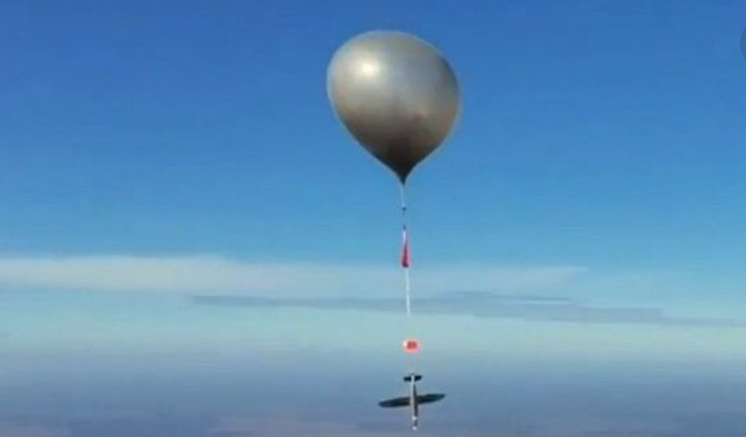
Attack drones launched from high-altitude balloons—a fusion of cutting-edge UAV technology and tactics first seen nearly two centuries ago.
It’s a combination that sounds almost absurd.
In reality, it may be one of the most effective innovations of the conflict so far.
The Balloon Comeback
At first glance, balloons belong to history books. They evoke images of 19th-century warfare or early reconnaissance missions in World War I—not modern combat.
But Ukraine’s latest tactic turns that assumption on its head.
Using a system developed by KettleTech Labs, Hornet drones are lifted to approximately 8,250 meters by balloon, far above their normal operational ceiling of around 2,000 meters. Once at altitude, the drone is automatically released—and something remarkable happens.
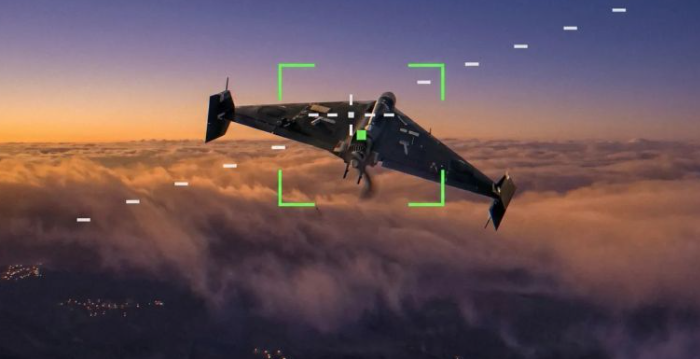
Instead of immediately powering up its engine, the drone glides.
In test scenarios, it traveled around 42 kilometers without using propulsion, preserving roughly 95% of its battery capacity for the final phase of its mission.
This fundamentally rewrites the rules of drone warfare.
Range, Reimagined
Standard operational range for the Hornet drone is estimated at around 150 kilometers, carrying a payload of 4–5 kilograms.
With balloon-assisted launch, that range stretches dramatically—reaching 190 to 200 kilometers.
But range is only part of the story.
By conserving energy during the glide phase, the drone arrives at its target with maximum available power, allowing:
- Higher-speed terminal maneuvers
- More aggressive attack profiles
- Greater accuracy under pressure
It’s not just about reaching the target—it’s about arriving stronger.
The Invisible Threat
Perhaps the most dangerous aspect of this tactic is its stealth.
With the engine switched off during the glide:
- Thermal signature is minimal
- Radar cross-section remains extremely small
This makes the drones exceptionally difficult to intercept.
The economic asymmetry is striking. Defending forces may need to use high-cost surface-to-air missiles to attempt interception—while the attacking drone remains comparatively cheap.
Once again, drones are reshaping warfare, not just tactically—but economically.
Automation and Scale
The system’s deployment is equally sophisticated.
The release of the drone from the balloon can be triggered automatically via:
- Pre-set altitude thresholds
- Geofencing parameters
- Timers
No real-time operator input is required.
Combined with satellite communication systems such as Starlink, operational range becomes less a technical limitation and more a function of:
- Wind conditions
- Network availability
In practical terms, this enables deep strikes far behind enemy lines, targeting logistics routes and supply corridors.
And it does so with minimal exposure and maximum unpredictability.
The Great Regression: World War I Tactics Return
Yet even as the air war becomes more advanced, the ground tells a very different story.
The sheer density of drones has created “kill zones” stretching up to 50 kilometers, making large vehicles like tanks highly vulnerable and often immobile.
As a result, soldiers are reverting to tactics that feel disturbingly familiar:
- Trench warfare dynamics
- Barbed wire defenses
- Small, mobile assault units resembling World War I stormtrooper tactics
Motorcycles replace armored vehicles. Infantry advances cautiously, dismounting early and moving on foot.
Even barbed wire—once thought obsolete—is back, trapping soldiers who then become easy targets for drones.
A Psychological Battlefield
The impact is not just physical—it’s psychological.
Drones are ever-present, constantly watching, hunting, waiting.
This creates an environment of continuous stress and fear, where soldiers know they may be targeted at any moment—often without warning.
The psychological pressure is so severe that reports have emerged of extreme reactions to the threat of drone attacks.
The battlefield is no longer just contested—it is haunted.
History Repeats—But Smarter
Ironically, the concept of aerial attack using balloons is not new.
In 1849, Austrian forces used balloons to drop explosives during the siege of Venice—a primitive but visionary attempt to exploit altitude and wind.
Today, the same principles are being revived—with modern precision, automation, and guidance systems layered on top.
It is a reminder of a fundamental truth:
innovation in warfare is rarely about entirely new ideas—it is about recombining old ones in new ways.
Conclusion: The Future Is Hybrid—And Unpredictable
What is emerging in Ukraine is not a simple evolution of warfare.
It is a hybridization:
- High-tech drones meet low-tech launch systems
- Autonomous systems coexist with century-old tactics
- Digital warfare overlays analog strategies
The result is something far more complex—and far harder to predict.
Because in modern war, progress is no longer linear.
Sometimes, the fastest way forward…
is to rediscover the past.