DroneAids Ukraine's Drone Revolution - The Country Teaching the World How to Scale Military Innovation

Kyiv, September 2026 – In less than four years, Ukraine has accomplished something few defense analysts believed possible: it has transformed itself from a consumer of military technology into one of the world's most influential innovators in drone warfare.
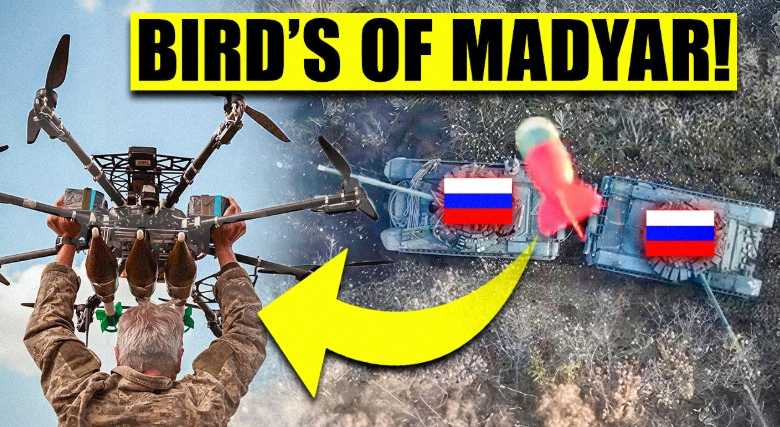
When Russia's full-scale invasion entered its third year, drones had already become an indispensable part of Ukraine's military strategy. While many European nations were still debating regulatory frameworks, procurement models, and operational concepts, Ukrainian forces were deploying unmanned systems at scale across nearly every battlefield function imaginable.
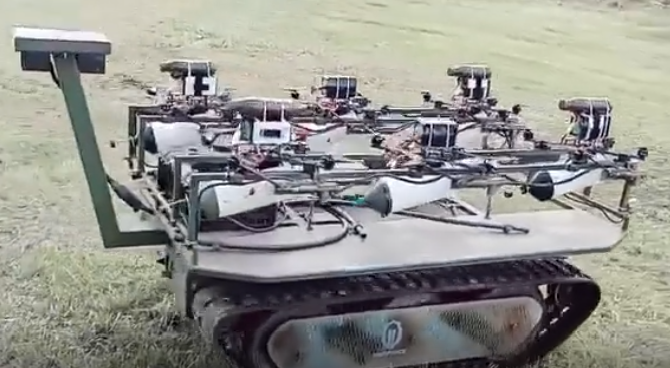
Reconnaissance, artillery spotting, logistics support, electronic warfare, intelligence gathering, target acquisition, and long-range strike missions increasingly relied on drones. What began as an emergency wartime adaptation evolved into a comprehensive technological ecosystem that has fundamentally altered modern military operations.
The speed of this transformation has few historical parallels.
By the summer of 2026, Ukrainian officials reported annual drone production reaching ten million units, a figure that would have seemed unimaginable only a few years earlier. Ukrainian leadership has further indicated ambitions to double that capacity through international partnerships and industrial cooperation.
Behind these numbers lies a deeper story: the emergence of a highly agile innovation model that challenges traditional defense-industrial thinking.
For decades, military procurement has largely focused on sophisticated platforms that require extensive development cycles, significant budgets, and years of testing. Ukraine's wartime experience has pushed the industry in another direction. Instead of prioritizing complexity alone, many Ukrainian manufacturers have focused on affordability, scalability, adaptability, and rapid production.
In practical terms, this means producing technologies that can be fielded quickly, improved continuously, and replaced efficiently. Engineers receive operational feedback directly from frontline users, often implementing design improvements within weeks rather than years.
This compressed innovation cycle has enabled Ukrainian companies to evolve at a pace rarely seen in the global defense sector.
Today, hundreds of Ukrainian businesses, startups, and defense technology firms participate in the country's growing unmanned systems ecosystem. Industry observers increasingly view Ukraine not merely as a battlefield, but as a laboratory for testing the future of military technology.
The broader implications extend well beyond Ukraine itself.
Across Europe, defense manufacturers and policymakers are reevaluating assumptions about modern warfare. Traditional military systems remain critically important, but the conflict has highlighted the increasing value of inexpensive, highly adaptable technologies that can be deployed in large quantities.
This shift has generated growing interest from international partners seeking to learn from Ukraine's experience. In July 2026, the European Union and Ukraine announced an agreement intended to strengthen cooperation in drone development and production, combining Ukraine's operational expertise with Europe's industrial capacity.
Supporters argue that Ukraine's greatest achievement is not simply building drones. Rather, it is demonstrating how innovation can emerge under extreme pressure when industry, technology, and operational users collaborate closely.
The country's success has also challenged conventional perceptions of technological progress. Expensive systems often dominate defense exhibitions and procurement discussions, but battlefield realities frequently reward solutions that are practical, dependable, and available in large numbers.
As a result, Ukraine's drone industry has become a case study in the importance of industrial scalability. Producing a limited number of cutting-edge systems may deliver impressive technical specifications, but producing large quantities of effective systems can fundamentally alter operational outcomes.
This lesson is increasingly resonating within military organizations worldwide.
Beyond defense applications, the technologies developed by Ukrainian companies are likely to influence civilian industries as well. Advances in autonomy, navigation, sensor fusion, artificial intelligence, and remote operations have potential applications across logistics, infrastructure inspection, emergency response, agriculture, and industrial automation. Similar trends are already visible in the broader global drone and robotics sectors.
Whether viewed through the lens of technology, manufacturing, or military strategy, Ukraine has emerged as one of the most consequential innovation centers of the decade.
The country's drone revolution demonstrates that modern military success is increasingly defined not only by technological sophistication, but also by the ability to innovate rapidly, adapt continuously, and produce at scale.
In an era where the character of warfare is changing faster than ever, Ukraine's experience may prove to be one of the most influential defense lessons of the twenty-first century.