Drone Wars Reloaded. How GA‑ASI Turned ILA 2026 into a Battlefield of Algorithms and Airpower
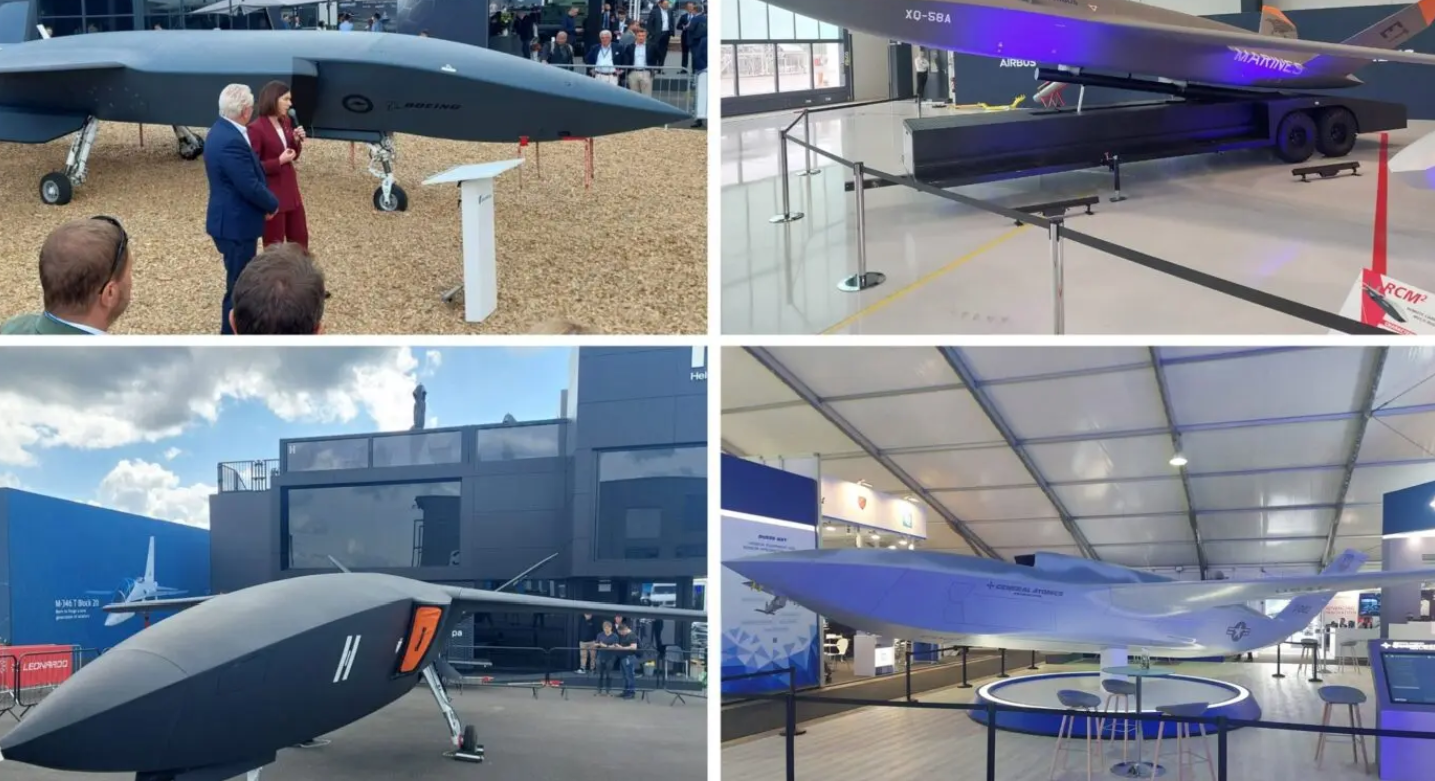
At ILA Berlin 2026, one thing became impossible to ignore: the future of air combat will not be flown alone.
It will be flown in swarms.
While Europe has been shaping its own vision of Collaborative Combat Aircraft (CCA), long centered around names like Airbus, Boeing, Kratos, and Helsing, a new contender has entered the arena — and it is not quietly asking for permission.
It is kicking the door open.
General Atomics Aeronautical Systems (GA‑ASI) has arrived — and it brought more than a concept. It brought hardware, flight hours, and a system already in testing.
From Predator to “Dark Merlin” — a Continuity of War
GA‑ASI is not new to unmanned aviation. Its lineage — from the MQ‑1 Predator to the MQ‑9 Reaper — has accumulated millions of flight hours and redefined modern warfare.
But what the company showcased at ILA 2026 is something fundamentally different.
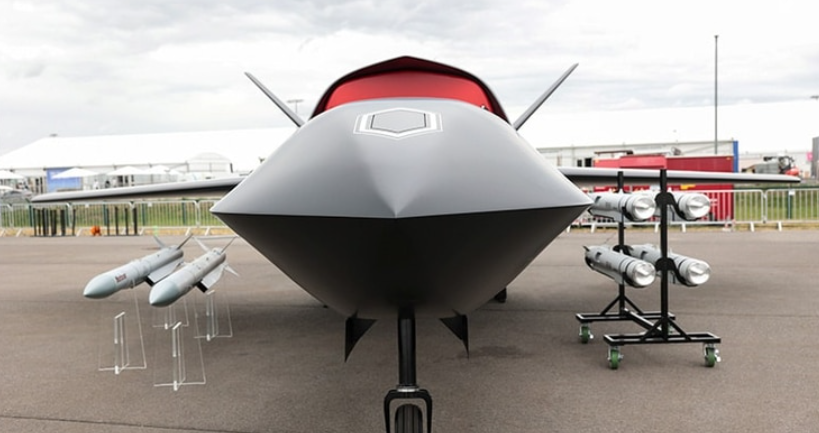
The YFQ‑42A Collaborative Combat Aircraft, now nicknamed Dark Merlin, represents a new category:
a semi-autonomous jet fighter designed to fight alongside human pilots.
This is not a drone in the traditional sense. It is a force multiplier — a machine designed to expand the reach, survivability, and lethality of crewed platforms.
And crucially: it is already in flight testing.
That alone changes the dynamics of Europe’s ongoing competition.
Gambit 6 — The Tactical Disruptor
If the YFQ‑42A is proof of maturity, then Gambit 6 is GA‑ASI’s strategic weapon.
The aircraft is part of a modular family of autonomous combat systems built around a common “core” architecture — a design approach that reduces cost, speeds development, and enables rapid adaptation across missions.
Gambit 6 takes that philosophy and pushes it into the most relevant battlefield of today:
- Air-to-ground strike
- Electronic warfare
- Suppression of enemy air defenses (SEAD)
It features:
- A low observable design
- An internal weapons bay to reduce radar signature
- Scalable integration of autonomy, sensors, and weapons
This is not just a drone. It is an adaptive combat node.
And one designed specifically for contested environments like Eastern Europe.
The European Shift — From Export to Integration
ILA 2026 made something else clear: GA‑ASI is not just exporting technology — it is embedding itself into Europe’s defense ecosystem.
The company signed a Memorandum of Understanding with Germany’s INTEC Group to support mission system integration, logistics, and operational deployment for the Gambit series.
The goal?
Sovereign capability.
This is the new language of European defense:
- not just buying platforms
- but owning integration, control, and deployment
GA‑ASI is adapting fast.
A New Player in Germany’s Combat Drone Race
Until recently, Germany’s future combat drone discussion looked relatively defined:
- Airbus and partners: European sovereignty play
- Boeing / MQ‑28 Ghost Bat: loyal wingman concept
- Kratos: low-cost attritable systems
Now, GA‑ASI enters with something different:
- proven autonomy
- tested systems
- scalable production philosophy
Most importantly — reduced development risk.
And that is a game changer.
Because while competitors present concepts, GA‑ASI presents a timeline.
Provocation: Is Europe Late to Its Own Revolution?
The rise of Collaborative Combat Aircraft is not theoretical anymore.
CCA is about:
- mass instead of exclusivity
- autonomy instead of pure pilot skill
- systems instead of platforms
GA‑ASI understood this early.
With Gambit, it built a family, not a single aircraft — ISR, trainer, strike, combat — all sharing a 70% common architecture.
That means:
- faster deployment
- lower cost
- scalable fleets
Exactly what modern conflicts demand.
The Real Message from ILA 2026
ILA 2026 was not about who has the best drone.
It was about who has the most credible path to fielding them at scale.
GA‑ASI came with:
- flying prototypes
- modular architecture
- European partnerships
And a clear message:
The era of experimental drone programs is over.
The era of operational autonomous combat systems has begun.
The only question left for Europe is:
Will it lead this transformation —
or import it?